“Kush is very easy to find here in Kolleh Town. People sell it openly, sometimes on the roadside, near junctions, and even close to our schools. You don’t even need to go far.”
– Community member, Kolleh Town, Sierra Leone
Kush is a type of synthetic drug that is widely used by young people in Sierra Leone, especially in the informal settlements of Freetown. It is inexpensive and readily available, making it highly accessible to unemployed and marginalised youth. Its use is associated with a range of harmful effects, including extreme sedation, organ damage and mental health complications.
In 2024, Sierra Leone’s president Julius Maada Bio, declared a “war on Kush”, calling the situation a national epidemic and an “existential crisis” for the country and its young people.
In this context – and following the initial ACRC city research – the team in Freetown decided to focus an action research project on kush use. Led by the Institute for Development, researchers set out to understand how communities in Freetown are responding to the growing kush problem. Their approach was to learn from community voices, exploring how local groups could work together to prevent and reduce drug use.
Researchers found significant community-driven responses already underway. Peer support, open family dialogues and school-based awareness campaigns emerged as particularly effective. Youth engagement in meaningful activities, such as vocational training and employment opportunities, was consistently highlighted as critical for preventing drug use.
The study focused on two communities, Kolleh Town and Olosoroh, which highlighted different ways of dealing with the crisis. Kolleh Town faced substantial challenges due to entrenched supply networks, limited enforcement and passive attitudes among authorities. In contrast, Olosoroh demonstrated stronger leadership commitment and proactive collaboration between teachers, youth leaders, police and NGOs, aiming to address the issue through education, awareness and behavioural interventions.
Key findings from the action research included:
1. The kush crisis in Freetown is driven by socioeconomic vulnerability.
Users of the drug are often male, aged between 15 and 30 and are unemployed or not in education. For these marginalised youth, kush becomes a readily available coping mechanism to alleviate poverty, boredom and stress.
2. Community responses require consistency and peer engagement.
Effective community-led responses include peer support among young people, open family dialogues and school-based awareness campaigns. However, these efforts are often undermined by a lack of continuity and consistency.
3. Supply chain disruption is hampered by corruption.
Law enforcement efforts are weakened by police complicity and corruption, with reports of arrested dealers released after paying bribes. The police should focus on high-level suppliers and traffickers rather than low-level users.
4. A holistic response must provide economic alternatives and accessible health support.
Investing in vocational training, job creation and recreational activities for at-risk youth are all essential. Current health facilities and rehabilitation centres are severely limited, unaffordable and overwhelmed.
5. Sustainable solutions depend on coordinated reform coalitions.
The complexity of the kush crisis requires inclusive reform coalitions that bring together youth representatives, traditional leaders, religious figures, police and NGOs, to build trust and coordinate efforts. Coalitions that build on existing community networks have the greatest chance of success.
Throughout the project, IfD researchers worked closely with community members. Communities had tried different strategies and reported that they were running out of ideas on how to deal with the kush problem. As such, they were very engaged with IfD’s approach, particularly as it provided a bridge between community members and national policymakers.
The findings of the research were presented to officials from the governmental departments, such as the mental health department at the Ministry of Health, Ministry of Social Welfare, National Task Force on Drugs and Substance Abuse, National Drug and Law Enforcement Agency, media houses and other partners.
Subsequent meetings with these agencies were pivotal in building consensus around the ACRC’s research-driven model, especially on the importance of a reform coalition of actors passionate about creating a community-led solution with strong institutional support to address the challenges posed by kush.
Researchers at IfD are continuing to support community responses and are actively pushing for a holistic policy response from government ministries.
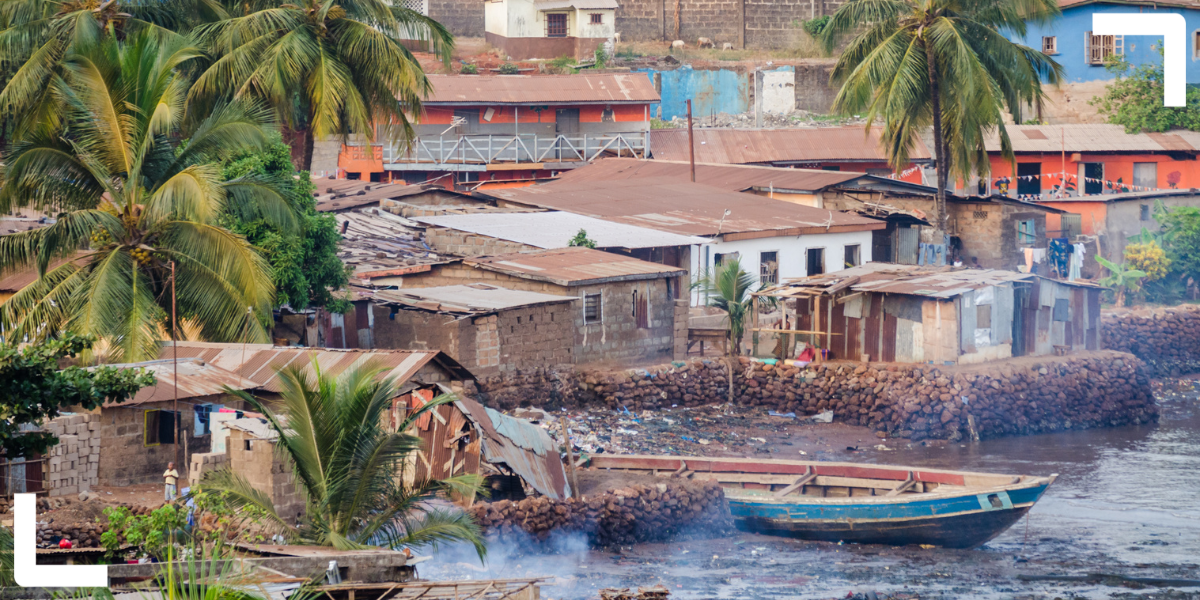
Header photo credit: Fabian Plock / Canva Pro. View over a coastal informal settlement in Freetown, Sierra Leone.
Note: This article presents the views of the authors featured and does not necessarily represent the views of the African Cities Research Consortium as a whole.
The African Cities blog is licensed under Creative Commons Attribution-NonCommercial-NoDerivatives 4.0 International (CC BY-NC-ND 4.0), which means you are welcome to repost this content as long as you provide full credit and a link to this original post.
