By Olumuyiwa Adegun, ACRC Lagos in-city urban development research lead
A sweltering city
Climate change has unveiled challenges for urban centres in Africa, especially large cities like Lagos, Nigeria’s commercial capital. Lagos has a tropical savanna climate with distinct wet (often cooler) and dry (often hotter) seasons. Average monthly temperature can reach 35°C, with over 70% humidity in February and March, usually the hottest months in the year.
With a current population of approximately 20 million, the current rate of growth indicates that Lagos might become the largest city globally by 2100. Physical development patterns associated with the current urbanisation rate result in urban heat island (UHI) effects. There is a notable difference in temperature of up to 7°C between the dense, hotter central parts of Lagos and the peripheral areas of urban sprawl.
Urban heat in Lagos can be analysed through the lens of “cities as a series of material and social systems that are drawn together and interrelated in certain domains”, as conceptualised by ACRC. A systems approach is necessary to properly understand urban heat in Lagos. Heat impacts social systems – public health, economy (through livelihoods and financial implications of heat-related disasters), food security (for example, lower crop yield, post-harvest losses due to higher temperatures), education and so on.
The impact of heat is also apparent on urban materialities. The material situation often determines levels of exposure and adaptation to heat. For instance, energy and water are crucial to cooling persons or spaces.
Heat stress disproportionately affects informal settlement residents
Exposure to high temperatures and heat stress is unequally distributed in Lagos, with lower income households experiencing greater exposure. A recent heat stress analysis over Lagos metropolis shows that the most socioeconomically disadvantaged areas – those categorised as slums and informal neighbourhoods – were most affected, with “hot” heat stress conditions observed over 90% of the time.
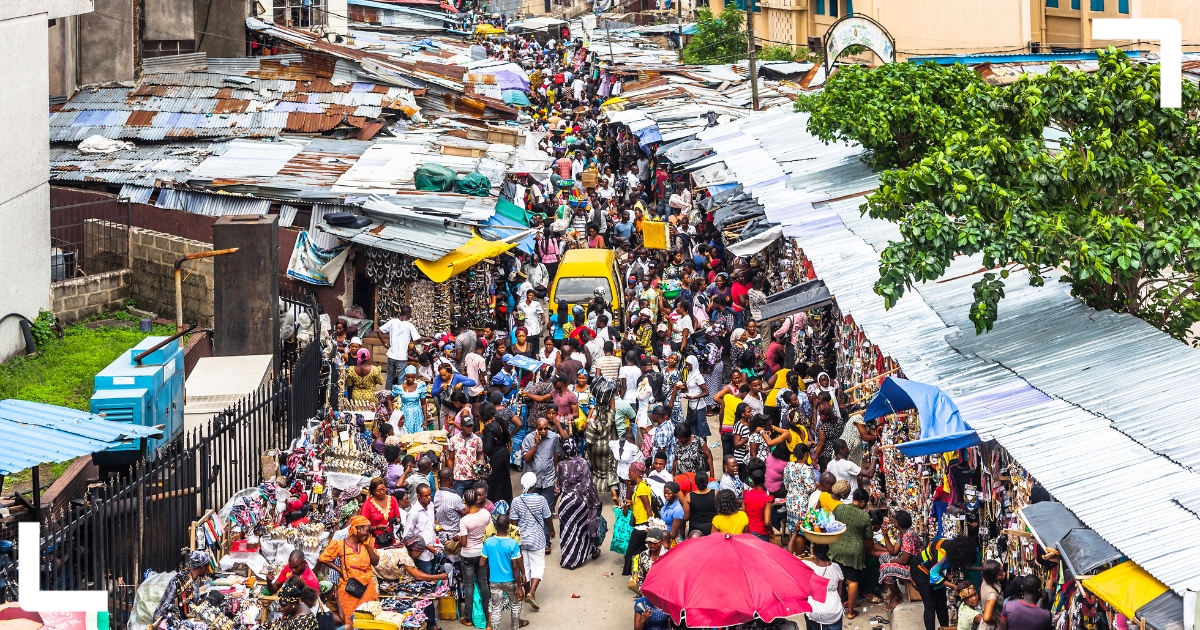
The meteorological situations are exacerbated by physical conditions – the nature of dwellings (heat-absorbing wall materials, poorly ventilated rooms, and so on), overcrowding, absence of green spaces, poor service coverage and inadequate infrastructure, especially for water and electricity. Socioeconomic conditions also contribute to heat stress vulnerability. Many slum dwellers engage in informal work outdoors, which leaves them continuously exposed to extreme heat. For instance, street traders, waste scavengers, cart pushers and construction workers often endure long hours working in the direct sun.
Recent studies show that residents of Lagos’s informal settlements experience significant health challenges from exposure to excess heat. Dizziness, headaches, malaria and skin rashes are common heat-health problems that have been reported within some informal settlements in the city. These challenges are exacerbated through poor access to quality, affordable healthcare facilities.
Cooling strategies that residents deploy involve diverse practices often linked to water and housing features. The most popular responses are bathing, opening doors/windows, drinking water/fluids (hydration), staying outdoors and wearing light clothing. The use of cooling appliances such air conditioners is not common, due to electricity power cuts and the high cost of purchasing such appliances.
Heat action plan – a comprehensive strategy
A heat action plan typically contains a comprehensive strategy to prepare for, respond to and reduce the diverse impacts of exposure to extreme heat. The plan should include framework(s) for systematic heat monitoring, timely early warnings, preventive actions expected and targeted adaptation interventions, usually for those communities and groups who are most vulnerable.
Based on global standards and good practices, heat action plans should include:
1. A definition of a heat wave;
2. Preparedness and early warning systems;
3. Response mechanisms;
4. Coordination, implementation and monitoring;
5. Risk mapping and vulnerability assessment;
6. Public and stakeholder engagement;
7. Adaptation and long-term planning; and
8. Integration and governance strategies.
Learning from other cities
Lagos can learn from other cities. In February 2025, the City of Freetown launched its heat action plan – the first in Africa. The plan was developed considering the following principles that can be emulated:
> Equity and inclusion (ensuring all residents, especially those in vulnerable communities, can benefit from heat adaptation strategies);
> Data-driven and evidence-based planning;
> The pursuit of co-benefits (solutions that simultaneously deliver health, economic, environmental and social impacts);
> The promotion of nature-based approaches; and
> A commitment to community-centredness.
Ahmedabad, one of India’s largest cities, implemented South Asia’s first heat action plan after the deadly 2010 heatwave. The heatwave led to mortalities, with over 1,344 deaths recorded in May 2010 alone, a 43.1% increase over the baseline mortality rate. A group of epidemiologists showed that implementation of the heat action plan in the city led to a decrease in summertime mortalities in subsequent years, with the largest declines at the highest temperatures. This translated into averting over 1,000 deaths annually.
Acting, now!
The city of Lagos need not wait till heat reaches catastrophic levels before taking appropriate steps. There is an urgent need take steps to develop and start implementing a heat action plan.
Existing state resources and frameworks can be harnessed. To start, a chief heat officer should be appointed for Lagos, initially based within, or working directly with, the Lagos Resilience Office (LASRO), whose current multidisciplinary approach can be adapted for urban heat resilience. The chief heat officer would anchor the process of developing the heat action plan, coordinating the integrated and participatory process needed to create an inclusive plan.
The state cannot do it alone. In line with ACRC’s theory of change, commitment from elites, mobilisation of citizens, enhanced capacity of state officials as well as formal and informal coalitions are crucial to successfully creating and implementing an inclusive plan for the megacity. Beating the heat is a collective task.
Header photo credit: peeterv / Getty Images (via Canva Pro). Market streets in Lagos, Nigeria.
Note: This article presents the views of the authors featured and does not necessarily represent the views of the African Cities Research Consortium as a whole.
The African Cities blog is licensed under Creative Commons Attribution-NonCommercial-NoDerivatives 4.0 International (CC BY-NC-ND 4.0), which means you are welcome to repost this content as long as you provide full credit and a link to this original post.
