
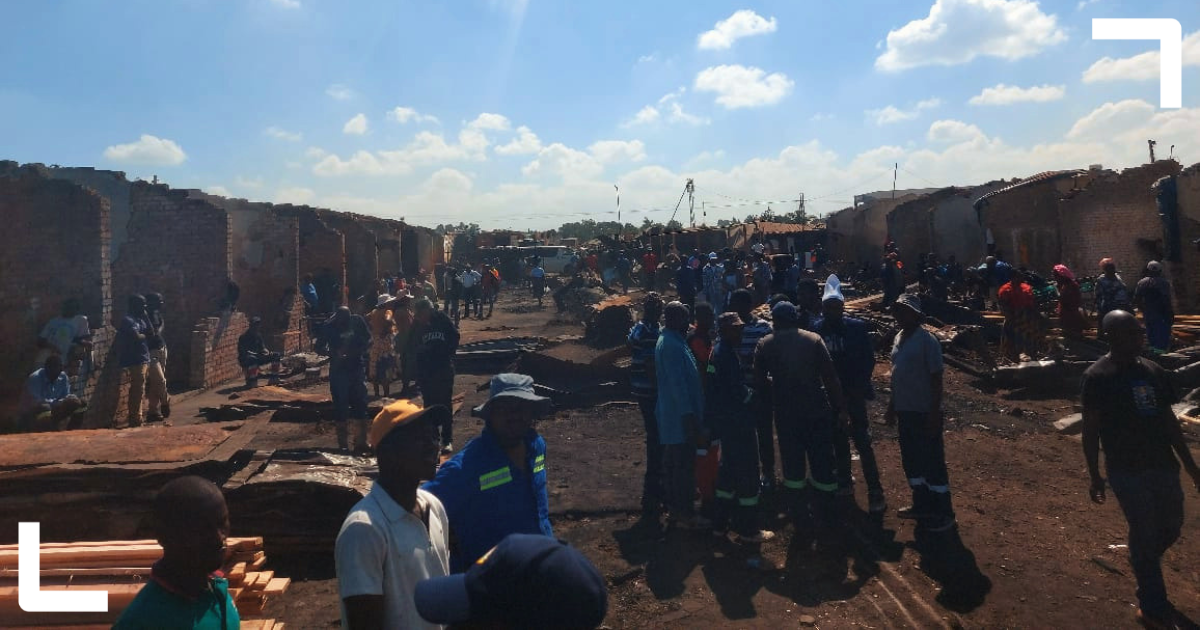
Urban markets in Harare
Urban markets are at the centre of life in Harare, providing livelihoods to thousands of people, supplying affordable goods and anchoring the city’s informal economy. Action research in the city so far has looked at improving infrastructure and strengthening trader capacity in the Glen View 8 Furniture Complex (GV8FC). The Pundutso Urban Markets Project (PUMP) is building on learnings from this initiative to support further market improvements across Harare, through creating institutional space for traders and the City of Harare to collaborate meaningfully.
In this blog miniseries looking at urban markets in Harare, this first post explores the City of Harare’s receding role in urban markets, the second outlines priority actions for tackling fire risks in markets, the third takes a closer look at market sanitation, and the fourth reflects on contested market governance.
By Kudzai Chatiza
Key takeaways
- The City of Harare still “owns” markets on paper but has largely withdrawn in practice. Though it still collects some fees, it is failing to provide reliable governance and basic services, including workspace infrastructure.
- The vacuum the City has left is occupied by informal institutions, which are keeping markets running but making them fragile and exclusionary. This is evident in weak infrastructure, higher disaster risk and access shaped by informal power and payments.
- What is needed is a different City return to markets that it previously receded from, to co-govern, coordinate (not control), secure tenure and use shared revenues tied to visible service delivery.
This blog post arises from research, concluded in May 2025, of Glen View Area 8 Furniture Complex (GV8FC) and Harare’s wider market system. The research was conducted as part of the Pundutso Urban Markets Project (PUMP) under the African Cities Research Consortium (ACRC).
GV8FC was selected as a pilot site for examining institutional, governance and policy dynamics affecting informal manufacturing markets in Harare. Primary data sources included interviews and engagements with GV8FC formal and informal leaders, City of Harare officials, participants in five ACRC‐organised workshops, three Urban Informality Forum seminars, and a review of administrative and policy documentation from the City of Harare.
Understanding the “receding City”
Urban markets are often described as chaotic, informal or even unruly. But beneath this surface activity lies something more profound: a steady withdrawal of the City itself. In Harare, this phenomenon can be described as the “receding city”.
The City – both as a whole and those divisions responsible for markets – remains legally responsible for markets, but has gradually lost the ability to competently govern, provide services and sustain markets overall. The City still issues annual trader permits or licences and collects monthly levies, but not at all markets nor from all traders. Additionally, the most glaring indicator of the receding City is the failure to deliver, operate and maintain appropriate and adequate infrastructure, workspaces and basic services at markets.
In marketplaces like GV8FC, the City’s role did not disappear overnight. Instead, it slowly ebbed away. Permits were issued, then expired without being renewed. Infrastructure was planned but not fully delivered. Revenue systems were introduced and then abandoned. Over time, the City of Harare stopped being the effective authority on the ground, even though it retained legal ownership of the land and policy responsibility for the market. In variable forms, this is the situation at many other city markets.
Into the gap created by this retreat stepped market associations, politically connected committees, cooperatives and informal powerbrokers. These actors now allocate space, collect fees, resolve disputes and organise security. In practical terms, they have become the de facto managers of markets like GV8FC.
However, this is not the same as sustainable self-governance. While local organisation has kept markets alive, it has also introduced new exclusions, blind spots and vulnerabilities. The “receding City” is not simply absent. It is present enough to claim authority, but absent enough to avoid responsibility – leading to shades of strategic and operational unsustainability at markets. This contradiction shapes everything that follows regarding how markets grow, who gets access, how infrastructure is funded and who benefits from urban economies.
What the receding City means for sustainability
Market sustainability depends on more than hustle and hard work. It requires predictable governance, reliable infrastructure and credible institutions. The receding City undermines all three. At GV8FC, the absence of effective city governance has meant no stable system for financing infrastructure. Roads remain unpaved. Water and sanitation are inadequate. Fire risks are high and disaster responses are mostly reactive rather than preventative.
Without the City collecting and reinvesting revenue, collective services collapse. Individual traders may improve their own stalls, but shared infrastructure like drainage, fire breaks and access roads, which require coordinated investment by formal institutions, are not provided or, if in place, are not competently operated and maintained. This is because the institutions that fill the gaps left by the receding City struggle to sustainably perform these complex functions over time.
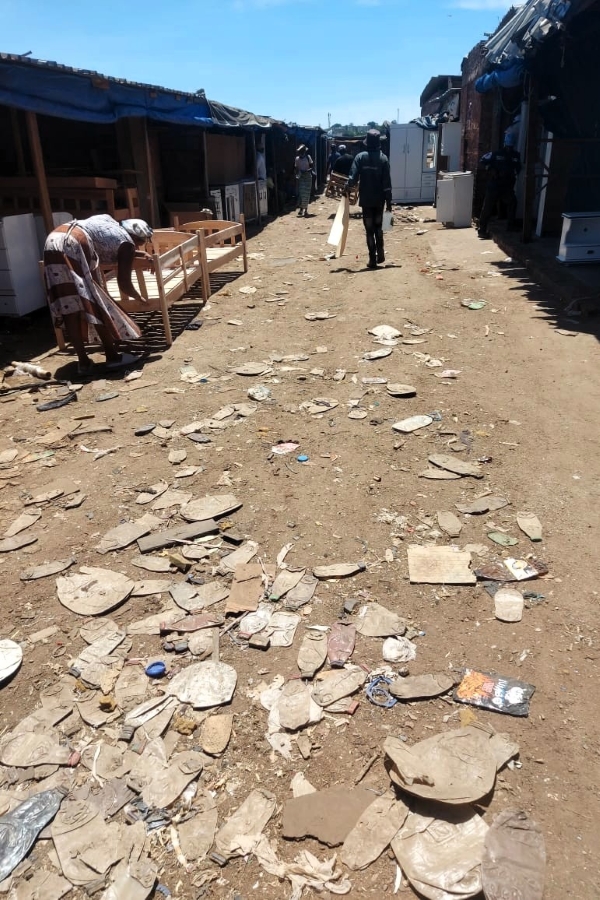
Ironically, the City also suffers. When revenue systems break down, income needed for planning, maintenance and service delivery is lost. This feeds a vicious cycle, whereby poor services reduce willingness to pay, and low levels of payment further weaken the City’s capacity. Overall City authority is undermined, as traders lose trust in the City’s ability to uphold the “social contract”.
Equally important is planned land use. Markets in Harare have expanded organically, with incompatible activities. At GV8FC, the main enterprise of carpentry now sits uneasily with catering, storage and retail, creating a crowded space where incompatible uses are adjacent in a complex that lacks formal layouts. This increases disaster risks, reduces productivity and makes markets harder to upgrade. In short, when the City recedes, markets survive but they do so inefficiently, vulnerably and at great long-term cost.
The second major cost of a receding City is exclusion. Urban markets are often justified as tools of inclusion and poverty reduction, providing livelihoods for those shut out of formal employment. But when governance shifts to informal systems, access increasingly depends on power, connections and informal payments, rather than transparent and inclusive rules.
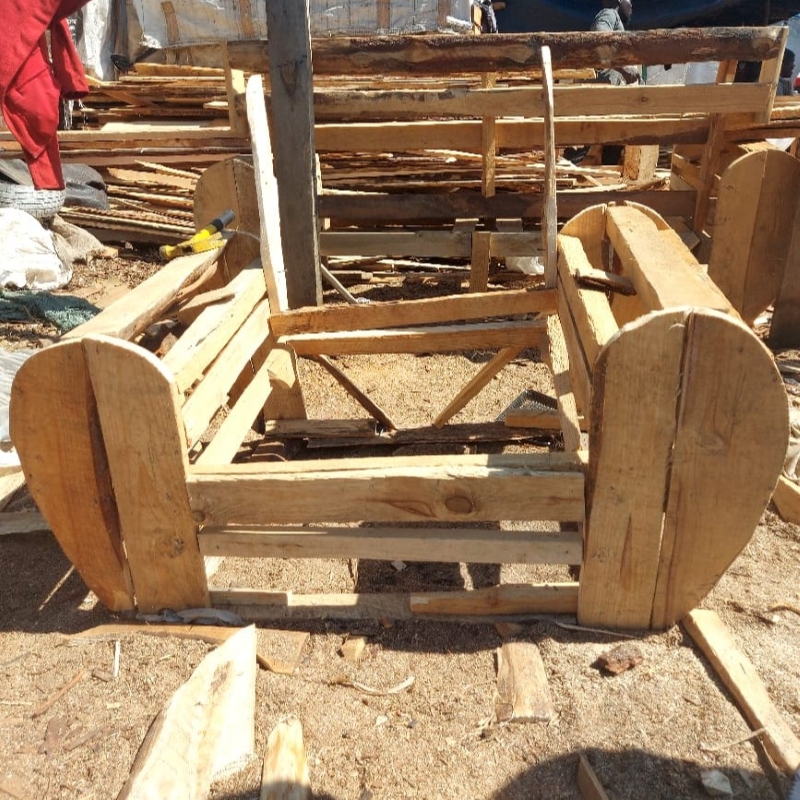
At GV8FC, original permits covered fewer than 500 traders, yet several thousand now operate there. Subletting, informal allocation and politically mediated access have become normal. New entrants often gain space not through waiting lists or public processes, but through market insiders. This system excludes the very groups that social markets were designed to support.
Those at risk of missing out include women, youth and the poorest newcomers, who lack networks or capital to buy their way in. Over time, markets risk becoming closed clubs rather than open ladders which those on low incomes can use to climb out of poverty.
Tenure insecurity deepens this exclusion. Many traders believe they “own” their stalls, even without legal documentation. Others remain perpetually informal. This uncertainty discourages long-term investment, limits access to finance and fuels conflict between traders and the City. A receding City therefore produces a paradox whereby markets grow larger but become less inclusive, more politicised and harder to reform.
Why the City must return, but differently
The solution is not a return to heavy-handed enforcement or mass evictions. Our analysis of GV8FC shows that such approaches fuel resistance and deepen mistrust. Instead, what is needed is a reconfigured City role that recognises markets as permanent parts of the urban economy and invests in governing them collaboratively.
This means treating markets not as temporary poverty measures, but as productive urban assets. It also means moving beyond the false choice between total informality and rigid formality. The City must re‑enter markets as a co‑governance partner, setting clear rules, protecting public interests and enabling local institutions to function within an agreed framework. Without this, markets will remain stuck in limbo, being too informal to upgrade, while too large to ignore.
Three policy messages
Based on the policy analysis conducted at GV8FC, three policy pillars emerge. These align considerably with the City’s SME policy and the national formalisation initiatives.
Policy message 1: Reassert the City’s role as coordinator, not controller
The City of Harare can re‑enter markets to coordinate planning, infrastructure and regulation. This can be done without displacing local institutions. Clear mandates and shared authority are essential for sustainability.
Policy message 2: Secure tenure to unlock investment and inclusion
Transparent, time‑bound and transferable tenure arrangements are critical. Without them, markets cannot attract finance, plan infrastructure or remain inclusive to new entrants.
Policy message 3: Finance markets through shared revenue models
Market sustainability requires reliable revenue collection linked to visible service delivery. Co‑managed revenue systems can rebuild trust and fund infrastructure.
Photo credits: Development Governance Institute
Note: This article presents the views of the authors featured and does not necessarily represent the views of the African Cities Research Consortium as a whole.
Author acknowledgement: This blog draws on ACRC‑supported work but does not represent the views of the consortium or its funder, FCDO (United Kingdom). The contributions of ACRC Harare colleagues – especially George Masimba, Stephan Tafireyi (City of Harare, SMEs Division), Thomas Karakadzai and Tapiwa Nyamukapa, who took part in a meeting at the City’s Housing and Community Services Offices to discuss the Kuwadzana 4 issue following a field visit – are gratefully acknowledged.
Generative AI statement: Copilot was used to process research notes and relevant literature to help prepare an initial draft of this blog post. This draft was then extensively edited by the communications team and approved by the author of the article.
The African Cities blog is licensed under Creative Commons Attribution-NonCommercial-NoDerivatives 4.0 International (CC BY-NC-ND 4.0), which means you are welcome to repost this content as long as you provide full credit and a link to this original post.
