
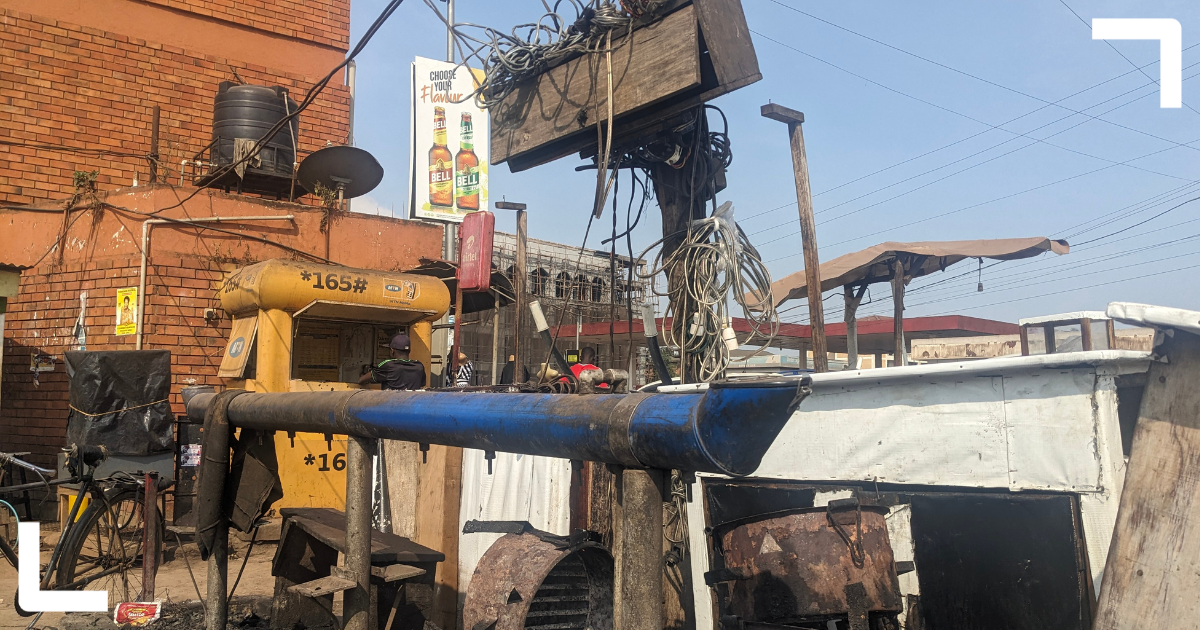
By Francis Mawejje, social worker and programme manager (community-led data) at ACTogether Uganda and ACRC action research lead for Kampala’s electricity access project
The need for access to safe and affordable energy has been recognised at the global scale, but progress towards equitable access for all has been slow in many low-income neighbourhoods.
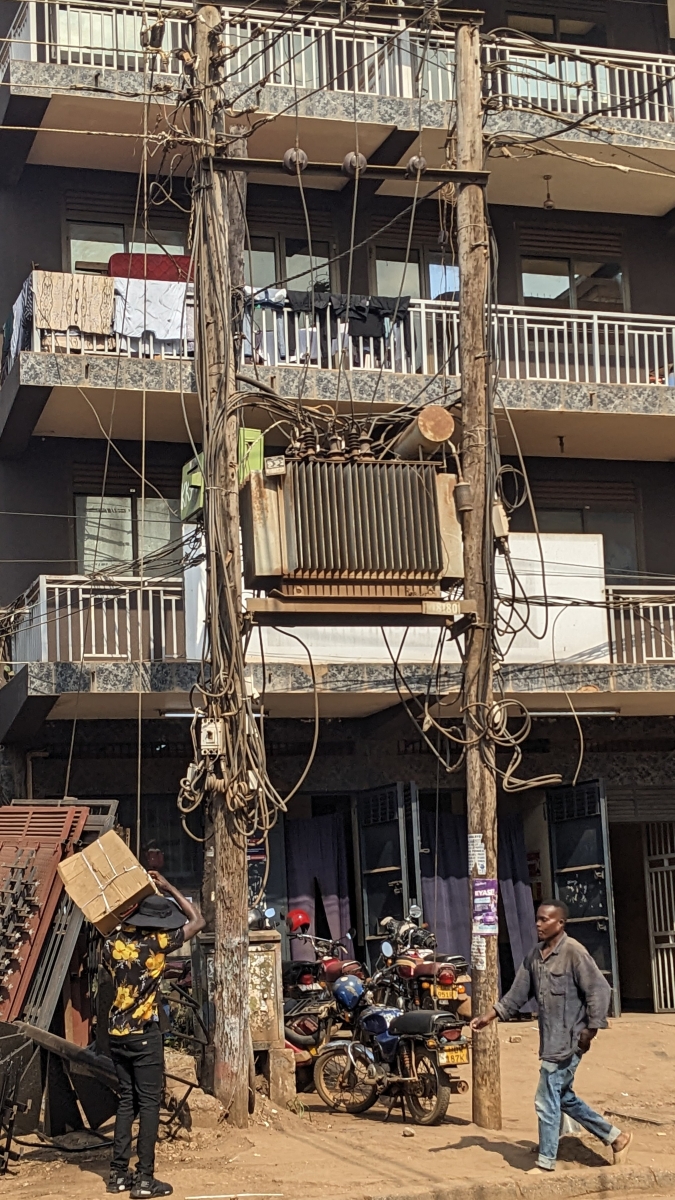
This is acute in urban areas, where those living in informal neighbourhoods lack access to public services, dense housing built from cardboard and wood is a fire risk, and livelihoods are dependent on access to energy. Many residents are tenants, which is an added complication in accessing electricity, as the landowner can block direct access to the utility (and subsidy).
In Kampala, ACTogether is working with the National Slum Dwellers Federation of Uganda to transform access to grid electricity.
The government of Uganda has recognised the importance of access to clean energy through three subsidy and financing frameworks. The government is using a cooperative model to increase the likelihood that resources reach the residents of informal settlements. However, to date, progress has been slow.
This blog post introduces the subsidies that exist already, explains that they do not work, and describes how ACTogether and the Ugandan Slum Dwellers Federation are working to address this deficit in inclusive programming.
Existing subsidy models
1. Electricity Connections Policy (ECP): Launched in 2018, the ECP aims for a 60% electrification rate by 2027 by providing “free” connections to households situated within 35-90 metres of a pole. While the connection itself is subsidised, households must still meet the costs of internal wiring and obtaining a wiring certificate. The official connection application involves inspection fees of UGX 23,600-41,300. Research findings show that residents pay an average of UGX 86,620 in informal “fees” and UGX 100,000-200,000 for a wiring certificate, in order to bypass delays manufactured by official surveyors and inspectors (technical gatekeepers) during inspections.
2. Price Subsidy Programme: This is a market-driven initiative whereby the state provides 30-70% discounts on clean energy technologies like solar systems and clean cooking solutions. The subsidy funds go directly to pre-qualified energy service companies (ESCOs) to lower the upfront purchase price. Uptake in informal neighbourhoods is low, due to a lack of affordability and a lack of information. To be eligible for the discounted price offered by this programme requires a national ID and proof of ability to pay. However, individual applicants in informal settlements often lack the financial literacy or initial capital to engage with ESCOs alone.
3. Government credit lines via participating financial institutions (PFIs): The Uganda Energy Credit Capitalisation Company (UECCC) provides low-interest loan programmes through PFIs like Centenary Bank. These loans are intended to cover the expensive “house wiring” hurdle that excludes low-income households from the formal grid. However, loans are often inaccessible to informal residents, who lack the formal assets and/or credit history required.
Powerful political interests are well-served by the current system
Despite the government’s commitment to inclusive energy, the presence of powerful informal actors means that financial gain (rentseeking) dominates the process of accessing electricity. These informal actors include:
> Technical gatekeepers (surveyors and inspectors employed by the utility), who hold considerable power. They often “manufacture delays” during technical inspections to solicit informal payments.
> Informal brokers (Kamyufus), who are frequently former utility trainees or staff and now provide speedy informal access to the grid. They may charge a monthly fee (approximately UGX 10,000) regardless of consumption.
> Property owners (landlords), who often use Kamyufus to bypass delays in the formal system. They charge tenants marked-up rates of UGX 10,000-20,000 a month.
> Utility staff/installers (Musombwa), who are formally employed engineers working with informal brokers to connect residents. Staff extract fees from applicants, typically UGX 100,000-200,000, for connections.
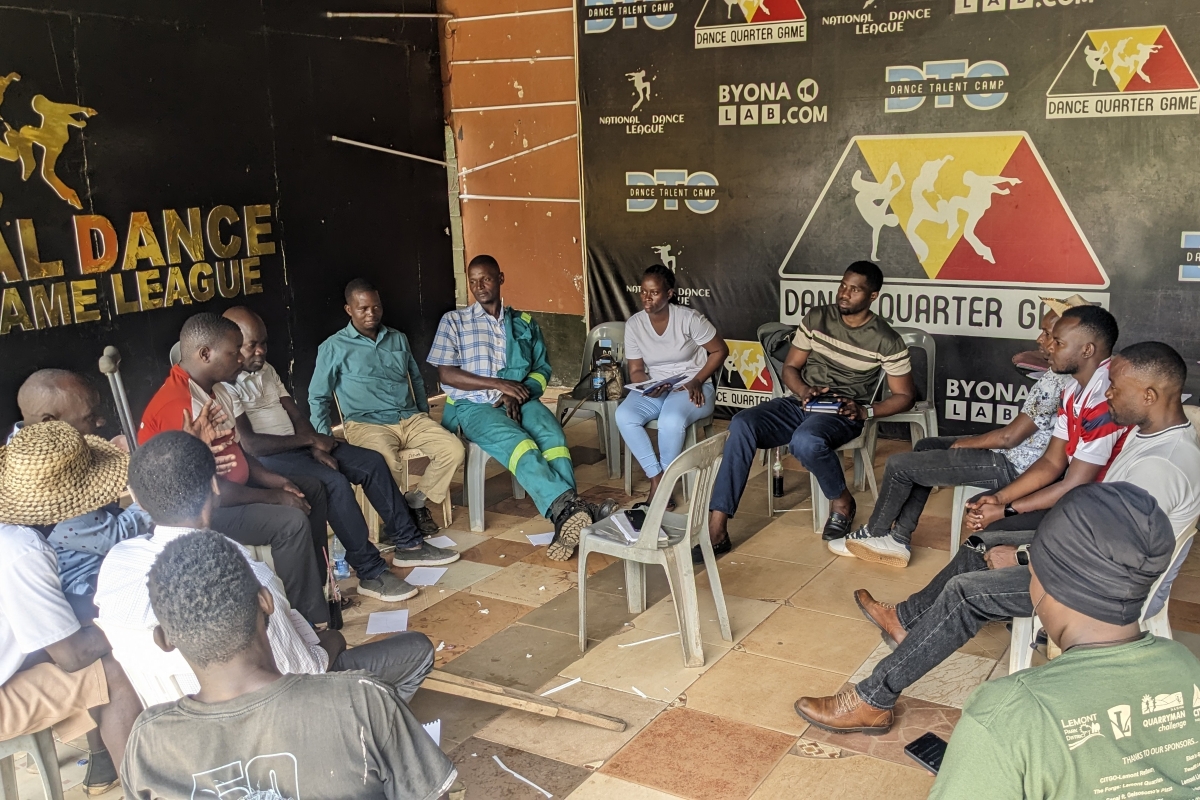
A focus group discussion held as part of the research process
Who are the important agencies?
ACTogether Uganda and the National Slum Dwellers Federation of Uganda (NSDFU) are coordinating a coalition to address these problems. They act as “navigators” for the process. Alongside providing professional support, they also focus on:
> Building trust – Bridging the communication gap between suspicious residents and formal utilities to overcome the “transparency deficit”.
> Social collateral – Leveraging organised informal settlement dwellers into community collectives to provide the social guarantees that replace individual credit history, making residents “bankable” for formal lenders.
UEDCL (the state-owned distributor) is a vital member of the coalition, ensuring technical integrity and grid stability. It has two significant contributions to make:
> Bulk service deals – The coalition aspires to negotiate bulk deals and discounted rates from UEDCL for the community collectives, rather than dealing with fragmented individual applications.
> Setting technical standards – Collaborating to institutionalise the “ready board” as a standardised technical solution for bypassing expensive housing-wiring requirements.
The Kampala Capital City Authority (KCCA) provides the critical urban planning framework that allows the initiative to move from a pilot to a city-wide system. Its role includes:
> Regulatory alignment – Ensuring electricity access is integrated with other urban systems like water and road access.
> Local approvals – Validating the residency of applicants and providing “letters of no-objection” for placing shared infrastructure in communal spaces.
The Ministry of Energy (MEMD) and UECCC provide the “vertical integration” needed to align community needs with national fiscal frameworks, focusing on:
> Formal recognition – Securing a memorandum of understanding (MoU) that recognises community cooperatives as legitimate intermediaries for the national Electricity Access Scale-up Project (EASP) and the results-based framework.
> Risk mitigation – Developing framework agreements with PFIs like Centenary Bank, where the coalition helps define how the fund acts as a collective guarantor.
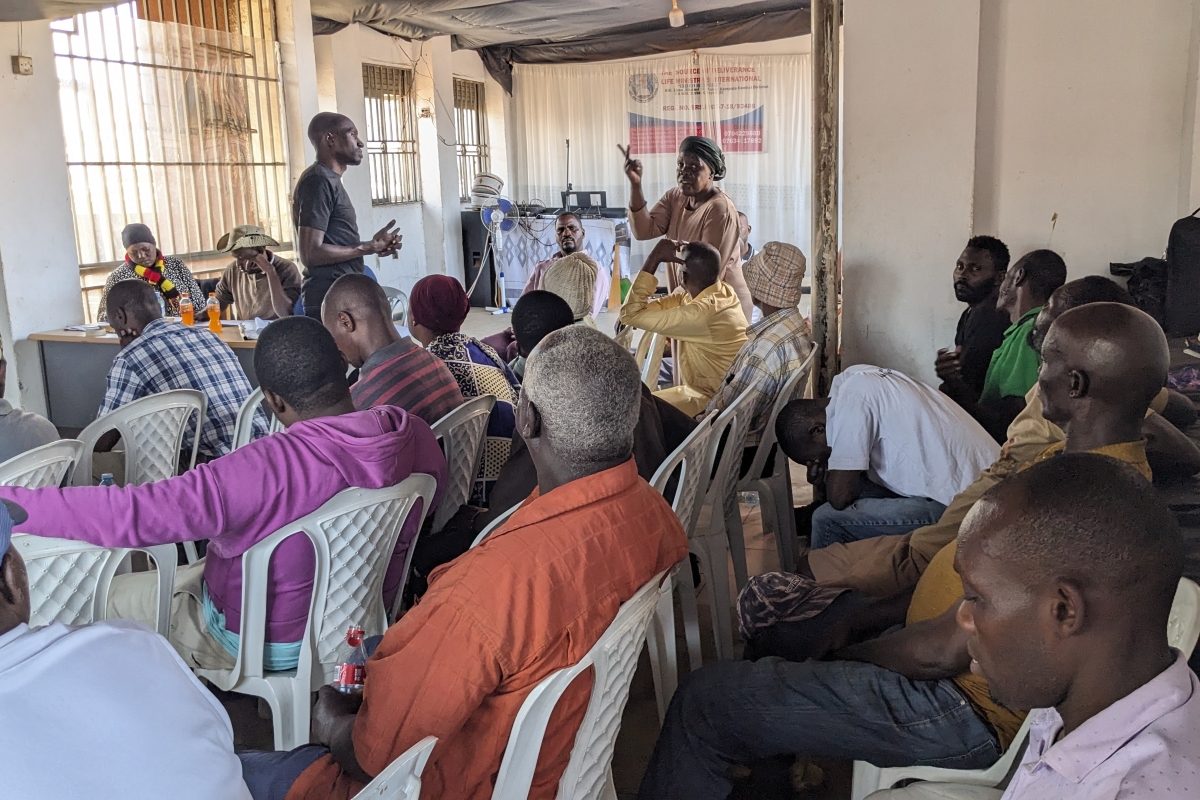
A co-creation dialogue held with community members
Improving outcomes through collaboration
Led by ACTogether and NSDFU, the coalition seeks to:
> Improve access for tenants through landlord–tenant negotiations – Standardising legal consent through agreements that protect a tenant’s investment in equipment, while securing the landlord’s permission for formal connection.
> Introduce a multi-stakeholder transparency dashboard –A low-tech, high-transparency digital interface (SMS/USSD/web/app) to track application status and eliminate “manufactured delays” and unofficial fees. With digital clarity, enabled through a real-time process tracker, the proposal seeks to strip technical gatekeepers (like surveyors) of the discretionary power they currently use to solicit informal fees.
> Challenge residents’ isolation and aggregate applicants into organised, credit-ready cooperatives – This process begins by identifying existing community associations and organising them into electricity cooperatives. Many of these associations are NSDFU women-led savings groups. These associations undergo capacity-building sessions focusing on financial literacy, leadership and the use of digital tools to foster self-reliance and trust.
The cooperatives help to bridge the complex requirements of national programmes – like UECCC and the EASP – with the lived realities of informal neighbourhoods. By enabling the utility to work with aggregated demand and bulk applications, it will be easier to challenge informal payments demanded by technical gatekeepers.
In addition to creating and capacitating cooperatives, ACTogether and NSDFU are also seeking to transition Kamyufus from “illegal actors” into certified agents to improve safety and response times. The project plans to select and certify ten to 15 experienced Kamyufus to act as official liaisons between the utility and the cooperative. This turns a “security threat” – brokers who tampered with legal meters to force residents back into illegal arrangements – into a “service asset” under a regulatory framework.
Photo credits: ACTogether Uganda
Note: This article presents the views of the authors featured and does not necessarily represent the views of the African Cities Research Consortium as a whole.
The African Cities blog is licensed under Creative Commons Attribution-NonCommercial-NoDerivatives 4.0 International (CC BY-NC-ND 4.0), which means you are welcome to repost this content as long as you provide full credit and a link to this original post.
