
More than 60% of Kampala’s 2.3 million residents reside in informal settlements. Despite the city being food-abundant, communities living in these neighbourhoods face significant barriers to accessing nutritious diets, due to economic hardship, weak governance and inadequate service delivery.
A new ACRC working paper by Gloria Seruwagi, Henry Bazira, Maria Ssematiko, Jacqueline Kobusingye, Dorcus Kabahinda and Catherine Nakidde explores the challenges that informal settlement residents face in accessing healthy food, the political and systemic issues underpinning these, and potential ways to improve health, wellbeing and nutrition in the city.
Along with healthy and nutritious food, people living in Kampala’s informal settlements also face difficulties accessing essential services like healthcare and safe water. Exacerbating this is predatory advertising for food and beverages, which pushes processed and unhealthy options that many perceive as cheaper than nutritious food.
Key findings from the team’s research in the city show that:
> Informal food traders are vital for food access and availability. But they operate in an environment marked by high taxes, corruption and licensing constraints, which contributes to elevated food prices and forces many residents to rely on cheaper, unhealthier options.
> Nutrition literacy is low among residents of informal settlements, who often prioritise basic needs like housing or healthcare over dietary quality.
> Investment in disease prevention is very low and 98% of Kampala’s health facilities are privately owned. This leaves most low-income residents with expensive, curative-focused options and little exposure to preventive care or nutritional education.
> Sanitation and waste management systems are largely dysfunctional and inadequate, and also suffer from political interference. Reliable garbage collection is lacking in many informal settlements, leading to increased risk of disease outbreaks.
> Governance challenges are central, with resource allocation shaped by political interests. This delays critical policies dedicated to improving access to healthy diets, such as the Food and Nutrition Security Bill, with other more politically driven programmes overshadowing nutrition-focused initiatives.
> Non-state actors, including CSOs, development partners and the private sector, play key roles in filling service gaps. But their efforts are often fragmented and dependent on donors, which limits greater uptake and sustainability.
The authors highlight that the challenges residents of Kampala’s informal settlements face in accessing healthy diets largely stem from the limited affordability of nutritious food, due to high costs and political interference. Weak regulatory systems have enabled unhealthy, processed foods to proliferate in the city, especially as these are marketed to vulnerable groups. Meanwhile, low nutritional literacy prevents residents from understanding the vital role that healthy diets play in preventive healthcare and productivity.
Improving health, wellbeing and nutrition outcomes in Kampala’s informal settlements will require collaborative and holistic urban reform efforts. The authors argue that enhancing regulation, policy implementation and economic opportunities is critical, while more investment in community-driven initiatives, better urban planning and equitable service delivery will help transform the lives of millions living in Kampala’s most vulnerable neighbourhoods.
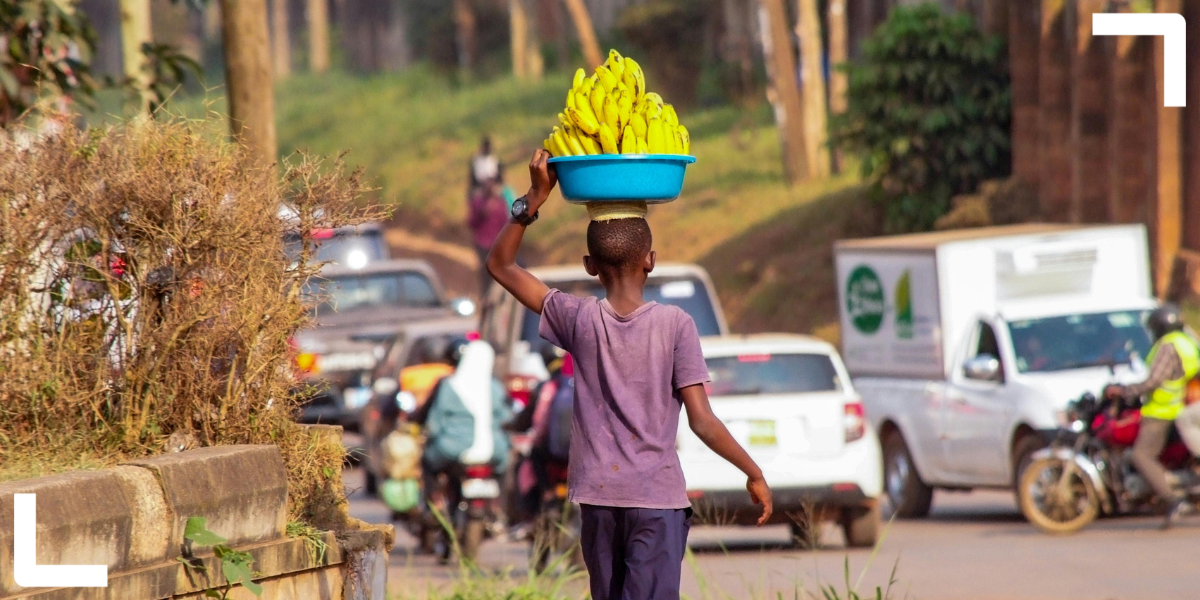
Header photo credit: Solomon Anomet / Pexels (via Canva Pro). Street vendor carrying bananas in Kampala, Uganda.
Note: This article presents the views of the authors featured and does not necessarily represent the views of the African Cities Research Consortium as a whole.
The African Cities blog is licensed under Creative Commons Attribution-NonCommercial-NoDerivatives 4.0 International (CC BY-NC-ND 4.0), which means you are welcome to repost this content as long as you provide full credit and a link to this original post.
