
The housing challenge in African cities is far from consistent. With differing historical, sociopolitical and economic contexts, cities are seeing urbanisation play out along differing trajectories – impacting issues around housing demand, supply and justice.
ACRC’s housing domain co-leads Alexandre Apsan Frediani and Ola Uduku join Diana Mitlin for a conversation around housing in African cities, drawing on insights from the seven cities studied in their report: Accra, Addis Ababa, Dar es Salaam, Freetown, Lagos, Lilongwe and Nairobi.
Highlighting key issues and observations from the city research, they discuss the importance of local government engagement, the significant challenges facing low-income residents around navigating rental markets and accessing housing finance, and the need for more sustainable construction approaches and building materials.
They emphasise the value of building reform coalitions and developing collaborative research approaches in order to influence housing policy and programming at the city level, also noting the potential that leveraging global issues such as climate change could have to drive sectoral reform.
> Read more in ACRC’s housing domain report
Alexandre Apsan Frediani is a principal researcher in the human settlements group at the International Institute for Environment and Development (IIED) and co-lead of the ACRC housing domain.
Ola Uduku is head of school at the Liverpool School of Architecture and co-lead of the ACRC housing domain.
Diana Mitlin is professor of global urbanism at The University of Manchester’s Global Development Institute and CEO of ACRC.
Transcript
The full podcast transcript is available below.
Read now
Intro Welcome to the African Cities podcast.
Diana Mitlin So thank you, Ola and Alex, for coming up to Manchester to do the podcast. I think it would be great if we have one-sentence introductions, so that people listening know who you are. My name is Diana Mitlin. I’m interviewing you about housing – as you know, a topic very dear to my heart and central to my work. And I’m CEO of the African Cities Research Consortium. Ola, over to you.
Ola Uduku Hi, my name’s Professor Ola Uduku and I’m head of School of Architecture at the University of Liverpool and I’m also co-director of the housing domain research group with my colleague.
Alexandre Apsan Frediani My name is Alexandre Apsan Frediani. I’m a principal researcher at the International Institute for Environment and Development, where I co-lead IIED’s work on housing justice.
Diana Mitlin So thanks so much, Alex and Ola. So I think it would be good if you just start perhaps by very briefly describing the housing domain work and the seven cities in which you were active in the foundation phase. Who would like to start off with that?
Ola Uduku I’m happy to take the lead. The housing domain is one of the constituent domains of the African Cities Research Consortium work. But we were tasked particularly with looking at housing and indeed how the coalitions around housing feed into developments, particularly in African cities and the effects of housing, so to speak – both the key areas and also crosscutting themes. What we looked at particularly was the housing situation in seven cities that we were involved in. And I think maybe if we take a city each we can discuss what we found out from each of the cities. So possibly starting from Freetown. Alex?
Alexandre Apsan Frediani Great. Yeah, I think in each city different priority issues start emerging as key aspects to the engagement around housing. I think in Freetown, one very important dominant contextual issue is that the housing policy framework hasn’t been fully developed as a national framework for housing. And it’s an effort that the national government has been trying to get off the ground for a long time, but it just hasn’t been able to make progress on it. And in the ground in Freetown we’ve seen continuous housing deprivations perpetuated over time – a context not only shaped by increasing population growth or migration flows from outside areas of Freetown towards Freetown, but to do a lot with how the housing system is reproducing itself in the context of Freetown – not necessarily leading to mass evictions, like in other contexts, but affecting a lot people living, especially in the context of rental housing that end up facing the threat of displacement, due to their ability to pay for increasing costs of living and rental prices and end up seeing themselves moving from one place to another and actually experiencing multiple forms of dispossession.
Diana Mitlin Thank you, Alex. It was really great also to see how the analysis coming out of the housing domain work in Freetown helped to catalyse moving forward on the housing policy. That was fantastic to see and thanks to you and your colleagues for that. Which city should we move to next?
Ola Uduku Well, I guess I should do Lagos, which I probably have a better insight on, although I think some of the issues there also affect Accra. But Lagos is probably the most populous city that we did look at in terms of housing. Yes it is. And it had multiple issues. There are issues of displacement due to mass evictions. There are also issues around being able to acquire land in the first place because of the complex land ownership issues that exist around Lagos and Accra, very much to do with historic ownership and the fact that it is very difficult for the poor to really get any access to land to build. And then also there’s the issue of Lagos being, as we called it, a hot city – the cost of rentals are incredibly high. So in the research we found out that people actually sublet rooms and bed spaces. So it’s not even the house. You can actually sublet rooms just to be able to work and then go back to your village, which could be anywhere in coastal West Africa. So we had instances of migrants moving to Cotonou at the weekends because it was cheaper for them to live at quote-unquote “home”, but then just come into Lagos for work. In terms of other things too, the grip of the building materials providers was particularly clear there – those large cartels of economic providers of things like cement and so on, and that very much determined the cost of the build or buildings. There’s very little use of sustainable materials and the ways in which cities of the poor neighbourhoods reproduce themselves remains very much the same. They are much more informal settlements and the informality is both because the cost of full building materials are expensive, but also the fact that they’re always under the threat of eviction. So what we were able to look at in terms of our findings was ways in which we might look at building better coalitions with those involved in providing finance for buildings. So there was one example of a community-focused housing estate, where the local community, who were, fair enough, a bit more affluent than the very poor, were able to work together to be able to produce a housing estate that had some sustainability features.
Diana Mitlin Great to have a positive example in a city which sometimes is seen as characterising housing inequalities. It’s always shocking to hear about the practice of hot bedding where people just rent space to sleep. Which city would you next like to move to?
Alexandre Apsan Frediani Maybe Accra, which you started to touch into it. Maybe one of the topics I can start off, but also we’ll pick it up. Ola, I think one of the things that the local research partners really emphasised was this issue of the relationship with local governments. I think in Accra this was particularly relevant. I think it helped a lot to illustrate this topic across the different cities, actually. The prominence of the analysis of the potential that local governments could play in protecting and recognising and fulfilling the right to adequate housing, but at the same time the difficulties that local governments are facing, due to a decentralisation process that doesn’t really create the capabilities for local governments to fulfil this promise and this role. And as a consequence, often local governments are kind of retreating and saying that “well housing is not our business, it’s something for national governments to deal with”. And I think the researchers were coming up with a series of provocations to bring local governments into the conversation by attaching the issue of housing to other very important priorities in the city, such as access to livelihood opportunities and making the important connection between housing and livelihoods – that you need to live in proximity to livelihood opportunities. And, as we know, the local partners in Accra have been for many years involved in struggles to retain markets, informal markets, in close proximity to informal settlements where many of the urban poor live, and actually started to contest the trends of trying to displace livelihood opportunities as a way of displacing people from well-located areas of the city. And in that type of contestation, local governments are extremely important actors to try to contest or to try to revert some of those processes to make sure that housing rights are secured in ways that you can support also the livelihoods of low-income groups in the city.
Diana Mitlin Thank you. A real tension, I think, that you’re illustrating in policy frameworks, with local government being so influential because of zoning, regulation and standards, but at the same time national government being important, obviously with the overall policy framework, but often in terms of financing infrastructure improvements that are so critical to shelter, but also housing programmes themselves. So absolutely an opportunity for collaboration, or if there’s no collaboration, really something of a vacuum. Ola, did you want to add on the experience in Accra?
Ola Uduku I think the only other thing was particularly one of the case studies which was Korle Bu, you have this whole issue about indeed the whole sustainability issue. It’s very close to a very swampy area. So you’re really looking at I would say national issues around being able to think about flooding and so on, which again shows that tension because I could see the local government saying, “well, this is a national problem”, whereas the national government would rather not think about it. So this is to do with the location of some cities, particularly those near the coast, that there is a real problem of coastal erosion and constant flooding and so on. So you have poorer communities in areas that are already under stress in sustainable issues, in sustainable terms and that need to be able to think about the crosscutting issues around climate and sustainability seriously, in terms of how one is able to support those communities and if you’re shifting them, where are you shifting them to? So I think that’s very important too.
Diana Mitlin Yeah, thank you for highlighting climate change, which as we all know is critical to addressing in the context of African cities. Which city shall we go to next?
Alexandre Apsan Frediani I think you just touched on the issue of sustainability and building materials and that brings Lilongwe to the forefront because I think, especially in your visit to Lilongwe, that became such an important topic in terms of the understanding that for low-income groups, access to affordable, resilient building materials is so critical, given the prominence of incremental housing practices in many of the sub-Saharan African cities context. And at the same time, we see the sustainability discourse applying the sustainability lens to this discussion by purely focusing on technologies, of development of new forms of building local materials, as if it’s gonna be the silver bullet around this particular topic. But what we learned in Lilongwe is that actually it’s a much more complex picture than that, that understanding the full spectrum of the value chain of building materials that go to housing in informal settlements, it is very important to find entry points for reform that can make these value chains more robust, that can protect local livelihoods and it can reduce prices of building materials at informal settlements, while at the same time strengthening local entrepreneurship activities that can make the markets, or the context within which the building materials are produced, distributed, more robust and more inclusive overall. But maybe you can say more about that.
Ola Uduku Yeah, about the materials particularly, because in some ways I would say Malawi it seems has been a test bed for some interesting innovations. So they have a really good developed use of local cookers using sustainable ways of cooking so as not to deplete the charcoal cooking methods which are the normal way that people cook in informal settlement. So there has been some development of local materials but they are very much tests. The standard housing estate – and the government has been fairly paternalistic, in the sense there has been significant development of I guess housing for the middle-income or maybe slightly upper lower-income – but this happens when there are elections. So there’s a direct link to the politics and when housing is invested in at national and local government level. So housing has been invested in, but not enough and it seems to stop and start in relation to the times at which political activity is taking place. And now that formal housing does use standard international value chains, which in Malawi’s case is particularly problematic because everything is coming into Lilongwe from outwith Malawi. So you have a lot of imported materials from South Africa, but even as far away as China, and the value chains around that mean that there is very little control in terms of what the costs are, because the costs are being determined by international markets. And there’s been less development of changing those materials for local materials that would obviously reduce the costs and also involve local Malawians more in the process and the production. So the standardised design of the house that most Malawians are looking at, even at a lower cost level in site and services, is still based on building materials that have a value chain that works well outside of the Malawian cost system. It costs as much as international costs are for cement and so on. And these links are, yeah, amazingly international. But the further away you are from the supplier, the more it costs. And in the case of Malawi, it’s had successive suppliers really determining those markets. So it’s something that needs a lot more integration, in terms of some of the good work that has happened in Malawi around some areas like cooking materials and so on, really needs to now move into the ways in which future production of housing and involvement of locals in that housing production takes place. A positive again is that, unlike some of the faster, rapidly urbanising cities, Lilongwe as a city does have the space to develop, but it’s been stunted by these stops and starts, I’d say, in terms of growth and growth plans.
Diana Mitlin I think you’ve really highlighted nicely the work you did on value chains, which I really appreciated in the domain report. I thought that was fantastic. It’s a really good example of how essential it is to have both a political lens and a systems lens if we are to understand the opportunities and the challenges that exist in African cities. And you’ve also highlighted the significance of housing to the politics of urban areas. Housing programmes are incredibly attractive for politicians to illustrate, but in fact in most contexts they proved very hard to deliver at scale, just because it is so expensive. So real tensions in terms of what governments offer to urban residents. I kind of feel that takes us to Addis. Who would like to introduce the work from Addis Ababa?
Alexandre Apsan Frediani Do you want to have a go?
Ola Uduku I think if you start.
Alexandre Apsan Frediani Okay. Addis is an incredible case. When we saw that Addis partners wanted to engage with the issue of housing, for us, it was fantastic, right? We have an emblematic housing programme by the national government that have had very mixed reviews in terms of its impact on the ground. And we thought what a great possibility to really unpack that into more detail to see what comes up in terms of issues of inclusion, in terms of issues of sustainability and in terms of the right to adequate housing more generally. And what we started seeing from the report from our partners is the amount of exclusion that the current programme have perpetuated, where the actual end result is housing units that are not affordable for the low-income groups, and there are also housing units that have been delivered unfinished and many of the costs have been passed to those that have been accessing the housing units themselves. So that combination led to many people not being able to afford the repayment rates and therefore moving out from any of these units. So this characterisation of the current initiative, of what is in a way a symbol of possibilities of how national governments can promote housing production actually presents a much more complex picture and one that that puts to the forefront the issue of needing to diversify housing options or the way within which governments can engage with the issue of housing. And therefore we were also given examples of other much more granular small-scale initiatives in Addis where communities have been receiving subsidies themselves to generate incremental housing development, which the partners have identified as much more inspiring in terms of possibilities of other ways of engaging on housing production.
Diana Mitlin Did you want to add on Addis Ababa?
Ola Uduku Just a little. I think it was a really interesting case because to me it was totally different from the West African case. So Addis had come from a much more state-controlled system and it just shows the tensions that if you move from one system to another, it doesn’t mean that it’s going to be all roses at the end. And I think that tension between having a situation where, whatever it was 30, 40 years this would not have been the case and allowing almost market controls to come into the system has shown the tensions that exist, both in terms of what is possible and just the sheer cost again. So the issue again about materials and how you’re able to do that has shown that in the points where communities were able to do that, this collaborative approach to delivering housing seems to have been more successful. But again, back to the fact that the actors at the top need to work with different agents throughout the housing process if we’re going to get the best. So even if there’s a tabula rasa, it doesn’t mean that it doesn’t need much more coordination and collaboration to be more successful, which I think Addis in this case was a good example of.
Diana Mitlin And I think we recognise, or anyone who even reads the newspapers recognises, that housing is really difficult for governments to intervene successfully in, in both Europe, North America as well as Africa, Asia, Latin America. So really challenging. At the same time, we also recognise that millions, hundreds of millions of people deliver housing to themselves through this incremental housing process that you’ve described. And whilst it definitely can be improved on, in many cases it does provide adequate quality. So a real paradox there. We have two cities to go, Dar es Salaam and Nairobi. Which one do you think we should introduce next?
Ola Uduku Let’s do Nairobi because think this is a city that I was involved in quite a lot, in terms of working with the researcher there, who did a really good interesting analysis. This was a slightly different analysis in the sense that it was very much to do with looking at land markets and the ways in which housing had developed in, I’d say, more the middle-class and lower-middle-class regions than necessarily the poorer and more informal settlements. But in itself I think it did show again this issue around how the land value determined who was being housed where and the tensions around being able to let that integrate into a wider development of the city as a place where everybody would have equal access to. Because effectively, as might be expected I guess, in a city like Nairobi, the areas that were of the highest value had the highest costs in terms of where people built and obviously the rentals involved with those. Also it was one of the cities that showed more this idea about densification, which is something that is I guess mainly the cities south of Limpopo, South Africa and so on have been more involved in. But cities that we had looked at were really much more I guess less dense and more spread out. Whereas in Nairobi or central Nairobi, the idea about I guess tenements, or we call them apartments and flats here, have become quite the norm, certainly over the last two decades or more. So again, how these flats also have value, rental value, which again relates to where they are and who’s actually being accommodated in them. There was less of a discussion about the materials, but essentially from what we could see, the materials being used again were standardised international materials throughout the world, so very much the use of concrete frames and so on, which in the case of Nairobi not so bad, but you do have issues around building regulations and so on, which again is something that in terms of I think looking forward, making sure that these are adhered to because there have been problems with building collapse across Africa. Nairobi would be a place where this could happen, but so far there hasn’t been evidence that it has done. But it is a city that was working more towards densification, I would say in the central areas, but the research did again, as we might expect, show that the richer were able to get those rentals or rent property closer to where economic activity was and the poorer townships were further away and less serviced, although sometimes still densified. I don’t know. Do you want to add anything?
Alexandre Apsan Frediani I think exactly, I think two points I would just reinforce from what you just said, Ola. One is this issue of the interdependency of the land and property markets and how one relates to another. So development in one type of development sector affects others and that was very interesting to think about these interdependencies of these different housing and land markets. Again, the land aspect came very strong in the Nairobi case. And the second point around the enforcement of building regulations, especially in the context of densification and the role of local government and trying to infuse or promote the creation of those standards and the enforcement of them and the lack of capabilities in the broader environment of the construction sector to be able to really get a handle into those processes, which are generating, as Ola was mentioning, a lot of vulnerabilities and risks for many tenants that are living in the high-rise buildings in very low-income areas of the city.
Diana Mitlin I think that the situation in Nairobi, as picked up by your work, highlights really the importance of rental markets. We’ve seen in the context of Nairobi, the longstanding development now of rental options for lower-middle-income households with pluses and challenges around that. And at the same time, you highlighted the importance of densification. That of course has wider implications. Smaller plots mean it’s cheaper to provide infrastructure. It becomes possible to improve more people’s lives for the same unit of money. And at the same time, if we’re thinking about the challenges of climate, clearly we want to reduce travel around the urban space. We want to avoid urban sprawl. Now, there are many reasons why Nairobi has developed that way. And clearly climate has not been a consideration to date, but it does provide us with examples and illustrations and understandings about what that means. Let’s just introduce our final city of Dar es Salaam, and then we’ll look a little bit more at key policy entry points, policy and programming entry points. Over to you, Alex.
Alexandre Apsan Frediani Dar, again it’s a city with a long history of mobilisation around housing issues and where we had researchers that have been embedded within those networks that have been calling for many years for the development of housing policy, involved in housing policy development themselves, as well as supporting grassroots groups in informal settlements, pursuing informal settlement upgrading. So the research was quite focused on a bit of a systematisation of those efforts and some of the debates and the mobilisations, the sticking points that have been prioritised by some of those groups on the ground. One thing I would like to maybe to identify here or to highlight has been this relationship between banks and those living in poor housing in informal settlement conditions and the emphasis in Dar es Salaam to try to engage with mortgage providers to be able to increase their trust, to be able to provide the loans at lower rates for those living in low-income groups, which has been often a huge bottleneck, as we know, with very high interest rates, but many times not even a possibility, where banks would not accept the proposals and the requests from those living in informal settlements. So the efforts of putting that issue into the equation and thinking of collaborative ways that does not add new risks to those living in informal settlements and where the local governments and national government actors come into the conversation for facilitating this dialogue, I think has been very interesting. And on top of that, interesting also initiatives between city authority and private developers in requesting a percentage of certain private development that needs to go into more affordable housing options, at least some sort of openings for some form of public-private partnership that could lead to the development of housing for social interests, which as we know, of course, there is still many challenges, challenges around even the definition of what is affordability, which I know is a very important topic that has been underpinning a lot of our work and international debates. But nevertheless, I think some arrangement that tries to bring government back into a more driving seat as a regulatory or as a promoter for housing options, I think that has been encouraging and interesting to see.
Ola Uduku Yeah. I think absolutely, it did seem to be a more developed, I guess, social housing market than the other cities we’d looked at, in the sense that I think there was more trust that the government was doing things. It was just the cost of doing things and that challenge about being able to indeed guarantee loans and so on that was a problem. So the idea about there being I guess government-provided housing was not totally new, but the way in which coalitions could make it much more available and affordable to everybody was something that I think particularly was highlighted in the Addis case. And I just wonder whether that’s because of all the cities I was just reflecting, it’s the only one that had been usurped by Dodoma, which is now allegedly the capital. So there’s a bit less pressure maybe, but I would say that Dar remains a primate city still in Tanzania. So I don’t think it’s so much that. But I think there’s an agreement that the government does need to be able to provide something, but it’s how that works in reality and what that cost is when it goes down to the informal dwellers and those who are finding it difficult to get into the market. But otherwise the value chain issue is still there, but I’d say less acute than in the case of say Lilongwe, for example.
Diana Mitlin So I think what you’ve highlighted really is the importance of thinking about housing as a parallel track, in the sense of there’s housing, the physical construction, but equally important is finance for housing, housing finance and the impossibility of not having access to credit if you want to develop your housing. To save and build your house incrementally is hugely challenging and really not cost-effective. And then of course the Dar es Salaam example brings up the regularisation programme, the land titling programme, which the government has had a long commitment to, and where we can really see how that plays out over time. So I’d like to, now we’ve introduced all seven of the cities, I think it will be good to turn to some of the insights that you have around what can be done. You’ve already mentioned a diversity of approaches, approaches to policies and approaches to programming. So maybe we should start by your reflections on what do you see as key policy and programming entry points for governments that are keen to do more and coalitions that are also keen to take up the housing challenge?
Ola Uduku Silence. Oh, I think the policy has to be that, okay, there’s the conceptualisation from the United Nations that housing is a right and so on. But it’s how that actually is actualised. So I think there’s been a lot of indeed passing the buck on. So I think national governments do need to be able to think about housing and think about how one actually invests in ways in which housing, particularly for the very poor, is a priority. And I think this is very difficult in today’s situations socioeconomically and globally. But I think what’s come out , insights I would say, is that some of the cities that have done better are cities where the government has at least had a hand or a say in looking at how housing is produced or spread out. So it’s less to do with “we leave it to others to sort out”. So I think there’s that need for at top level, so to speak, government priorities and government focus to have housing as one of the key issues that drives development.
Alexandre Apsan Frediani Yeah, I agree Ola. And I think the overall narrative that we heard from the researchers that they were hearing from different policymakers, is that the government cannot do anything about this. It’s such a big problem. It’s too complicated, it’s too complex. Even if we did wish to protect the right to adequate housing, as stated by the United Nations, we just lack the capacities to do it. And therefore, the only thing that is left for us is to support the private sector, to drive foreign direct investment into the sector, to be able to financialise housing, because that is how we’re gonna be able to get investments into housing. But then in reality, what we start seeing is that the results from the research, and of course of many other initiatives, is that we see that the problem is caused by political choices. It’s not necessarily just for the lack of capabilities or there are so many different ways within which government efforts can advance the right to adequate housing, but they just haven’t been prioritised on the ground. We see globally, for example, that public investment into housing on average is less than 0.1% of countries’ GDP. So we are really seeing that the amount of investment, public investment that goes into housing is very low. If we look at the multilateral and bilateral investments into housing, and it is incredible how little there is and how unequal that is. If we’re trying to divide the multilateral and bilateral investments per poor household in Europe and in Africa, European poor households would receive 22 times more than an African household. So what we are seeing is that multilateral and bilateral investments are mostly going to European context, not where there is the most need and where there is the most, a bigger scale of housing deprivations. So we really see that those are a result of political choices, global choices, local choices, national choices. So the quick question for us throughout the work is how to support coalitions that are trying to penetrate those political systems and trying to effect change, so that housing can be prioritised.
Ola Uduku And from a less marketised point of view. So effectively, as you’re saying, the political choices are around or the politico-economic choices are around a much capitalised system where certain units are the things we’re looking at. Whereas what we were finding in, if you like, the good cases, are coalitions work together to look at areas of incremental housing and ways in which there are coalitions and collaborations around providing more than the unit and more to do with developing groups of whatever it is, housing with incremental possibilities and so on. So the models that are being used at, I would say, national level are very skewed towards, I guess for lack of a better word, neoliberal ideas about property provision.
Diana Mitlin I think the two things you’ve really highlighted for me is one is the significance of incremental development. I think that governments sometimes resist that because they don’t see it as addressing their need to be politically popular. It’s not seen as sufficiently modern, modern modernism. And it’s their concerns about quality and also sometimes about the additional cost of building incrementally, although we know that it’s the way to go if you want to have scale, even if it costs a little bit more in terms of construction because you may have to redo some things. It’s much cheaper in terms of housing finance because you don’t have large loans with interest charges for long periods. So the benefits of incrementalism and the sense among governments that it’s not politically popular, and at the same time the challenges of going to scale with investments. So, Alex, you highlighted the reluctance of multilateral and bilateral agencies to be involved. Of course, historically they have been involved, but generally they felt that their funding was used for relatively expensive developments, which only addressed a very small proportion of those in need and didn’t generate the income required to produce more housing. So they were a little bit stuck. How do we go now? There were sites and services programmes, of course, but I think they may be not popular because of this association with incrementalism. I mean, does that represent the picture that you observed?
Ola Uduku I think to an extent. So I think also back to the politics, it’s the look as well. I mean, you’re in power for four, three, four, five years. And it’s difficult in terms of incremental investment and so on to be able to say at the end of your term, “this is what I’ve done”. So I guess, yeah, site and services has had, if you like, a bad look probably since the 70s or whenever it started. And it’s that I think conceptualising longer term. So we’re back to this thing about, you have a policy that is only as long as when the government’s in place and there’s always that looking at what has been delivered. And, yes, it looks better if you’ve got this housing estate, even if really we know that it’s not making that much of a difference. It costs a lot. And indeed, particularly again the citation will be places like Lagos and so on, where there was a significant amount of World Bank housing, but really it got displaced. So the low- income housing was bought by middle-income people who then sublet it out. So the idea that it would trickle down never ever happened. So, you know, you’ve got that happening and so I think it’s both the costs and then I think the reluctance of markets to indeed underwrite loans to people who they feel probably might not pay back the loan and so on. So they’d rather I think keep safe, which is I would say again the kind of westernised idea about indeed the housing estate and certain people who they feel they can guarantee the loans to or who actually just buy outright or whatever. So it’s not really going to where the need is. Which is interesting because I think when we look at Latin America, there’s a different dynamic going on. So we’ve still got lots of informal settlements and very little recognition of incremental design and upgrading and so on being something that is supported, which it should be.
Alexandre Apsan Frediani I agree. And I look at this picture that became I think increasingly more complex and interesting as we moved forward. Because of the nature of the African Cities Research Consortium research that was putting at the forefront the political settlement question, where is power and how can power be leveraged to bring about progressive change? And thinking that through the formation of urban coalitions of advancing that, we worked closely with our partners to try to think what are those cracks or what are those topics, what are those let’s say what we call friendly enemies? You know, those things that we agree are important. We might have very different ideas of what they mean, but we agree they’re important for us to talk about. And through our research, I think we identified maybe three friendly enemies around the housing question. One of them being the issue of governance, coordination among different public sectors, and putting at the forefront the role of local governments. Definitely a friendly enemy that everybody wanted to talk about. Local governments because they believe they need more capacities, more capabilities to deal with this issue, national governments because they are looking for ways of localising and delegating things to be done, and local actors because local governments are the most immediate place of representation, that they can actually have very direct mechanisms of advocating for that. Second topic was around the rental aspect, the rental question being at the forefront.
Diana Mitlin So I’m keen that we explore rental, but just before we leave governance, which city do you think you observed a coalition that was able to engage local government with the success? Did you observe that in any of the seven cities?
Ola Uduku I would have thought probably Dar, to an extent. I felt that there was something there, there was a structure.
Alexandre Apsan Frediani Yeah, I think you see the context of Freetown is a difficult one to say it was a success engagement of local government. It was a complex engagement of multi-level governance, for sure, and the tensions between local, regional and national government has played a big role in the possibilities to advance the housing question. Nevertheless, because of those tensions, there were very interesting initiatives. The Transform Freetown agenda has been able to put at least discursively the point of upgrading into the context of Freetown, with some punctual experiences of upgrading and the mayor of Freetown now in her second mandate, has been very much bringing the question of informality of housing as a very important agenda for the development of Freetown. At least qualifying the future of Freetown from that perspective has been in a more discursive level very important to legitimate the fact that informal settlements are residents of Freetown and that they need to engage into policy options that work for them. Not to say that that has been all great outcomes, but I think that has been an important advancement. I think Accra has been another place, probably Diana, you would know more in detail the realities in Accra, but it seems that there was a lot of engagement with alliances around coalitions to affect national local governments and the kind of decentralisation efforts in Ghana. What do you think?
Diana Mitlin So I think it goes back to a theme we’ve recognised as important. So local government recognises that they need to address the needs, if they can, of people living in informal settlements. That is absolutely, I would agree with you, there’s a lot of pressure for them to do that. Groups are organised, both professional groups and also grassroots groups. So I think that’s in place. The emphasis is probably more on discussing issues around secure tenure and access to basic services than it is on providing the construction element. So I think that it’s a little bit of a halfway house. All three cities, I think, are good examples of where you have people who are willing to apply themselves to the problem. I think something one of you mentioned earlier about like you have to focus on it. You may not have the answers, but you can’t say! It’s too difficult, we need to ignore this”. You need to look at learning, you need to look at successes, you need to apply yourself. And if governments local and national apply themselves, I think they can begin to make progress.
Alexandre Apsan Frediani I think just one example of some developments, just to highlight the possibilities, has been the climate action plans in the case of Sierra Leone and the climate agenda that I think in the case of Sierra Leone has been so far tactically used productively to recognise the needs of informal settlement dwellers to have improvements to become more resilient to climate shocks and stresses. And I think that’s not everywhere, as we know, that sometimes climate action plans can lead to displacements on the name of risk and that is a true risk. But in places it has opened up possibilities to recognise I think, as you’re mentioning, at least the need to bring improvements to those localities.
Diana Mitlin Let’s go to the rental issue because I think for me that was also a very important contribution that comes out of your domain paper. This strong emphasis on the need to act to improve rental markets.
Ola Uduku Yeah. Well, I think again, the whole idea of rent controls was something that came across, particularly I think across all West African cities. I’m not sure about Sierra Leone, but certainly Accra and Lagos. And in a way that did have government interest, although the laws and controls were historic. So there was an acknowledgement that rentals were an issue, but then again it was one of these too difficult or too political to touch. So the idea that you would have to pay two months’, two years’ rent in advance would be fine if you’re upper middle class or middle class and you have a job where you can do that. But the reality was much more frightening on the ground and it was so granular, this whole thing about a bed that you could rent a bed, I think that shocked a lot of us. So even if we were aware that rentals were an issue, we hadn’t realised how hot an issue it was in certain areas. Because literally you cannot in certain parts of urban Accra and so on find anywhere unless you’re able to engage in these informal practices around renting per square metre, literally as it comes to it. But this was something that there was a framework for, so it was a case of beginning to speak to or finding out whether the coalitions were able to influence – I think it is at national level – these issues around rent control, but this could be something that working with local governments one could have a better feel for. And the examples I would give is, certainly in areas like education – often education becomes tied to your paying your equivalent of council tax. So you want your kid to go to the basic primary school, you need to produce your council tax certificate. So there’s something around tying it to things that people would want to do, and therefore being able to get some kind of buy-in towards getting local governments more involved in having some of the finances required and organisational structures to deliver or be more involved in being able to administer issues around rent control, which at the moment is a kind of law at national level but doesn’t trickle down.
Diana Mitlin So if I’m right, the issue about rent control is primarily about whether you have to make these advanced payments. So a year’s rent up front, two years’ rent up front, which I think even upper-middle-income households would be potentially a bit shocked at having to mobilise that much capital.
Alexandre Apsan Frediani Yeah, I think it’s that, it’s also to do with how much you can increase your rent prices in the end of your contract.
Ola Uduku Well there’s that too, yes. And at the end of it, it just goes up.
Alexandre Apsan Frediani When you have a contract and when this increase doesn’t just come randomly in the end of the month because you are installing a new tap, or because you as a structure owner want to make improvements to your housing qualities. Underpinning something came up very interesting for me in this project was because of the political settlement angle, some of the discussions that we were having brought up the question, why the rental issue or tenants’ rights issues haven’t been higher in the political agenda. Yes, as you say Diana, it cuts across people of different classes. It would be a natural point of discussion. There are provisions in many countries of tenants committee to deal with tenant disputes that are connecting with the judicial systems but trying to deal with it in more civil spaces and so there are possibilities in terms of frameworks in different countries of arrangements that are there but never put into practice, never operationalised. So why, what is stopping for coalitions to be built around that? And one of the things that came up is that rental issues is mostly an urban concern. That is a concern of the urban citizenry. And as many of politicians’ voters traditionally has been in rural areas, that rental issues might not have been a hot topic to get votes.
Ola Uduku It’s not a vote buyer.
Alexandre Apsan Frediani Yeah. But given the transitions that we are seeing, of urban transition, that inevitably the rental issue will and is becoming a political issue, for votes, for election processes. And therefore we see this increasing visibility and suddenly, the depth of it, the scale of the issue around rents in cities that I think it’s really opening up a whole bag of worms and how to deal with it. I think it’s something that politicians will have to start grappling and coming up with concrete options because they also put at the core is a question of how much can a state intervene in the housing markets. And that has been a question dominating housing policy in every context that we’re working on. And here the issue of rent controls, to what extent putting rent controls would take away the stimulations from the market, would discourage it from investments. So there’s a lot of assumptions and sometimes myths associated to the relationship between state and rental markets that I think will be at the forefront of many conversations in the policy sphere.
Ola Uduku Yeah.
Diana Mitlin Interesting. I think definitely one to watch. And also I think as tenants unions begin to form, we can also anticipate some things changing. I’m keen because of time to move on to I know one of the third entry points that you’re keen to highlight, on the building materials and construction sector.
Ola Uduku Well, yes, I think again, now we’re into the architecture of building. The building market, I would say in sub-Saharan Africa is still in the grip of, I guess, whatever, 1980s, 90s construction across the world. The dependency remains around materials such as cement, imported things like aluminium for windows and so on, which in today’s discussion around sustainability and materials really just cannot continue. But I think the larger providers, so this is the issue about actors and market actors such as Dangote in Nigeria, who apparently supplies not just West Africa but his reaches in terms of his cement goes all the way to South Africa. So you’ve got large cartels of financiers who are invested in the way in which construction takes place now. So there’s an issue about working with such suppliers to think about what are more sustainable materials anyway. But then at a more granular level, we do know that there are construction techniques that exist, particularly if we’re talking about slightly more informal settlements, which maybe last ten years and then you redesign them and so on, because we’re talking about incrementality anyway. So you’ve got the materials that are I would say still stuck in the high period or whatever of the 80s and 90s and building regulations that reinforce that. So there’s no real incentive to get large providers of materials, or indeed large providers of housing and so on, to change the way in which construction gets built. And when you look at those value chains, however, it’s clear that it’s not sustainable in the long run. So there’s a need to really look at what local materials might look like and indeed how these supply chains, at least even if the large suppliers therefore all decide to move to, for example, bamboo, there’s enough for local suppliers to get involved in the markets and the chains. So it’s a many-layered issue in terms of both the way regulation happens in the building construction industries, and then also the kind of materials that are being supplied. And I guess conceptually as well, what people think about. So we’re back to this issue about incremental not being wonderful, people are looking at that house and garden or whatever it is. So there are a series of things which I would say perpetuate the market as it exists, which if we’re looking at both sustainability and ways in which – well, circularity – the ways in which the building industry is much more attentive to being sustainable and involving those different actors, particularly at a lower level, it needs to start thinking about restructuring and reframing itself.
Diana Mitlin So a real example of how urban reform has to engage with the materiality of cities, this very physical element, whilst at the same time navigating a route through the political economy of urban development. Did you see any particular good examples of efforts to intervene in the supply chain? Or do you think this is still work to come?
Ola Uduku I mean again I think the housing estate we talked about in the podcast in Lagos, where it was a small communal housing estate. It was more middle class, I have to say than informal. But, as a group, they were able to look at their materials. I don’t think they actually deviated altogether from cement and so on, but they looked at how their housing could be designed to be more environmentally friendly, they could use cross-ventilation, less emphasis on expensive electricity, they had solar panels and they’re able to work together and therefore reduce the prices, in terms of what it would have been for them to build individually. So they’re working in a collective and collaborative manner and they’re also able to talk to local government to make sure that I think something around the way in which the power networks and so on allowed them to have their electricity off-grid and that kind of thing. Because the other bit is infrastructure. There’s a disincentive in a lot of countries to actually – well, a bit like here too. They’d rather people were on the grid, whereas it’s cheaper not to be, and so on. So those were the kind of examples, but very little in terms of informal housing using, I would say, different materials and techniques. More tests, examples – I think in Addis, the architecture school there has looked at building materials and new ways of construction, but it’s not gone out of the tests and into the community, unlike the cookers in Malawi. So it’s possible with the right …
Alexandre Apsan Frediani Yeah, in my view I think that the key element here is around increasing the bargaining power of those groups that have been absorbing all the risks, all the burdens of this very unjust value chain of building materials, as Ola was just describing, where the corrugated iron sheets are being used for housing and where it’s worse in terms of responding to climate changes and heat and rain, in some cases even asbestos being used still and promoted in some certain countries around the use of it and which directly expose local residents, but they say, it only expose if it breaks. But the roads they are not there, when you’re transporting building materials from one place, it breaks and exposes those that are the end user of the material and therefore so there is a deep injustice. There is a great political economy that is working at the global scale, which we have very little knowhow about, in terms of those different flows of those building materials from global, from international processes, how they are arriving in informal settlements, what are the regulations, the incentives that are actually playing around here. A lot of national interests at stake, due to relationship between countries around reducing tariffs around certain building materials over others, and at the same time, global conversations around the decarbonisation of the construction and building industry, not touching at all the issue of informality. They are focusing mostly in the formal housing construction processes at best, when they are not just focusing on northern countries’ construction processes. So for this topic to really address what is at the bottom of it, it really requires a more profound reframing of the conversation that puts those issues at the forefront. And I would just say that what for me has been encouraging has been the formation of coalitions, of collectives around construction materials, helping for those groups to move up in the value chain and for them to gain more bargaining power. And we’ve seen I think in Dar the proposal around formation of local enterprise through collective processes. And when we see this idea of thinking, of engaging with the construction sector as a political act, as a way of democratising decisionmaking, not only within the construction sector, but within the wider politics of the city, that combination between politics and building materials is something that in the 70s was very usual in Latin America. But I think that is something that has moved out of the picture. And I think it’s a very interesting space to revive and to think for more action.
Ola Uduku More global interests.
Ola Uduku I think that we see most of the efforts of organised groups of residents being around tenure security and access to basic services. So they tend to be takers in the market for building materials. But I understand where you’re coming from, and I do think that a more considered engagement may offer some benefits. I’ve also seen numerous efforts to create more environmentally friendly blocks, building materials, where you reduce the amount of cement. So there’s been a wealth of innovation around this, but I think one of the challenges is that it is still more expensive than fired earth blocks. So for me, there’s a real need for the professional interventions to really consider in a much more realistic way the very low incomes of the people who want to buy their products. So it’s again, it’s a good example of where you need a coalition that involves organised residents, but at the same time informed professionals to really create that cross-class alliance that can tackle the vested interests and move forward new ideas.
Alexandre Apsan Frediani I agree. And part of that has not to criminalise or to blame those living in informal settlements for the use of some more carbon-intensive materials. So I think that’s a very important conversation that we don’t then start with
Ola Uduku From that point of view, I don’t actually think they are. I mean, if anything, it’s the fact that a house is a house and people see the cement block as the gold standard. So it’s more the fact that if they’re using it, or rather when they’re using it, it’s costing them more. But back to this thing about regulation, the building regs will still say a cement block is the standard. If you’re using anything else, they’ll tell you what’s the compression weight and so on. So there’s that need to actually at a more national level, as Diana was saying, to have building regulations and those involved in regulating building to be much more open to what sustainability means, which I don’t think has actually entered the conversation at all.
Diana Mitlin So I’m really conscious about time. I think we probably should be thinking about wrapping this up, but I’m also really keen to have final thoughts from both of you about how your work suggests that you can take issues around housing justice forward. Who would like to go first?
Ola Uduku Well I think again, I think the regional coalitions. I think that certainly West Africa as a bloc does do some things reasonably well, as in ECOWAS and indeed CODESRIA, they do have some regional groups that work across countries. And I think in terms of issues, such as back to the building materials and even rent control, the issues are similar. And I think there’s a willingness among some intellectuals to have that discussion, but it’s to get them out of the ivory towers and really get them more involved in working with governments. But I would give the example about the days of air conditioning and whatever it was, refrigerators. Basically a protocol came from the IPCC and literally in my time, I think I was a teenager at the time or whatever, literally in a year, most fridges just changed. They didn’t have the CFCs or whatever it was.
Ola Uduku CFCs.
Ola Uduku So I think the issue is that it shouldn’t be top down. It’s something about being able to have some ideas around climate, which we know is coming to get us, so to speak, and we can see it in terms of erosion and so on. So I think being able to have that as something that really drives some of the issues around buildings, and particularly therefore housing, is something that should be able to push this agenda around looking at building materials at a regional level, if not at a national level. And we’re seeing a bit of it actually with solar, with our friends the Chinese. The cost of solar panels comes down and suddenly people start talking about it. So that’s the whole economics. It becomes something that people can begin to, so until we can look at the cost of a brick, probably that is more sustainably produced, it’s still a bit theoretical. So it’s having that critical mass and really being able to I guess spread that through, but ideally from a middle-up, if not ground-up, point of view. Because I think it’s unfair to ask informal sector dwellers to say, well, we have really cheap bricks, please can we … it’s gotta be both ways, I would say.
Diana Mitlin Thank you, Alex.
Alexandre Apsan Frediani Yeah, no, I agree. Ola I think that the issue of building materials you highlight has so much potential to really address the global-to-local, local-to-global dynamics that are embedded in the struggles for housing justice. And I think that’s a very important entry point, which we often don’t necessarily put so much emphasis on when we talk about financialisation of housing. We have big those big globalisation processes, we end up focusing on other dynamics, and I think this is something of a bit of a blind spot in many of the global engagements, advocacy work around advancing the right to adequate housing, which is so important for those that are in incremental housing practices specifically, you know. But I would just like to end maybe for my part, how amazing it has been to work with this incredible group of researchers in those different cities. And it really deepened or opened up my eyes about the possibilities that when you have researchers that are engaging with their local context, collaborating with civil society groups, many of them also permeating policy processes themselves, political actors themselves in their own context. And we basically helped in supporting exchanges, we’re very open in our methodology and trying to facilitate a process of research that allowed those topics to come to the forefront. And the networks and the collaboration, the solidarity among them was so powerful. And the possibilities that they can bring to generate not only knowledge sharing, learning across places around housing, which I think it’s so important and often not something we do so much about, I think the possibilities it opens to influence global processes. I think this is something I’m a bit frustrated, and I think we’re both trying to work on that, how do we open up more possibilities to optimise the opportunities for this type of collaboration, knowledge production processes to engage with more global processes of policymaking? I know that within UN Habitat there has been a lot of interest to learn from the findings that we generated. But beyond a report, beyond just sharing a document with key policy people that are involved in policy processes, what else could we facilitate to continue supporting a network of academics engaging on this topic, so that they can continue and enhance their ability to influence some of those decision-making processes?
Diana Mitlin So thank you. Thank you, Alex. Thank you, Ola. Hopefully this has drawn more people into understanding the issues around housing and encouraged them to look at your report. Thank you so much.
Alexandre Apsan Frediani Thank you.
Ola Uduku Thank you. Thanks for having us.
Outro You have been listening to the African Cities podcast. Remember to subscribe for more urban development insights and interviews from the African Cities Research Consortium.
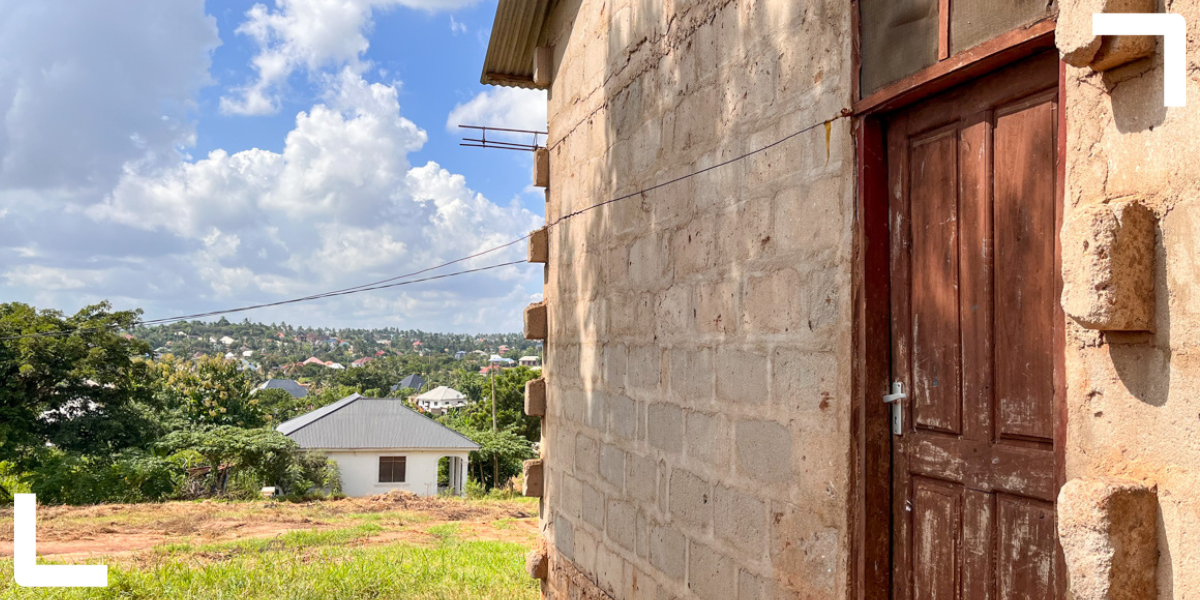
Header photo credit: Hannah van Rooyen. A housing unit in Mbezi Msumi, Dar es Salaam.
Note: This article presents the views of the author featured and does not necessarily represent the views of the African Cities Research Consortium as a whole.
The African Cities blog is licensed under Creative Commons Attribution-NonCommercial-NoDerivatives 4.0 International (CC BY-NC-ND 4.0), which means you are welcome to repost this content as long as you provide full credit and a link to this original post.
