
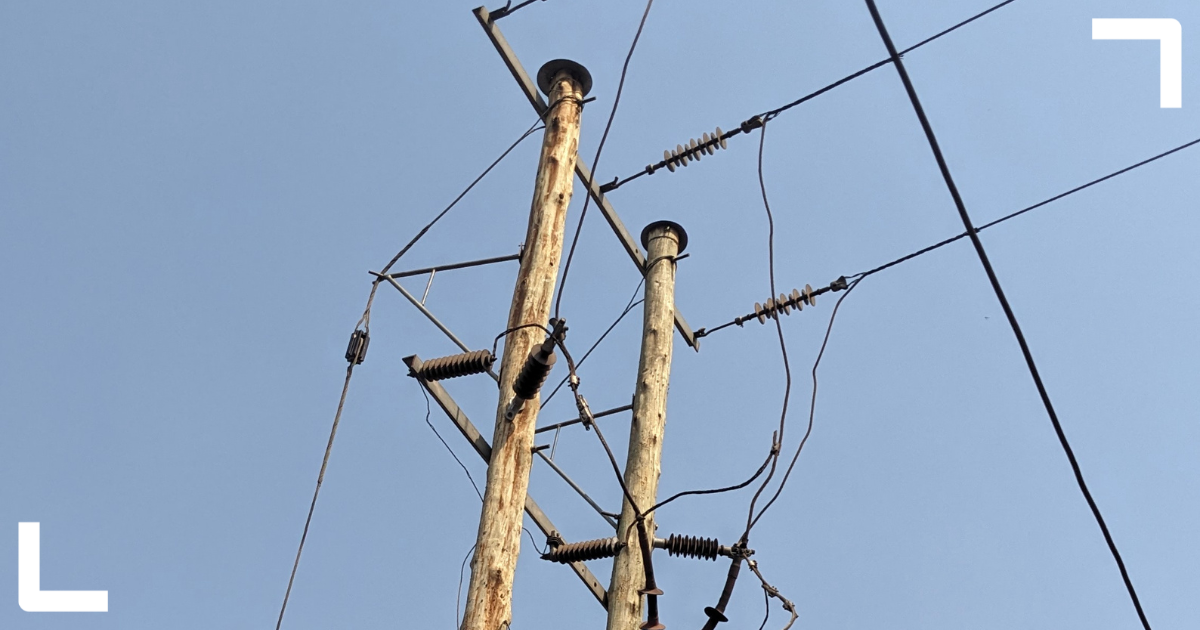
By Jimmy Kanonya, community researcher in ACRC Kampala’s Electricity Access Subsidy Action Research (EASAR) project
Electricity subsidies – designed to enhance access to services for underserved communities, promote equity, curb illegal connections and empower low-income households – may seem like a straightforward solution to the challenge of supplying electricity to Kampala’s informal settlements. However, the nuances of Kampala’s informal settlements and the contextual realities of the electricity supply chain paint a slightly different story.
As part of ACRC’s Electricity Access Subsidy Action Research (EASAR) project in Kampala, our team explored the electricity supply and distribution value chains in the informal settlements of Nankulabye and Kisenyi III. They encountered a series of surprises that reveal the complexity of the issue, and highlight how well-intentioned programmes can become entangled in red tape and informal networks, making change impossible to achieve.
Our research forms part of a broader effort to tackle urban energy poverty, and aims at understanding why subsidies fail to reach those in most need. We discovered that, beyond simple barriers like cost or awareness, community preferences for quick, informal solutions clash with formal processes, creating a cycle of dependency and inefficiency.
Here, we break down the key surprises and look at what they mean for residents and policymakers.
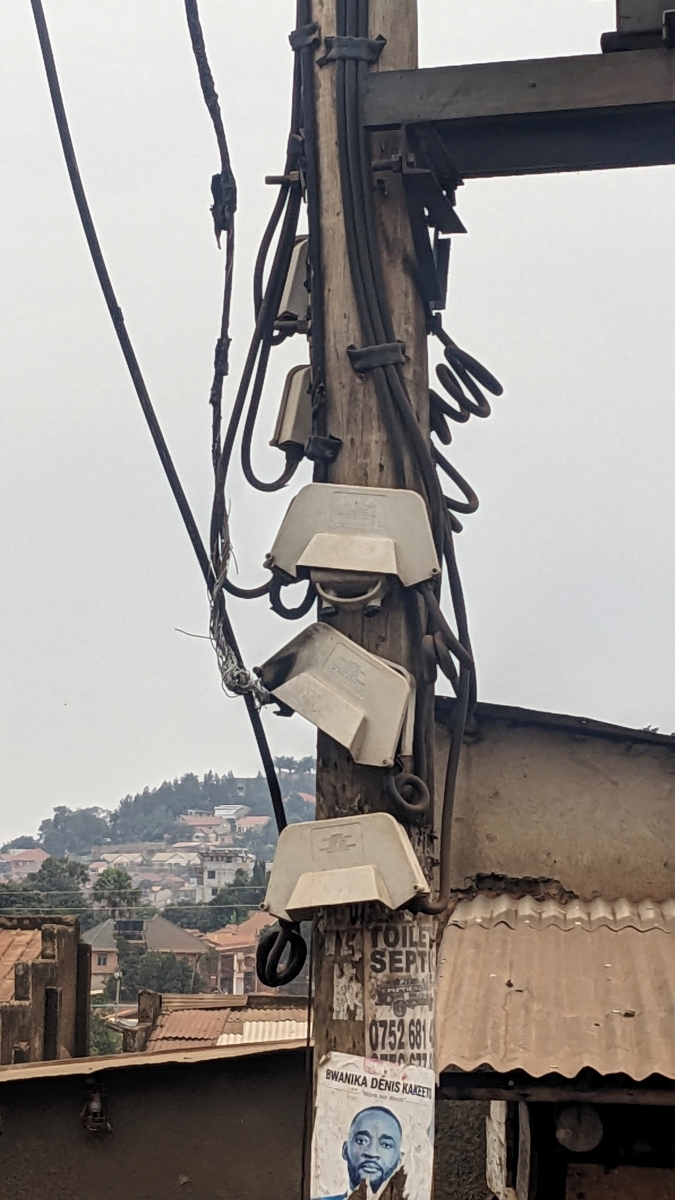
An electricity pole in Kampala
1. Kamyufu networks are more than meets the eye
“Kamyufu” might sound like local slang for a handy electrician who fixes wiring or hooks up power quickly for landlords, tenants or business owners in the informal settlements. But our findings paint a more intricate picture. Kamyufu is a sophisticated network of alternative service providers operating both vertically (from high-level suppliers to end-users) and horizontally (across community layers like neighbours and local leaders).
These networks position themselves as essential facilitators in the electricity value chain, from supply and connection to distribution and maintenance. For residents in Kisenyi and Nakulabye, turning to a Kamyufu often feels like the most viable option, as they are readily available to provide the service. Formal processes can be daunting, requiring residents to fill out subsidy applications or repair forms for faults, wait for approvals and navigate bureaucracy. In contrast, Kamyufus offer speed and accessibility at a friendly and negotiable cost. However, these fixtures are often non-standard and may pose safety risks to the Kamyufus and residents.
This setup thrives because it fills gaps in the formal electricity service delivery system. Government authorities and regulators sometimes downplay the reasons why locals prefer these informal routes, citing impatience or rule-breaking. Our research, however, shows that in complex urban environments, people prioritise reliability and urgency. For instance, a tenant might pay a Kamyufu a premium in order to avoid weeks without lighting, even if this means skirting official channels. This underscores how subsidies, while beneficial, can be undermined by embedded informal structures.
Case study | Too dark to wait: Two years without light in Nankulabye informal settlement
Aisha, a 33-year-old mother of three, has lived in Nankulabye for over a decade, surviving on casual jobs. Inspired by women in her savings group, she decided to start a small business selling cold drinks from her house.
“I imagined my kids having school supplies, maybe even saving for a proper home one day.”
She took out a loan from her local microfinance group to buy a fridge, committing to monthly repayments.
As formal electricity connections are rare and expensive in Nankulabye, Aisha turned to the Kamyufu, who connected her quickly for a small fee.
“No paperwork, no waiting. I loaded the fridge with drinks, and sales started picking up. On good days, I’d make Ugx 50,000 in profit – enough to cover the loan instalment and buy food for the family.”
But her business was badly impacted by the erratic illegal power supply.
“The power would go off without warning, sometimes for hours, sometimes days.”
Drinks spoiled in the heat and sales dipped. Faulty wiring also presented safety risks – “I’d hear stories of losing everything in a blaze started by bad connections” – and damaged her fridge compressor, leading to costly repairs.
At a community meeting, Aisha learned about the OBA scheme, a government initiative to provide affordable, legal connections to households.
“They talked about how it could transform small businesses like mine.”
She gathered the required documents: her national ID, proof of residence and a wiring certificate, paid the inspection fee and submitted her application through the Umeme (now UEDCL) office.
“I thought, finally, stable power! My fridge would run all day, sales would boom, and I’d pay off the loan faster.”
Officials assured her the process would take weeks, maybe months at most.
Two years later, despite following up countless times – visiting offices, calling hotlines, enlisting help from local leaders – she has no connection and no clear explanation.
“Sometimes they say ‘it’s in process’ or ‘wait for the next batch’, but nothing happens. I do not even know why. Is it funding? Corruption? Overloaded systems? No one tells me.”
Without reliable power, Aisha’s business has ground to a halt.
She has managed to earn enough from odd jobs to pay off the fridge loan. But the victory feels hollow.
“I scrimped and saved, sometimes skipping meals … That fridge was supposed to lift us up – better nutrition for the kids, more money for school fees, maybe even expanding the shop. Now it is just taking up space. If they can’t connect us after two years, what’s the point of applying?”
Nevertheless, she says, “If the connection comes tomorrow, I’d start again”.
2. Subsidised connections and the barriers of complexity
Electricity subsidies are publicised as gamechangers: reducing illegal connections, lowering costs and boosting socioeconomic opportunities. In theory, they help households afford legal, safe power, enabling everything from running small businesses to studying after dark. Yet, our study revealed that accessing these subsidies is often a labyrinthine process.
In some parts of Kisenyi and Nakulabye, an entire community missed out on subsidies, due to powerbroker networks. Brokers position themselves as “helpers”, charging unofficial fees to “expedite” applications or connections, and often colluding with official utility installers. What starts as a free or low-cost government programme ends up burdened by hidden costs, eroding trust and participation. Residents shared stories of endless paperwork, unclear requirements, and delays that push them back into informal connection.
This complexity is not just frustrating – it is a barrier to equity. Low-income households, already stretched thin, find the formal path too convoluted, leading them to opt for Kamyufus, despite the risks. Our findings highlight a need to simplify processes – clearer guidelines, community-led outreach and safeguards against exploitation could make subsidies truly accessible.
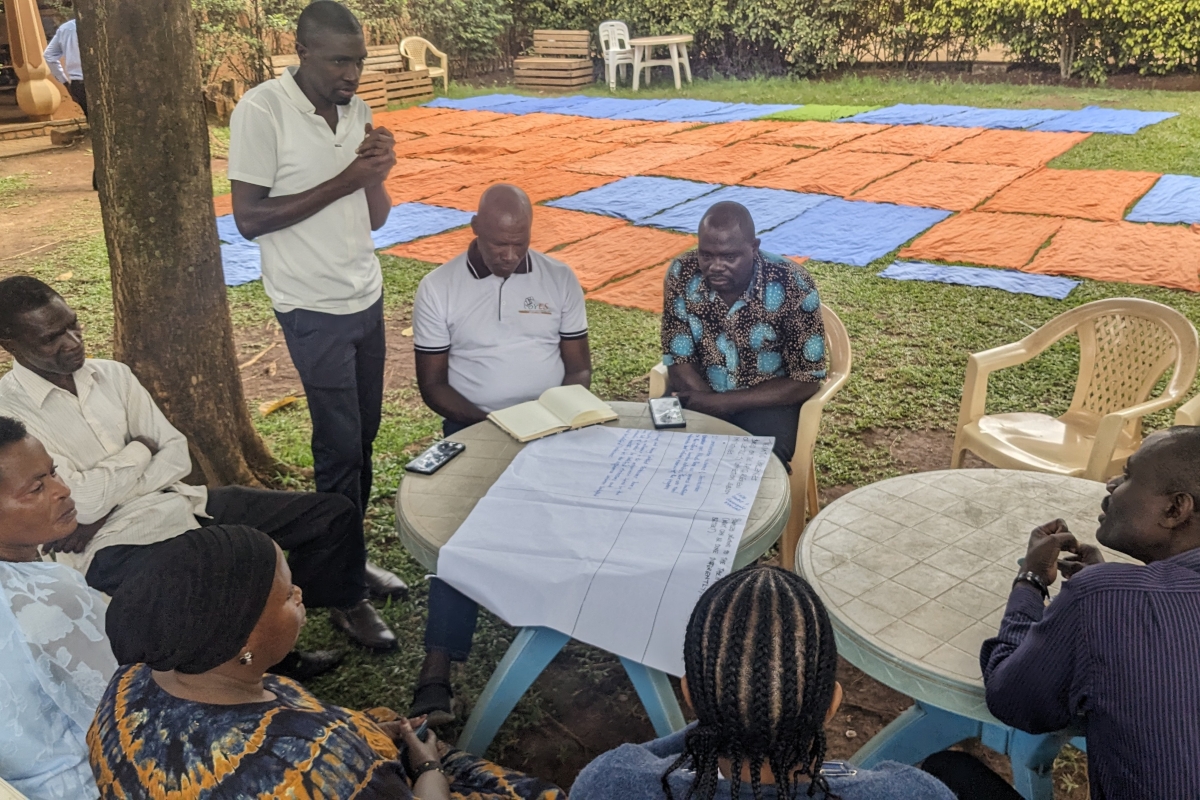
A community co-design session
What this means for Kampala’s urban landscape
These insights illustrate the existential complexity of urban informal settlements, with interconnected issues of governance, economics and social dynamics that defy simple fixes. Government actors often focus on the supply side – building infrastructure and rolling out subsidies. But without addressing the horizontal (community networks) and vertical (institutional layers) complexities, these efforts fall short.
For residents, informal connections might provide quick power, but they come with the risk of fire, electrocution and unstable supply – as alluded to by respondents during the action research (see case study above). Subsidies could break this cycle, but only if they are disentangled from broker networks.
A holistic, collaboratively produced approach is needed, which engages communities in design, regulates informal actors and streamlines distribution to ensure subsidies reach those targeted.
Overall, these findings point towards the need for adaptive strategies. Policymakers could pilot community-vetted application processes or integrate regulated Kamyufu roles to harness their networks positively. For community agency, awareness campaigns are key to demystifying subsidies, in order to provide broader choices for the residents.
> Read more about Kamyufus and community perceptions of them in Kampala’s informal settlements
Photo credits: ACTogether Uganda
Note: This article presents the views of the authors featured and does not necessarily represent the views of the African Cities Research Consortium as a whole.
Declaration on use of generative AI: Grok 4 (xAI), accessed via grok.com between October–November 2025, was used to assist with structuring ideas, suggesting phrasing and light editing. All findings, fieldwork data, quotations, and conclusions are the author’s own. The final text was reviewed and approved by the author.
The African Cities blog is licensed under Creative Commons Attribution-NonCommercial-NoDerivatives 4.0 International (CC BY-NC-ND 4.0), which means you are welcome to repost this content as long as you provide full credit and a link to this original post.
