By Mojeed Alabi, ACRC Lagos uptake lead
Media coverage can play a critical role in securing political traction for urban issues and ensuring accountability of decision makers. While researchers are ideally placed to highlight new trends, problems and potential solutions, in practice, there is often a gap.
There is a critical need for a symbiotic relationship between journalists and academic researchers. Without researchers, journalists risk superficial reporting, and without journalists, research remains locked away from the public that needs it most.
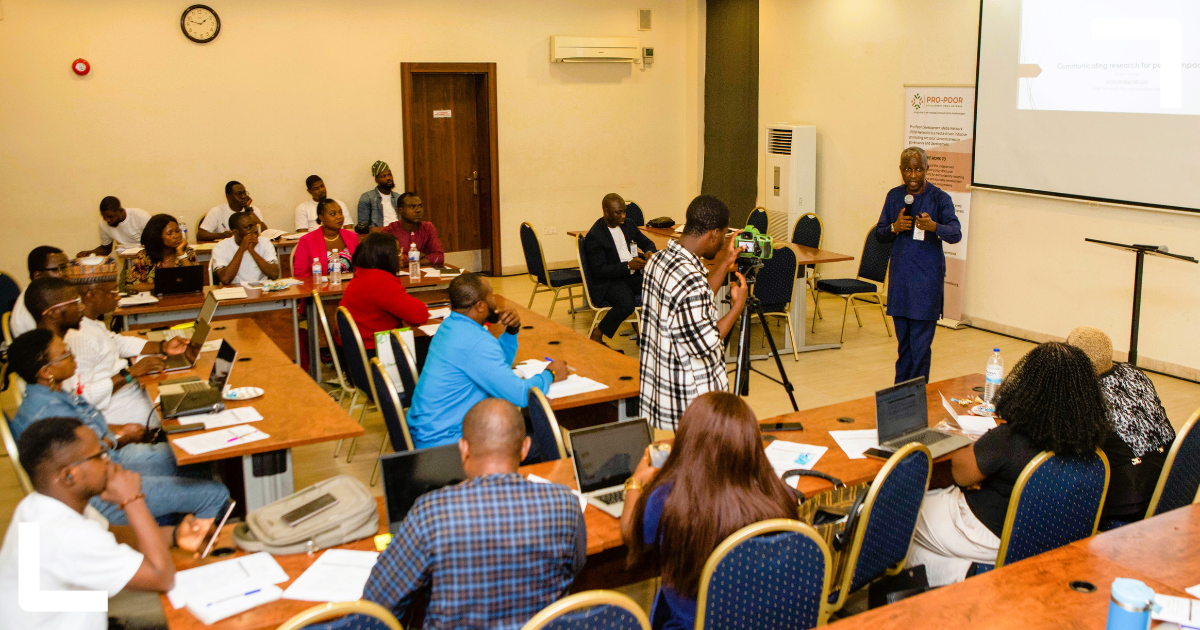
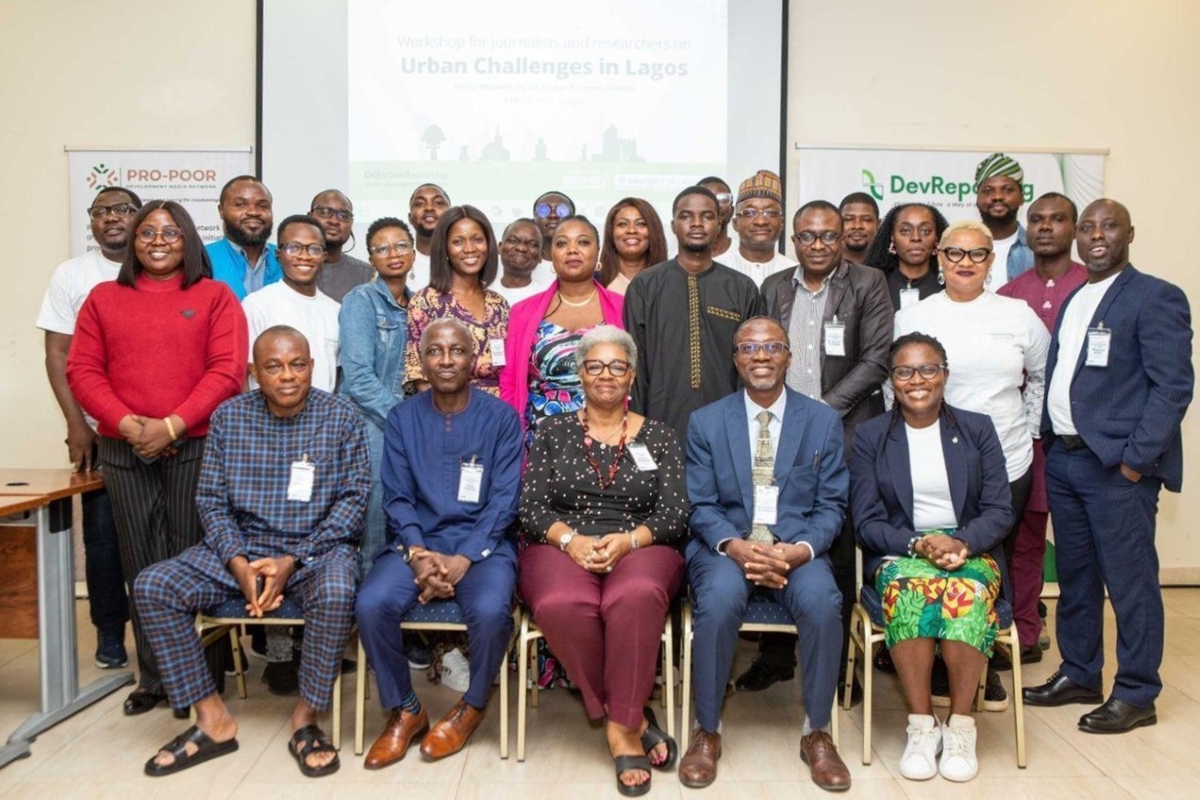
To address this, DevReporting – in partnership with the Pro-Poor Development Media Network (PDM Network) and with support from ACRC – recently convened a capacity building workshop for 30 journalists and researchers in Lagos, Nigeria’s commercial capital.
The workshop aimed to strengthen the link between academic research and development journalism by equipping selected journalists to produce evidence-informed and advocacy-driven stories on key urban issues such as water, sanitation and hygiene (WASH), flooding, evictions, housing gaps and other urban challenges in Lagos. It also sought to support ACRC researchers in communicating their findings more clearly and in ways that are accessible to the public, thereby enhancing the impact of research on public discourse and policy.
Presentation of ACRC’s Lagos city report
Taibat Lawanson, Professor of Planning and Heritage at the University of Liverpool, UK, presented findings from ACRC’s Foundation Phase research in the city, which she led from the University of Lagos (UNILAG). She explained that researchers examined nine major systems that determine how cities function. These include water supply, sanitation, transportation, health, education and energy, alongside food distribution, finance and digital connectivity. They found significant gaps in access to essential services, particularly for residents living in informal settlements.
According to the research, proximity to formal systems often determines access to essential services, leaving many urban residents underserved. On access to water, Taibat noted that although the Lagos State Government provides about 40% of the state’s daily water supply capacity, only about 30% of residents currently have access to public water.
WASH interventions and community-led governance
The co-lead of ACRC’s Lagos WASH project, Oluwaseun Muraina, explained how the initiative adopts community-led governance and social enterprise financing to improve water and sanitation services. Using the Okerube community as an example, she described engagement meetings held with community leaders, residents and landowners, culminating in a town hall discussion. She also highlighted a peer learning exchange visit to the Mukuru community in Nairobi, where the team studied existing solutions and explored lessons that could be adapted to the Nigerian context.
Waste management and community health
Team lead for the Lagos waste management project, Deji Akinpelu, spoke about the critical need for local government involvement in waste management. He advocated for a community-centred approach that prioritises community health over political expediency. He also issued a call for stricter enforcement against illegal refuse dumping, particularly on expressways, noting that the current situation is not sustainable.
Telling compelling stories on urban challenges
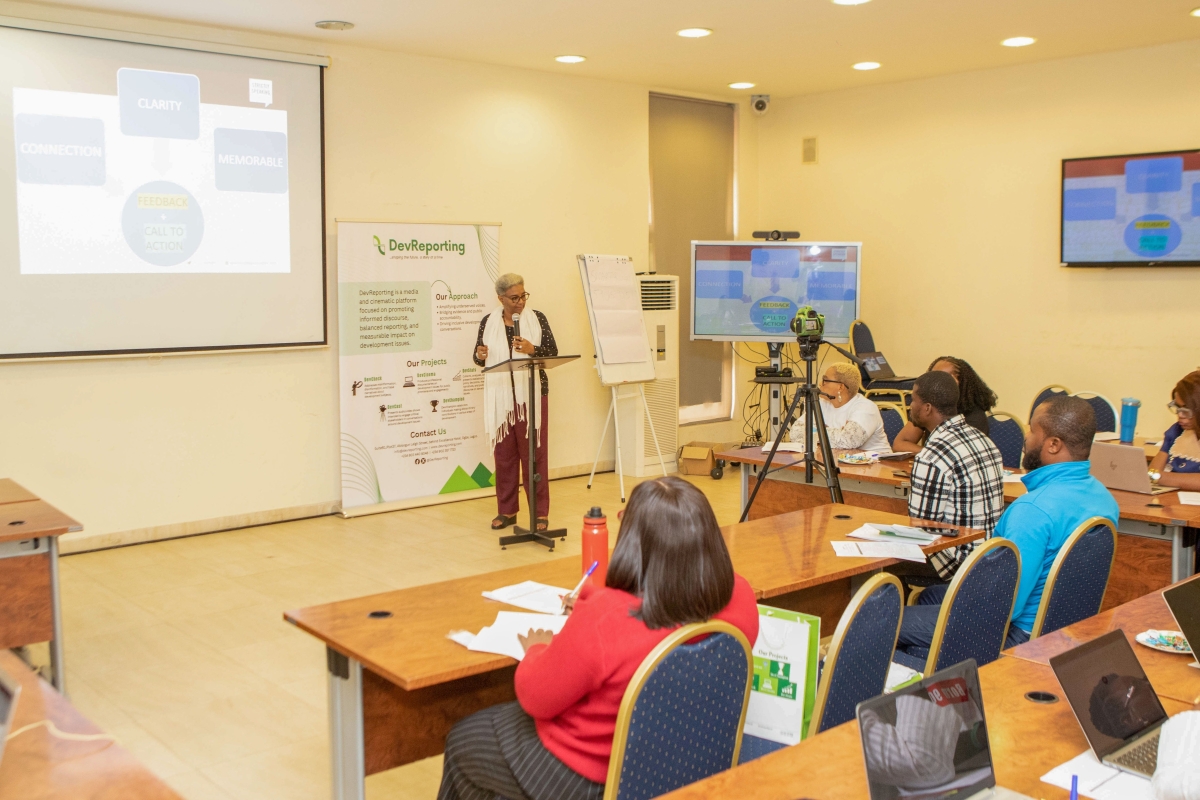
Veteran broadcaster and co-chair of the PDM Network, Bimbo Oloyede, outlined the myriad challenges facing urban centres. She urged journalists to focus on clarity, connection and memorable storytelling, while highlighting the human impact of urban problems. She emphasised the importance of bringing the reader on an imaginative journey by showing rather than telling.
Communicating research for public impact
The commissioning editor at The Conversation Africa, Wale Fatade, delivered a practical session on communicating research, arguing that academic findings should move beyond scholarly circles and be accessible to the public and policymakers. He noted that researchers too often publish in inaccessible journals using technical jargon. He challenged journalists to bridge the gap by converting dense academic work into clear, digestible content across formats such as news articles, features, and podcasts. He stressed that simplicity is the benchmark of genuine understanding.
Experience from the field
The managing editor of The Guardian Nigeria, Chinedum Uwaegbulam, drew on his experience covering property and environment to reframe stakeholder mapping as a strategic journalistic tool. Rather than a simple contact list, he argued that a well-constructed map shifts reporting from reactive event coverage to systems journalism, revealing power dynamics, conflicts of interest, and regulatory gaps behind the headlines.
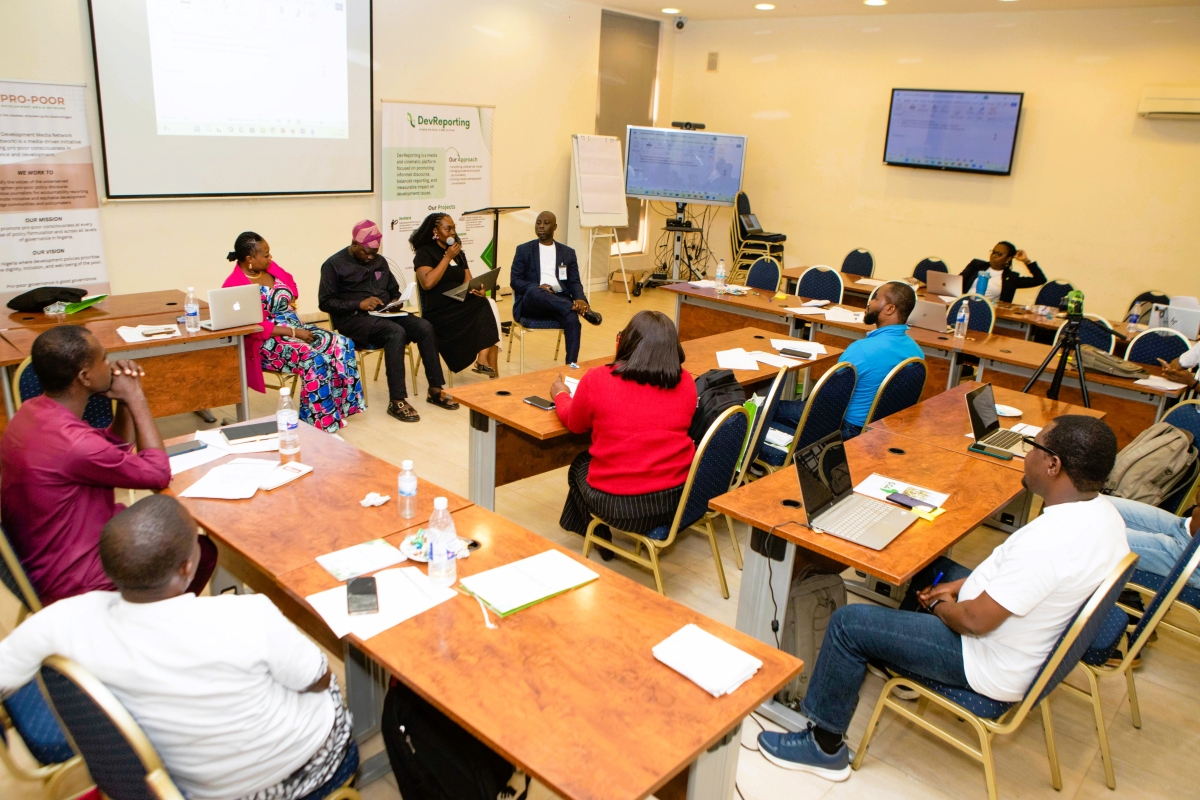
Using Lagos as a case study, he walked participants through key actors spanning government regulators, international financiers, vulnerable waterfront communities, and informal sector workers. He stressed that combining stakeholder maps with data sources such as budget allocations and floodplain records enables evidence-based accountability reporting.
The regional coordinator for sub-Saharan Africa at SciDev.net, Ogechi Ekeanyanwu, framed science reporting as a mindset challenge rather than a technical one, encouraging journalists to translate broad research findings into human-scale stories and to build personal relationships with researchers to facilitate clearer communication.
The Guardian Nigeria’s weekend editor, Kabir Garba, cautioned against recycled data, urging reporters to interrogate why statistics remain unchanged over time and to focus reporting on accountability and the impact on neglected communities.
On her part, Thomson Reuters Foundation correspondent, Bukola Adebayo, challenged journalists to refresh tired narratives around evictions and demolitions by focusing on victims’ experiences and pursuing government accountability. She strongly advocated for multimedia storytelling as a more powerful means of audience engagement than text alone.
The board secretary for the PDM Network, Omobayo Azeez, thanked the participants for their engagement, the partners for their support, and the presenters for their generosity. He expressed a strong hope that the relationships forged would endure for the future of journalism in Nigeria and Africa, by extension.
Strengthening urban development reporting
The workshop successfully fostered meaningful exchange between journalists, researchers, and development practitioners, strengthening the bridge between academic research and urban reporting. Participants left with practical frameworks and a renewed commitment to in-depth reporting on housing, environment, and WASH in Lagos.
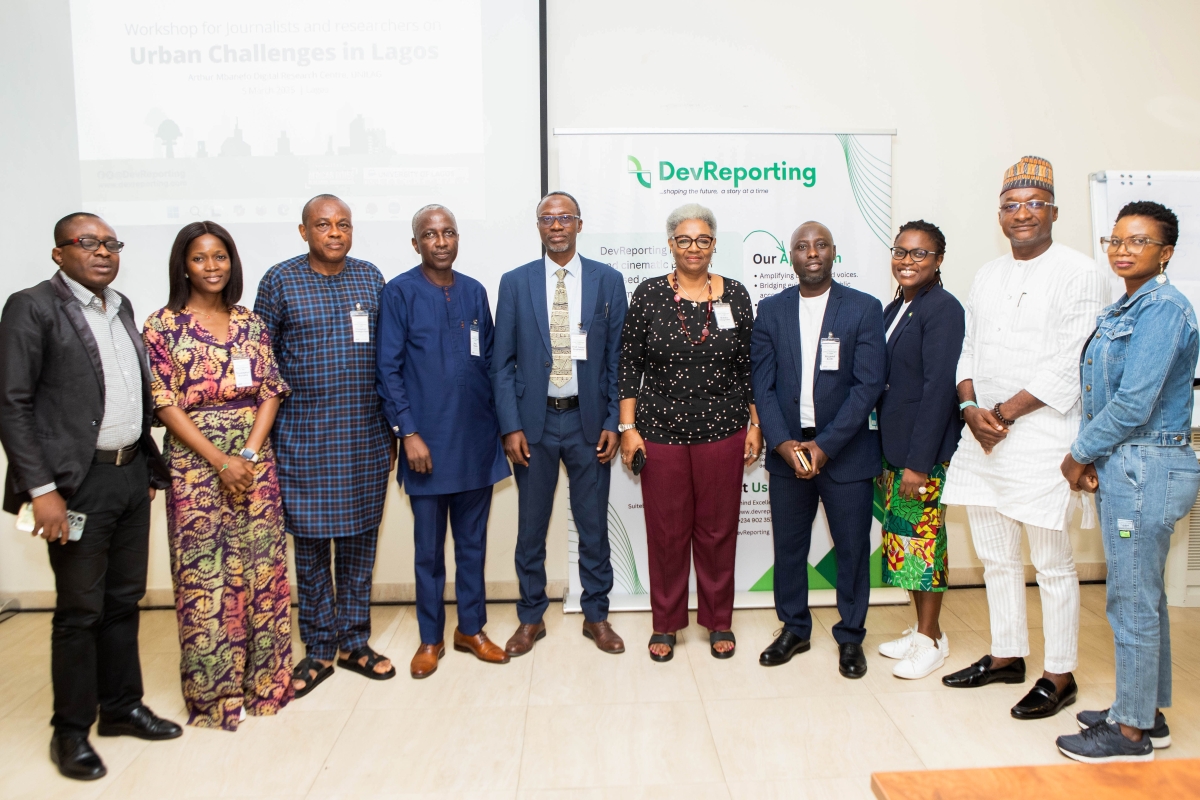
Photo credits: Tobi Fayelu
Note: This article presents the views of the authors featured and does not necessarily represent the views of the African Cities Research Consortium as a whole.
The African Cities blog is licensed under Creative Commons Attribution-NonCommercial-NoDerivatives 4.0 International (CC BY-NC-ND 4.0), which means you are welcome to repost this content as long as you provide full credit and a link to this original post.
