
By Muhamed Lunyago, CLASK action research project co-lead
Buying a piece of land – locally referred to as a “plot”, though not in the formal sense of a plot – in Kampala’s informal settlements is a complex experience.
From the outset, the buyer is cautious about the different dynamics surrounding urban land transfers and the local politics involved. Before they can hand over their money, they will be advised to first see the chairperson of Local Council I (hereafter LCI – LCs is a broader structure from district to village, but LCI is the village-based administrative unit).
In Kisenyi, just like in many other Ugandan informal settlements, LCI chairpersons verify ownership of the land during transaction and draft, sign and stamp land agreements. They also act as witnesses to land transactions and, in case of a post-transfer dispute, as conflict mediators and court witnesses. The role they play and their power in local land governance has been reinforced by some Ugandan utility service providers.
A power paradox
Our action research in Kisenyi revealed that utility service providers frequently require letters of introduction from LCI leaders or LCI stamps on land agreements before water, electricity or other utility services are approved.
Yet the critical role LCIs play was found to be paradoxical, as LCI chairpersons and committees have no explicit legal mandate over land administration in Uganda. Despite the fact that Uganda’s legal, administrative and policy frameworks assign land administration to mandated institutions under the Ministry of Lands, Housing and Urban Development (MLHUD), everyday forms of land governance happen within local communities, under the stewardship of LCI leaders.
As such, LCIs, especially chairpersons, have become hugely influential in land transfers in informal settlements. But with no legal mandate, a key question is how Uganda’s village-based leaders became such influential local land governance actors? The reality – which forms part of a broader critique of colonial and postcolonial governance – is that institutions are not constituted solely by formal rules, but also through everyday practices, relationships and established forms of trust. This is especially the case in contexts marked by historical vulnerability.
Local land governance frameworks…
We understand that Uganda runs what has been described (if not romanticised) as Africa’s most decentralised local governance system. Since the 1990s, when it was formalised through the Local Government Act of 1997, local councils have so far formed the core of this governance framework (from the city to the village level). Notably, the LCI Executive Committee is legally recognised as the lowest level of administration in both rural and urban areas, with statutory responsibilities including maintaining local security, mobilising communities to participate in government programmes, resolving local disputes and performing other administrative functions.
But regarding land matters, LCI committees have no legal mandate, as authority over land administration is vested in a separate institutional framework. As mentioned earlier, the MLHUD is at the apex of this framework, overseeing land governance through institutions such as the Ministerial Zonal Offices, District Land Boards, District Land Officers, Area Land Committees and Land Recorders. Principally, the responsibility for land administration rests firmly with these mandated land institutions.
…and local realities
This legal recognition, however, tells only part of the story – particularly when it comes to contexts like informal settlements, where small-scale yet everyday land transfers are predominant. While legislation has established a formal system of land administration through mandated institutions and legal procedures, communities have concomitantly developed an informal system of land governance that operates alongside it.
As Kampala’s urban Gen-Z say, “ku ground biralamu” (“the reality is different on the ground”). Residents often rely on “trusted” local actors to facilitate land transfers, verify ownership claims and resolve disputes. It is within this somewhat parallel system that LCIs have become essential.
With informal settlements rarely conforming to formal land administration workings, most land is undocumented and state institutions lack sufficient knowledge to verify competing claims. This can especially be seen in Kampala, with the layered nature of rights and claims on Mailo land. (The majority of land in Kisenyi is under Mailo land tenure, protecting the interests of both title owners and lawful occupants/tenants.) These and other reasons have left a land governance lacuna that needed to be filled.
Fulfilling community needs
With time, communities found resolve in LCI leaders. Their success in these spaces comes from their intimate knowledge of local communities – a currency that mandated state institutions can barely afford. As some LCI chairpersons have ruled their villages since Resistance Councils (RCs) were established, their historical memory of land occupancy, inheritance arrangements, existing encumbrances on land, rightful ownership and other matters is unmatched.
By implication, their legitimacy is derived from their social proximity, historical knowledge, accumulated trust and embeddedness in society. As our research in Kisenyi shows, LCIs routinely find themselves writing and signing land agreements, witnessing land transfers, verifying identities of land sellers and buyers, mediating conflicts and offering custody to copies (sometimes originals) of land-related records.
Over time, these roles have become institutionalised through everyday practices, positioning LCIs as the first point of contact in land matters at the local level for a whopping majority of informal urbanites. Of course, in doing so, they have also become local gatekeepers of land transfers and related matters, with their lack of legal mandate arguably creating vulnerabilities and opening room for abuse.
Emerging lessons from Kisenyi
From the experience of Kisenyi, four (of the many) lessons are worth stressing:
1. Institutional authority is not always entirely synonymous with juridical authority. It is often relational, since it is produced and reproduced through recurring interactions, trust and communal recognition. The power of LCI leaders on land matters in Kisenyi is, for instance, reproduced through everyday practices of land transfers.
2. Informality in land transfers should be seen as internal to the state, not external. LCIs are legally established government structures performing somewhat illegal/unofficial roles. As such, they are “caught in the middle” of operating as state structures and performing informal community practices. In essence, state authority is seen to be contested and negotiated in informal settlements.
3. Effective, inclusive and people-centred governance should not be dictated by statutory authority and institutional configurations. Rather, it should also be shaped by socially embedded knowledge and practices.
4. Legal and policy regimes alone cannot sustain land governance in contexts characterised by informality, fragility and historical vulnerability.
Reconciling land system vulnerabilities
In closing, we should not forget the warning from eminent political theorist, Mahmood Mamdani, in his newest book that the entire Ugandan political system has become fragile and vulnerable, with corruption becoming structural. This means that the vulnerability of LCIs is not an isolated occurrence but a systemic problem.
Challenges that may come with recognition of LCIs in land administration, and whether they should participate in local land governance, are very legitimate concerns. Far more important, however, is how the Ugandan state should respond to this entrenched reality. A few options emerged during our action research, including:
> Formal acknowledgment and regulation of the functions that LCIs already perform;
> Capacitating LCIs through trainings, recognising and streamlining their roles, defining their surcharges;
> Creation of stronger institutional linkages between LCIs and mandated structures.
We will explore these options and their limitations in more detail in future blog posts from the CLASK team.
It will be interesting to explore how the state goes about reconciling these everyday practices with socially acceptable, equitable and inclusive aspects of the law – given that the ongoing review of the Uganda National Land Policy pointed to the contradictory yet relevant role of LCIs.
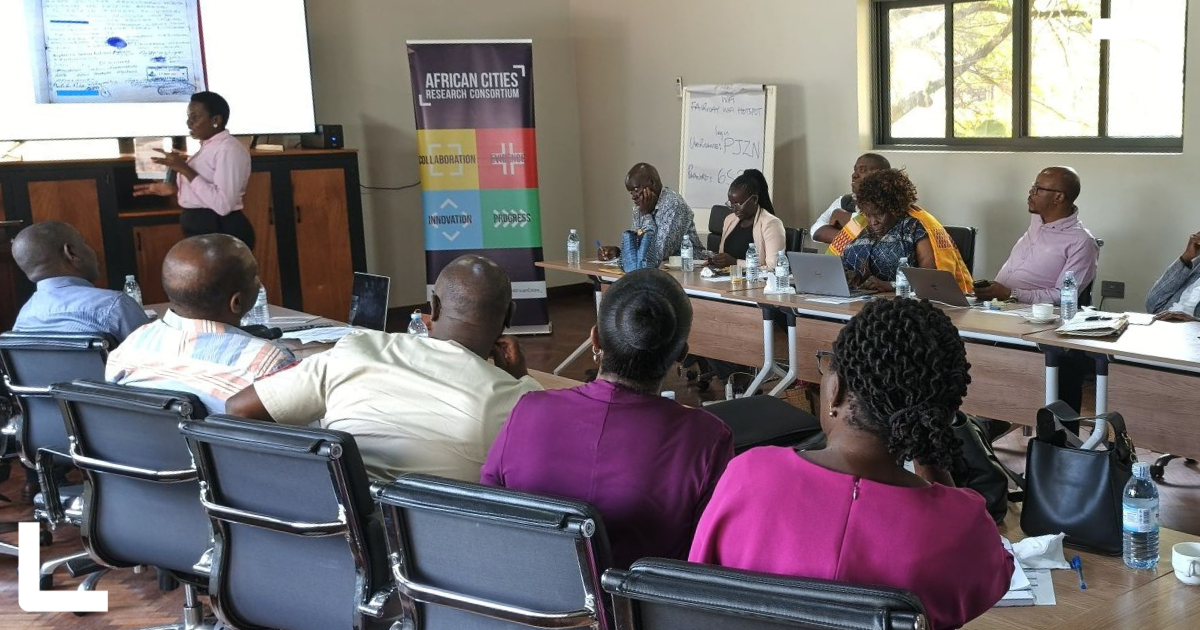
Header photo credit: Muhamed Lunyago. CLASK Meeting with MLHUD officials and consultants reviewing the Uganda National Land Policy.
Note: This article presents the views of the authors featured and does not necessarily represent the views of the African Cities Research Consortium as a whole.
The African Cities blog is licensed under Creative Commons Attribution-NonCommercial-NoDerivatives 4.0 International (CC BY-NC-ND 4.0), which means you are welcome to repost this content as long as you provide full credit and a link to this original post.
