
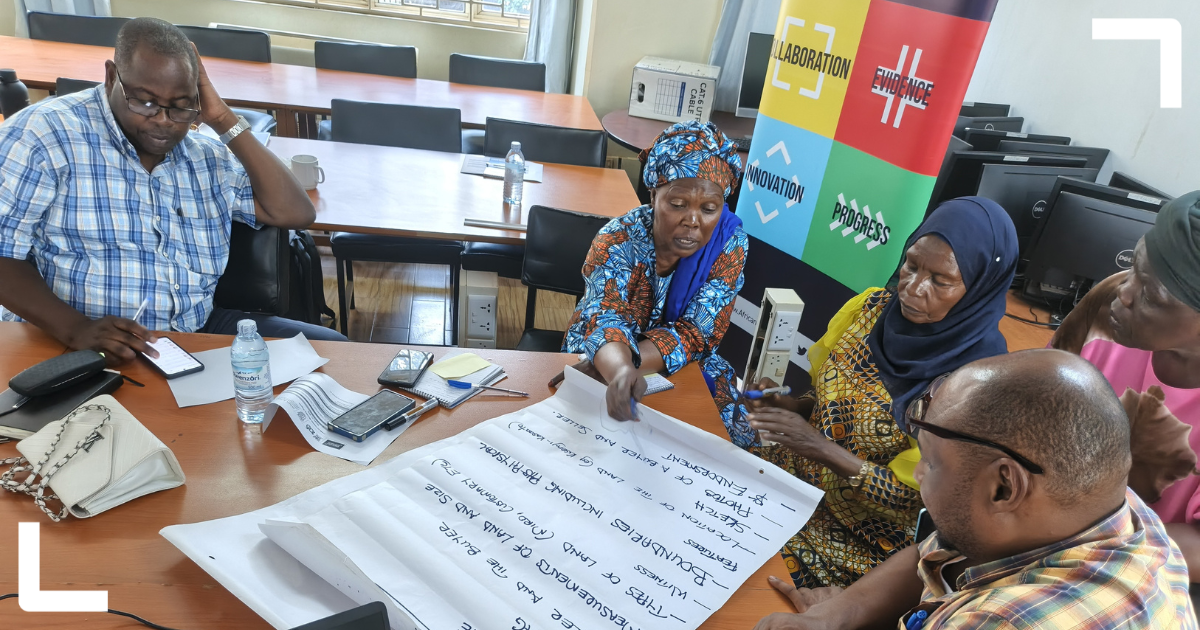
By Muhamed Lunyago, CLASK action research project co-lead, and Joseph Mukasa, CLASK project administrator
During ACRC’s foundation phase, the Kampala land and connectivity domain research revealed how relevant and critical local councils (LCs) are in land transfers, especially in informal settlements. This is because they were drawing land agreements, witnessing and validating land ownership transfers/transactions, and participating in different forms and aspects of land transfers.
The team observed that the active participation of LCs in land transfers was producing and/or fuelling conflicts – exacerbating tensions between landlords and tenants, land buyers and tenants, and land buyers and land sellers.
To deepen our understanding of this challenge, we are conducting action research in Kisenyi informal settlement in Kampala, through a project titled “Capacitating local councils for secure land transfers in Kisenyi informal settlements, Kampala City (CLASK)”. We prioritised the issue of LC involvement in land transfers in the first phase of the action research.

Rooftops of Kisenyi informal settlement, Kampala. Credit: Slum Dwellers International / Flickr (CC BY 2.0)
Contextualising the CLASK study
Land transfer in this context does not refer to the formal transfer of registered land, but to any form of land transaction – whether by gifting, buying or selling of registered or unregistered land – as long as the LCs are involved. This conceptualisation differs from the state conception of transfer, which focuses on the registered land.
By engaging different stakeholders – including LC leaders, local communities, government institutions, land brokers, representatives from traditional institutions, lawyers and some NGOs – the research aimed to establish what the LCs do, how they do it and what challenges they face. All this was done to unpack the complex nature of informal urban land governance, access, broader relations, contestations and conflicts in informal settlements, through the lens of Kisenyi.
Through interrogating this complex urban development challenge, the CLASK project team prioritised co-designing a solution to this intractable challenge. The team collected data through desk reviews, focus group discussions, interviews, field workshops and site visits. To understand the kind of land agreements that the LCs were writing and/or witnessing, we analysed different sample land agreements written by LC leaders and lawyers, using a comparative approach.
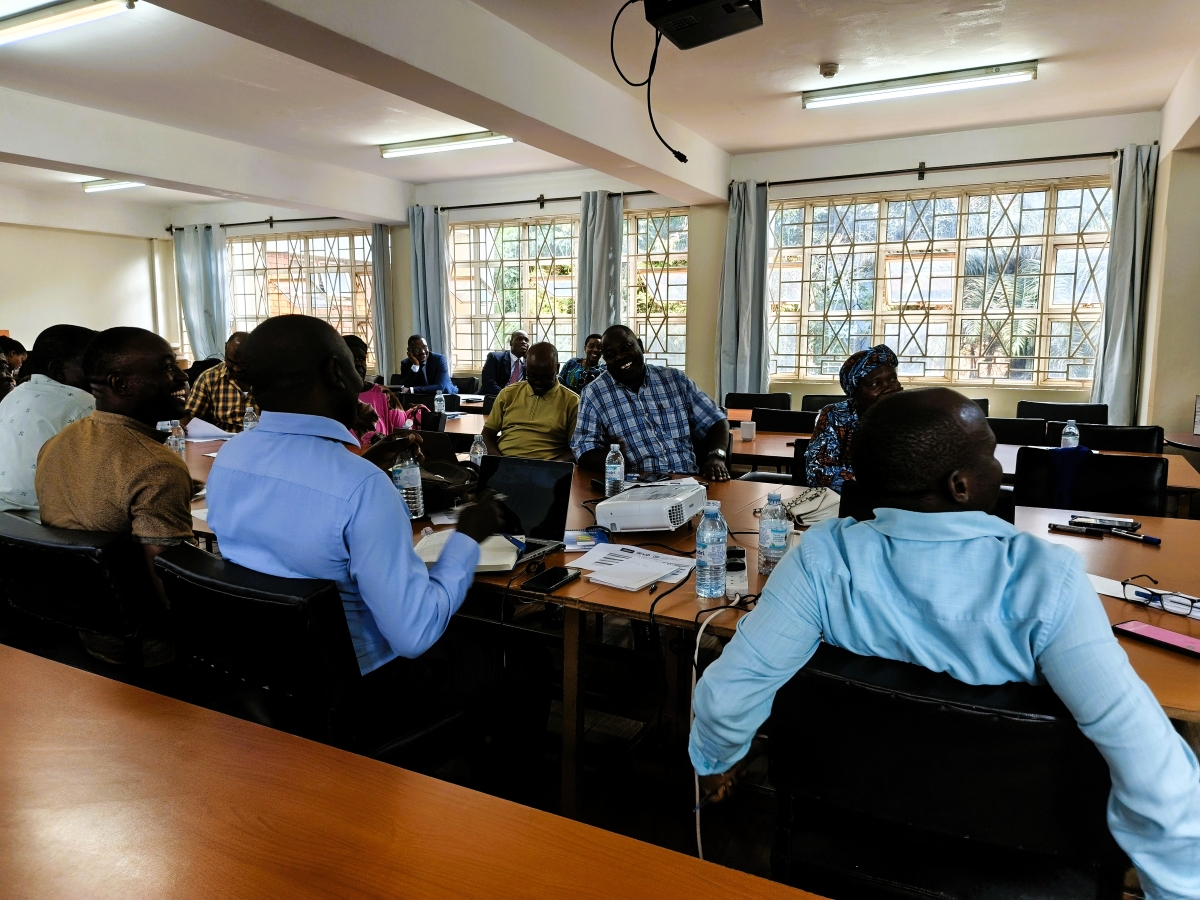
An action research meeting. Credit: Muhamed Lunyago
LCs at the epicentre of land transactions
The study confirmed that LCs are entrenched in Uganda’s local government structures, with some having been in leadership since the birth of the Resistance Councils in 1986, when the current National Resistance Movement (NRM) government took power. As such, most LC leaders claim long experience in land transfers and henceforth the knowledge of administering land. However, they have been relying on local knowledge gained from their long experience of writing and/or witnessing land transfers, rather than following the law.
Extra-legal realities
Although the LCs have been doing a commendable job helping out with land transactions, their actions were considered “extra-legal”, following a lack of legislative backing from either the Land Act or Local Government Act. Whereas the latter recognises them as the lowest unit of local government administration under the decentralised system of governance since 1992, their involvement in land matters is not stipulated in any law or policy. Yet they continue to either witness and/or endorse land transactions, and engage in other land-related matters in their respective communities. The absence of a well-defined mandate for LC leaders in land matters does not only complicate the work they do, but also land relations and ensuing contestations.
Capacity and knowledge gaps – the missing link to secure land transactions
Our engagement in the field revealed numerous capacity gaps among most LC leaders, leading to conflicts and contestations. These ranged from lack of basic knowledge of land laws and tenure arrangements, to illiteracy, to resource and financial limitations. For instance, it was observed that some LC leaders lack a basic understanding of different forms of land tenure systems and land ownership forms, impacting their ability to draft and/or witness proper land agreements. Many LCs also refer to a kibanja (tenancy ownership right) as a plot. However, formally, a plot is defined as land with particular dimensions (such as 50 x 100 ft), whereas kibanja is a form of ownership – where there is a landlord of a larger title with a tenant who bought tenancy rights – irrespective of the size of the land. This misinterpretation leads to contestable land agreements.
Similarly, many LC leaders lacked basic knowledge or training on how to write land agreements. Upon election, LCs are not inducted on making land agreements or handling land matters – most likely because of their lack of legal mandate. Yet they continue to play recognisable roles in handling land transfers – to the extent that transactions done before lawyers go to the LCs for ownership verification and due diligence. Such incapacity leaves loopholes and missing details, which are often exploited, especially by powerful elites, thereby opening the floodgates to land conflicts.
Secondly, the study established that LCs were using official headed papers to draft land agreements. While seemingly done to offer some guarantee of security and authentication, we found that this had legal, moral and economic implications. By drafting an agreement on headed paper, the LC lays some claim to the land – as confirmed by lawyers and other government officials we engaged in the course of the research. However, the social acceptability of the headed paper was no safeguard against land theft, as it would actually invalidate a land claim.
The acceptable best practice was instead for the agreement to be written on plain paper, then signed and stamped by the LCs as witnesses. This revelation came about when an LC leader was faulted in court for using official headed paper, raising questions around social acceptability vs legality, and whether this can be reconciled.
Loopholes and lapses in land transactions
Writing land agreements and transferring land in Kisenyi II and III were found to be processes marred by fraud, forgery and false witness accounts. While some LCs intentionally engage in fraud, others have participated unintentionally, by not reading agreements written by other parties. Examples shared during interviews and discussions highlighted that fraud is not isolated. It grows from weak oversight, little to no remuneration, and the unclear and/or undefined roles of LCs within the land governance system. Some LCs signed agreements without reading them through, some are illiterate and some do not conduct proper due diligence and verification before witnessing or writing a land transfer agreement.
The LCs and most residents transacting and transferring land did not consider the issue of landlord consent to be very important, yet most are bibanja (plural of kibanja) holders. Legally, anyone sitting on land that has a titleholder requires the consent of the landlord in order to sell the land. This is because, by law, the landlord must be given first priority in the case of a land sale. In the same way, if a landlord wants to sell the land, they must give first priority to the tenant (kibanja holder) – the person occupying the land. Since their consent is not always sought, most land transactions happen illegally, again laying the groundwork for immediate or future land conflicts.
LC–lawyer rivalry
Competing interests between LC leaders, lawyers and other interest groups have resulted in adversarial relationships among these different actors and interest groups. LCs claimed lawyers were overtaking their mandate because many people were shunning them for lawyers, leading LCs to feel threatened when a land transfer has an agreement drawn by a lawyer.
As a result, LC leaders demand high fees for their services, including witnessing or offering verification information. Many LCs indicated that if they are given their cut, they rarely bother carrying out due diligence. This in turn increases the risk of conflicts and insecurity.
Is inclusion too evasive?
The challenge of including vulnerable groups was raised as a critical concern in transfer processes. Currently, the LC committee has representatives for women, people with disabilities and youth. However, in most cases during land transfers, special representatives are not invited.
In instances where they are called on, this is often done at a late stage, making it difficult for them to attend meetings or appear during land transfers. Study participants indicated this is done deliberately to exclude them – while giving the impression that there were attempts to include them – and happens even in instances where vulnerable people are directly involved in the transaction as buyers or sellers. This cast a lot of doubt on the whole issue of inclusion on LC committees – akin to rubber-stamping.
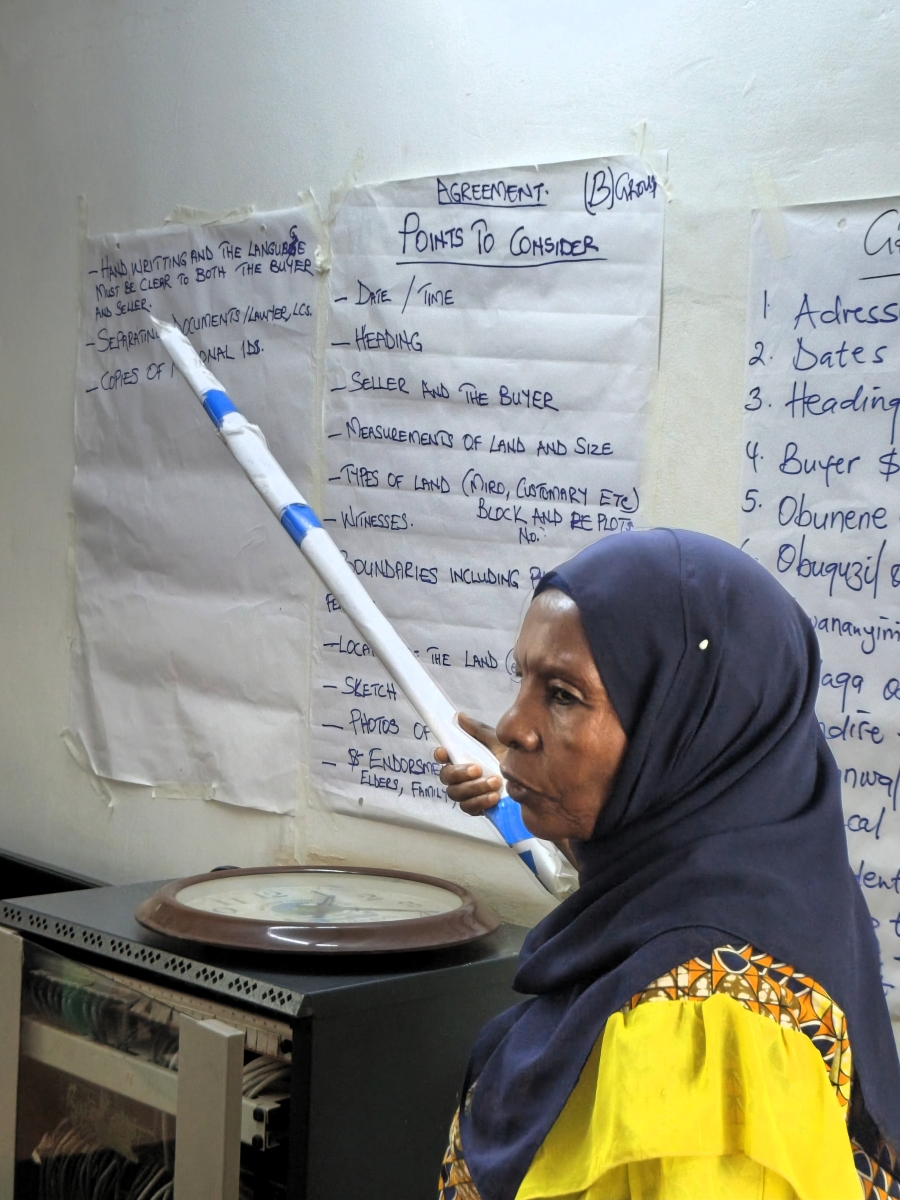
Presentation on points to consider in an agreement. Credit: Muhamed Lunyago
Next steps towards co-creating solutions
Findings from the initial CLASK research reiterate the contribution of LCs in bridging communities’ access to land transactions and governance. They also point to legal limitations, capacity gaps and questions around integrity, due diligence, inclusion and competing interests as critical impediments.
Building on this preliminary work, the CLASK team is working with communities and stakeholders in the land sector to co-create potential solutions that address some of these gaps and push for secure land transfer services.
Header photo credit: Muhamed Lunyago
Note: This article presents the views of the authors featured and does not necessarily represent the views of the African Cities Research Consortium as a whole.
The African Cities blog is licensed under Creative Commons Attribution-NonCommercial-NoDerivatives 4.0 International (CC BY-NC-ND 4.0), which means you are welcome to repost this content as long as you provide full credit and a link to this original post.
