
By George Masimba, ACRC Harare city manager
Urban markets are the engines of Harare’s economy, sustaining livelihoods for nearly 80% of its residents. Recognising their centrality, ACRC convened an urban markets indaba – or conference – under the theme: “Repositioning Harare’s urban markets as inclusive, productive, resilient and well-governed city systems”.
Held in June 2026, the indaba became a catalyst for collaboration, learning, follow-up engagements and unexpected openings that may reshape the work of ACRC team in Harare.
The indaba brought together both state and non-state actors, including the Ministry of Small to Medium Enterprises, Ministry of Local Government, provincial government (permanent secretary), financial institutions, residents’ associations, University of Zimbabwe, other ACRC Harare action research projects, FCDO and key departments from the City of Harare.
In addition, members of the Kampala ACRC team were also in attendance. After realising that the team in Kampala were working on similar urban markets issues during the Manchester learning workshop in March 2026, the two cities had resolved to maximise platforms for mutual learning – hence the invitation to the indaba.
Co-creating the indaba agenda
A series of virtual and physical meetings formed part of the preparations for the indaba. Dialogue on Shelter and Development Governance Institute worked with Harare’s SMEs and monitoring and evaluation divisions to co-create the concept note and programme.
Market traders were also engaged early on to help better structure their interventions – with an emphasis not only on highlighting challenges, but also on demonstrating traders’ readiness to collaborate with city authorities and contribute towards transforming markets.
A regional dimension was also added to the indaba preparations through a series of online meetings with the ACRC Kampala team, setting the stage for cross-city learning and comparative insights. To further enrich the indaba deliberations and provide much-needed context, market visits were also organised to Lusaka Markets (Highfield), Hatcliffe Dust Market and Glen View 8 Furniture Complex (GV8FC).
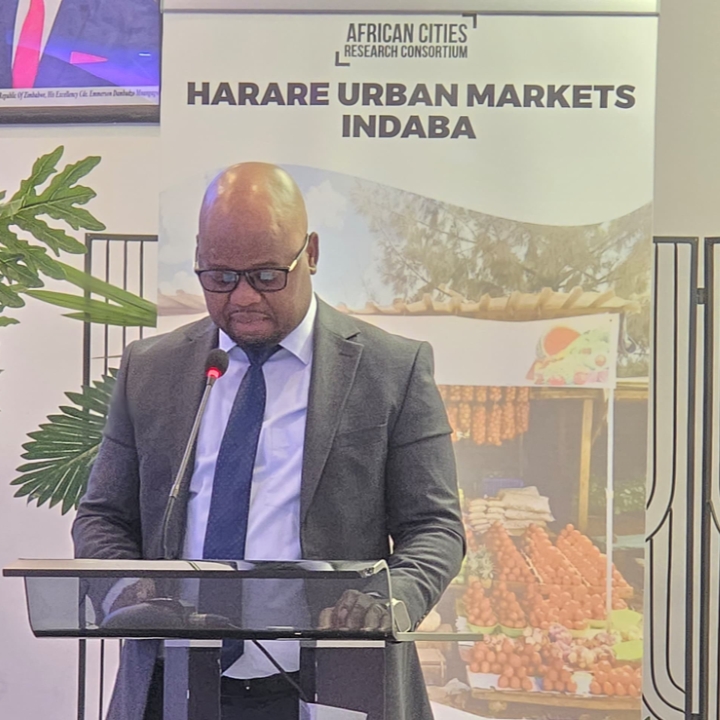
Acting town clerk for City of Harare delivering his speech at the indaba
Deliberations and voices from the markets
The indaba unfolded through four sessions:
1. Government perspectives: The acting town clerk opened the Indaba, announcing that “urban markets are the heartbeat of Harare’s economy”. The permanent secretary emphasised formalisation and governance reforms to tackle the pervasive challenge of space barons. Plans for a City SMEs Bank were unveiled by the SMEs committee chair for Harare, to help perform two functions: first, to finance informal enterprises; and second, to build and upgrade existing urban markets.
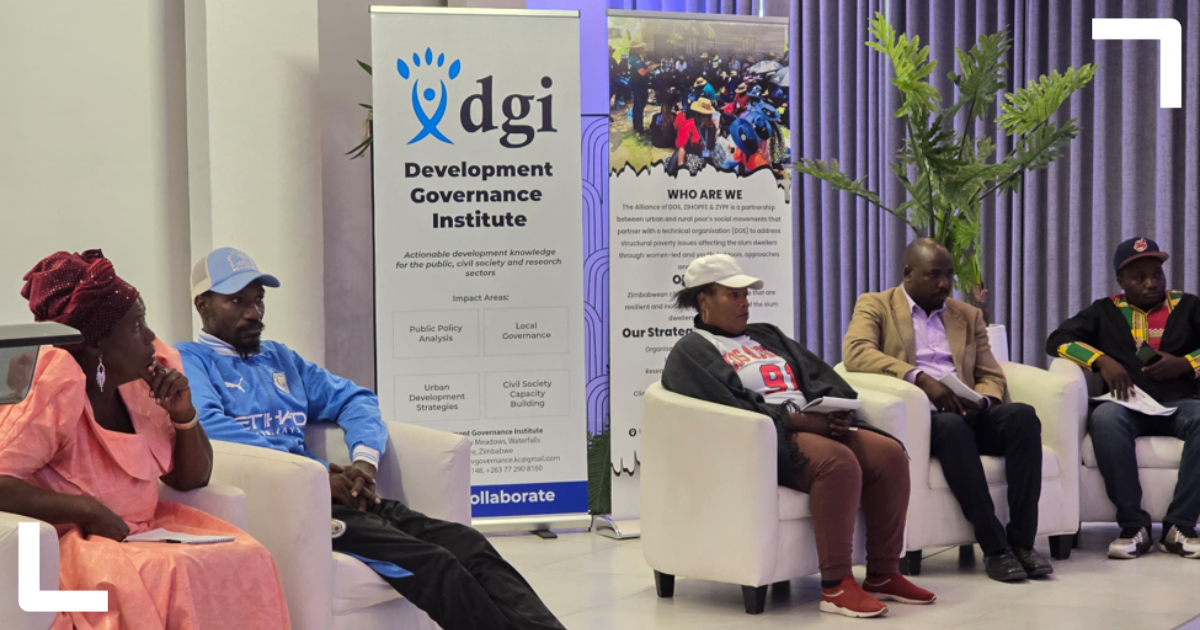
2. Traders’ experiences: Representatives from GV8FC, Lusaka, Hatcliffe Dust, Kuwadzana 4, Gazaland and Jambanja markets narrated experiences regarding infrastructure gaps, sanitation challenges and land tenure precarity in Harare’s urban markets. They stressed the need for engagement spaces with the council, citing ACRC convenings as vital spaces that had contributed towards improved relations and dialogue.
3. Financial institutions: Small to Medium Enterprise Development Corporation and Infrastructure Development Bank of Zimbabwe outlined financing instruments but cautioned that governance weaknesses made many projects unready and often risky for investment.
4. Group discussions: Participants, working through groups, then tackled four themes – infrastructure, financing, governance, and productivity and growth – consolidating and focusing on the key challenges and priority strategic policy and programming responses for Harare’s urban markets.
Lessons from the ACRC Kampala team
The ACRC Kampala team’s reflections on Ggaba Market underscored common realities in Africa’s urban markets: infrastructure deficits, contested governance and localised data gaps. The Kampala team reported how the ACRC action research had turned out to be an important neutral convener against the backdrop of the contested nature of urban markets.
For instance, the action research findings were leveraged to help articulate issues that ordinarily would be sensitive to tackle. Furthermore, their cautionary tale about potential relocation risks resonated strongly with relocation plans earmarked for Harare’s GV8FC traders, presenting timely lessons on the not-so-obvious complexities of undertaking market upgrades through relocations.
Unintended openings from the indaba
Beyond the formal programme, the indaba also unlocked new opportunities:
> Impromptu technical engagements: Sideline meetings with the SMEs division and the city architect’s division revealed draft designs for Chemhanza market shaped by traders’ inputs, such as stall dimensions tailored to carpenters’ needs.
> Council urban markets engagement: Follow-up meeting with SMEs, town planning, treasury, GIS, and monitoring and evaluation divisions clarified city and government plans for GV8FC, Chemhanza and Hatcliffe Dust markets. The engagement provided the ACRC team with an opportunity to also outline the action research to a wider cross-section of council officials and to stress the need for both the planned relocations and upgrades to be inclusive.
> Provincial government collaboration: Engagement with the permanent secretary’s office led to GV8FC and Chemhanza site visits, showcasing ACRC’s WASH investments and relocation and upgrading plans by the city and government.
Key takeaways
Along with being a space for policy dialogue, the urban markets indaba provided a strong platform for establishing strategic connections, resolving blockages under the ACRC’s urban markets workstream and bridging the gap between traders and authorities. It acted as a launchpad for follow-up engagements with city and government officials to catalyse planned interventions set out under the ACRC urban markets action research project in Harare.
By blending policy-facing deliberations with lived urban markets experiences and a regional exchange, it demonstrated how policy convenings with key public officials can generate both intended outcomes and crucial chance openings.
Key takeaways from the indaba included:
> Convenings should be used strategically – not only for dialogue but also for building relationships, aligning interventions, unblocking blockages and opening new doors for collaborations.
> Co-creation around multistakeholder engagements – involving traders, city officials and regional peers – builds a very rich programme that has potential for multiple spin-offs.
> Understanding council priorities is critical, and the indaba provided a very useful window for gathering insights on council and government plans, enabling the ACRC Harare team to strategically position the action research projects and related outputs.
> Urban markets are central to Harare’s economy and must be treated as core city systems, not peripheral and temporary urban spaces.
> Making traders’ voices central at every stage of market upgrading ensures solutions reflect lived markets realities.
> By meaningfully engaging diverse stakeholders, including traders, the indaba emphasised the importance of acknowledging both formal and informal governance structures as a crucial starting point for making Harare’s urban markets systems work.
> Investing in infrastructure, especially vending stalls and WASH facilities, are foundational elements of resilient markets.
> Relocations constitute a very tricky upgrading pathway for urban markets, with a high likelihood that – if not handled cautiously, with attention placed on inclusion – they can end up leading to displacement and exclusion.
Photo credits: Dialogue on Shelter. Header photo shows the market traders’ panel in session at the urban markets indaba.
Note: This article presents the views of the authors featured and does not necessarily represent the views of the African Cities Research Consortium as a whole.
Generative AI was used to help draft this blog post: The author used Copilot to refine and improve the original draft. This version was then reviewed and edited by the ACRC communications team, before being approved by the author.
The African Cities blog is licensed under Creative Commons Attribution-NonCommercial-NoDerivatives 4.0 International (CC BY-NC-ND 4.0), which means you are welcome to repost this content as long as you provide full credit and a link to this original post.
