
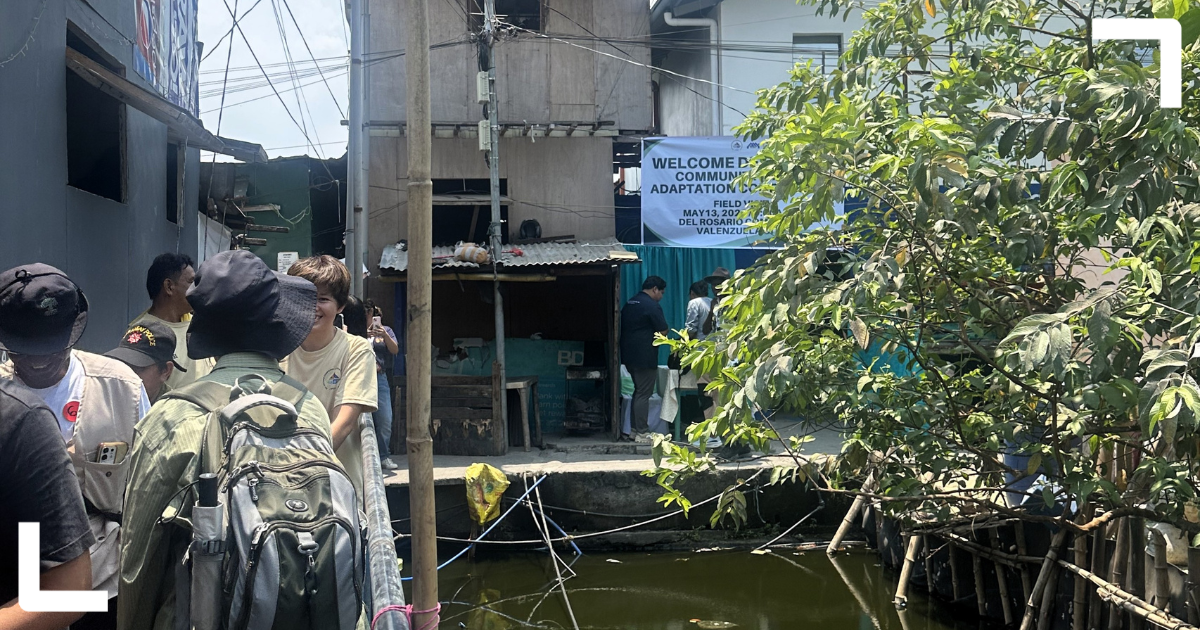
By Sejal Patel, Logedi Luhangala, Anna Walynicki, Aaron Acuda, Anwesha Tewary, Bhagavati Adhikari, Philippine Vernes and Joy Amor Bailey, with inputs from Ceilito Bulagsac from the CBA session, Municipal Government of Saint Bernard, The Philippines
Climate change is intensifying root causes of vulnerabilities such as sociopolitical, demographic, economic and infrastructural challenges in many informal settlements (ie rapid urbanisation, weak infrastructure, flooding and heat stress). Yet, climate finance is still failing to reach many of the low-income urban communities most vulnerable to the impacts of climate change.
This blog post presents reflections from a recent session at the 20th International Conference on Community-based Adaptation to Climate Change (CBA20), which explored this issue through two key lenses: breadth of finance availability (range of instruments); and depth of finance delivery (access).
The session brought together perspectives from local governments, insurers, multilateral financiers and grassroots organisations working directly on the frontlines of urban climate resilience. The session was also part of an ongoing climate finance study across five African cities: Accra, Harare, Kampala, Lagos and Nairobi, under the African Cities Research Consortium (ACRC).
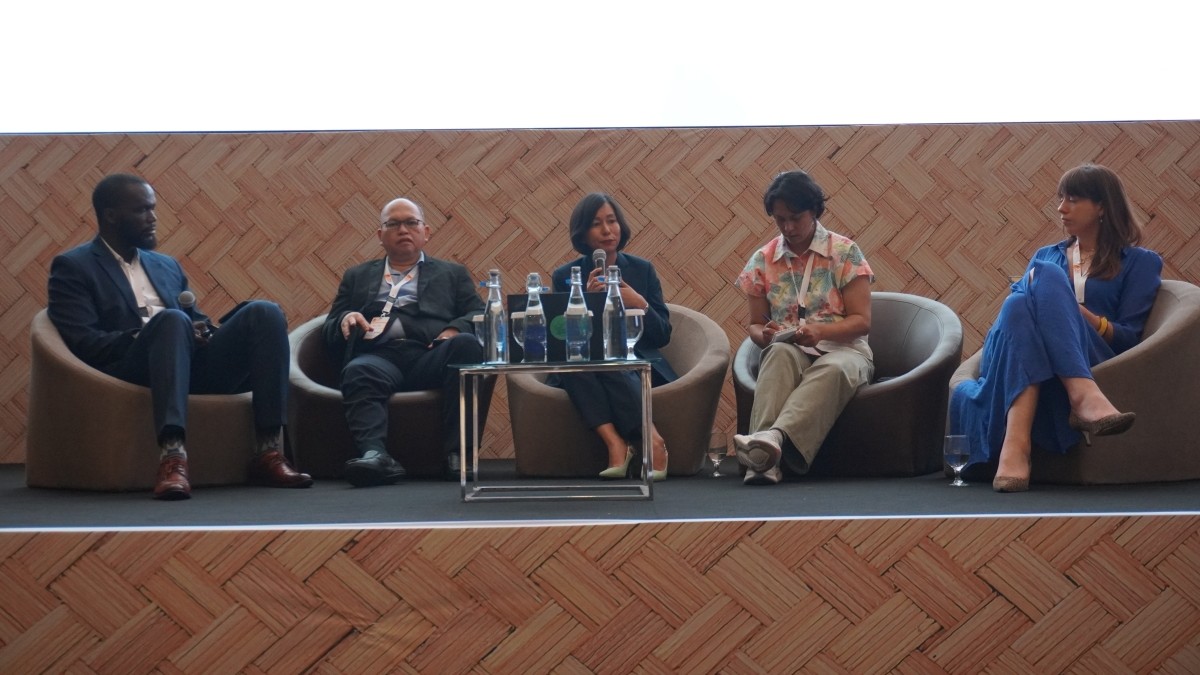
Joy Amor Bailey (Asian Development Bank) shares insights during the CBA20 urban climate finance session. Photo credit: Kentaro Koji
1. Breadth of finance availability: There needs to be a range of financial instruments and products available that service the spectrum of resilience functions to ensure robust coverage for building resilience.
Effective climate finance for informal settlements requires financing that supports communities to anticipate risks, absorb shocks and adapt to changing climate conditions. Different types of finance are required to meet these needs. We can map these against the “three A resilience framework”:
| Resilience function | Financial functions | Examples |
|---|---|---|
| Anticipate | Preparedness and pre-arranged finance | Adaptation investments, resilience infrastructure, forecast-based financing, contingency planning, resilience funds |
| Absorb | Shock-responsive finance/risk financing | Parametric insurance, emergency grants, contingency funds, social protection top-ups, emergency liquidity |
| Adapt | Transformational and long-term investment finance | Upgrading informal settlements, resilient housing, livelihood diversification, climate-resilient infrastructure, access to affordable credit |
The financiers for the different resilience functions vary. For example:
> Banks might be able to provide financing across all three functions.
> Community funds and saving schemes can provide financing that helps communities respond to shocks, and can also be for long-term investments (see Box 1).
> Insurers provide insurance products for responding to shocks. These products can act as a tool to transfer the financial burden of a potential catastrophe to reduce risk. For example, parametric insurance provides rapid liquidity after a shock, which strengthens absorptive capacity (see Box 2).
> Investors may be seeking to fund large-scale infrastructure for revenue generation, including by upgrading settlements or strengthening the climate resilience of infrastructure.
The financial coverage across these functions is not consistent and major gaps persist in availability, as well as accessibility for local communities. A key principle for improving the coverage is that funders need to spend more time directly engaging with vulnerable communities to better understand local contexts and priorities, in order to ensure that financial products being provided are relevant and suitable.
Box 1: Community funds
Community pooled funds and savings – typical of saving groups, cooperatives and women-led networks across the Huairou Commission’s network – play a critical role in building community resilience. Often given as small loans or grants for climate adaptation, livelihoods, emergency relief and housing, and used as social protection and safety nets, these layered instruments allow communities to address multiple intersecting vulnerabilities, as well as build partnerships with the local government. Community-generated data on vulnerability and local conditions strengthen grassroots ability to negotiate with their local governments and seek accountability.
Grassroots groups and landless communities living in informal settlements in Nepal have built three different types of funds – community resilience funds, activist funds and informal solidarity mechanisms (through small daily contributions from residents themselves) – to organise and address climate and development challenges. For example, the activist fund enables community organisers to support advocacy campaigns, protect activists and respond to movement-related needs, while the solidarity fund supports community action during floods, evictions and other crises without waiting for external assistance.
Because of their flexibility, these funds are easily accessible and respond faster to communities’ local priorities during climate emergencies than many formal/institutional arrangements. They strengthen local leadership, collective decision making and mutual accountability. Yet, despite being effective, they remain excluded from support and top-up resourcing from mainstream climate finance because they do not fit formal institutional requirements.
While these funds provide immediate support to communities dealing with climate shocks, they cannot substitute the formal mechanisms required for long-term resilience building and scaling of locally led solutions. Therefore, formal climate finance should recognise, strengthen and invest in these existing community-led mechanisms.
Box 2: Parametric insurance
Parametric insurance is increasingly being used to provide rapid, pre-arranged finance triggered by measurable climate indicators, such as rainfall levels, flooding or extreme heat. Unlike traditional insurance, which requires losses to be assessed before a payment is made, parametric insurance can release funding quickly once an agreed threshold is reached. This speed is particularly important for vulnerable urban informal workers, whose livelihoods can be disrupted by recurring climate shocks and who often have limited access to savings, credit or social protection.
However, experience shows that the effectiveness of parametric insurance depends as much on its design as on the financing itself. Insurance should not be viewed solely as a payout mechanism, but as a resilience tool that enables people to make more informed decisions before, during and after a shock. When people know support will arrive quickly and predictably, they are better able to avoid harmful coping strategies, protect livelihoods and recover more quickly.
Humanity Insured’s experience highlights the importance of community-led design. In India, consultations with female informal workers revealed that the current temperature threshold of 43.7°C used for heat insurance did not align with their lived experience of dangerous heat exposure, with users suggesting adjusting parameters to 40°C – insights that will be embedded into future project design. This reinforces a broader lesson for climate finance: financial instruments designed without community participation are less likely to be trusted, used or effective.
Trust, transparency and accessibility remain critical challenges. Communities often raise concerns about whether insurance triggers are legitimate, whether payouts will arrive as promised and whether products are designed for their circumstances. Successful approaches therefore combine simple and transparent triggers with trusted local delivery partners, such as municipalities, cooperatives and community organisations. For example, flood insurance initiatives supported by Humanity Insured in partnership with Communes of Togo have prioritised community engagement with residents, local government teams led by the mayor, and partners to shape transparent trigger design to strengthen confidence in the mechanism.
Emerging evidence suggests that well-designed, locally grounded parametric insurance can play an important role within broader resilience financing systems. In its first year since launching in October 2024, Humanity Insured used GBP 1.67 million in grant funding to mobilise GBP 33 million of insurance protection for 1.69 million people across 14 countries, resulting in GBP 6.7 million in payouts through pre-arranged risk financing mechanisms. Humanity Insured’s work demonstrates that when insurance is shaped with community engagement, trusted delivery channels and complementary resilience building activities, parametric insurance can help strengthen the absorptive capacity of vulnerable households and communities, while supporting longer-term resilience.
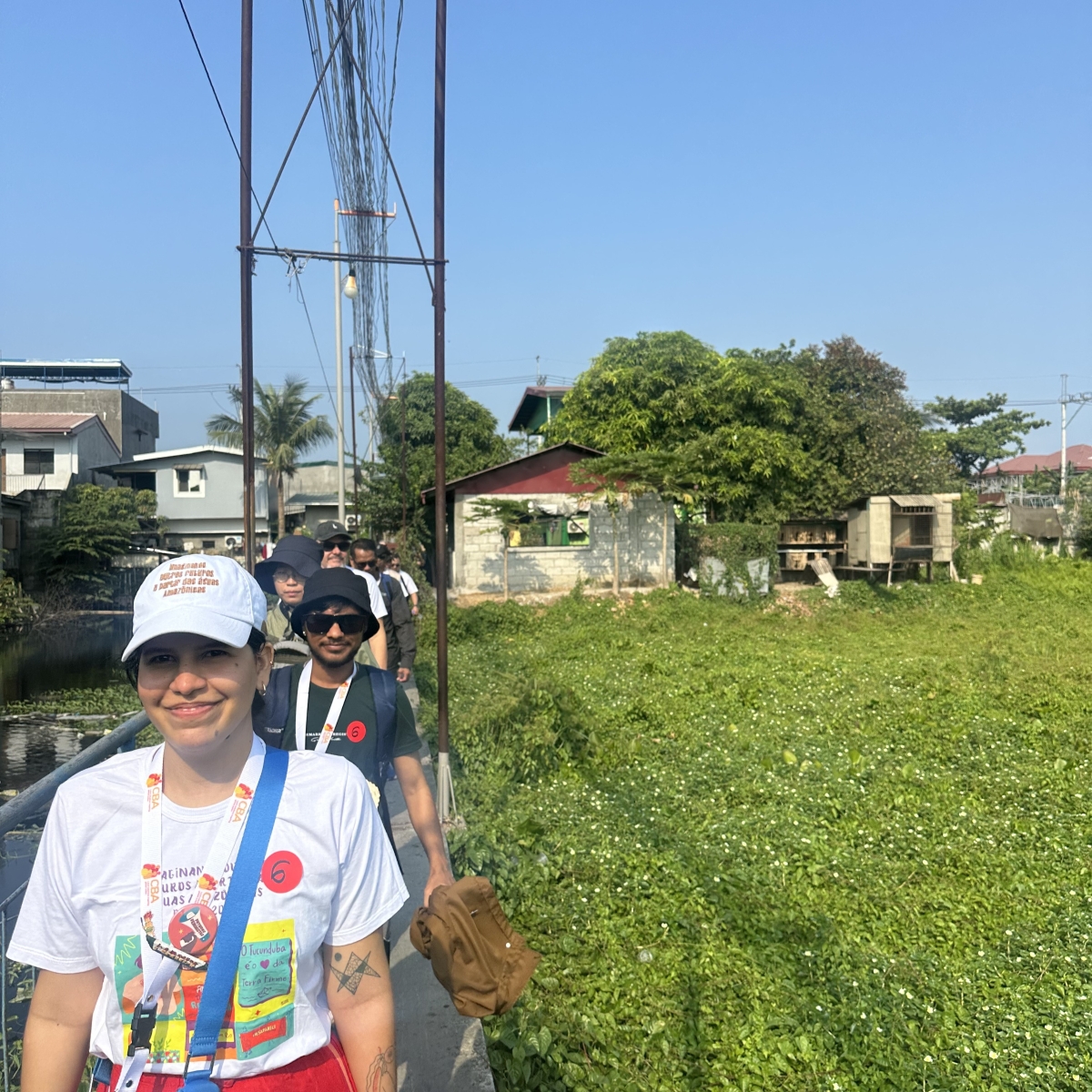
CBA participants visit an urban informal settlement in Manila to observe locally-led adaptation in action. Photo credit: Aaron Acuda
2. Depth of finance delivery: financing needs to be accessible to local actors.
There are calls from across the sector that highlight the need for climate finance systems to fundamentally shift from top-down delivery models towards approaches grounded in co-creation, flexibility and trust. Such approaches enable interventions that can more effectively address the local challenges of climate change. In such systems, communities should not simply be consulted after projects are designed, but should actively shape priorities, financing mechanisms, implementation strategies and accountability systems from the outset.
However, as funding opportunities are still often designed for large institutions rather than community-based organisations responding directly to climate impacts on the ground, there remains a large gap between available financing and financing that communities can access and manage. Often funders argue that the transaction costs of providing small-scale funding across many community organisations is too high.
Climate finance and policy institutions sometimes use terms such as “readiness”, “innovation”, and “transformation” to indicate their willingness to be early investors in building institutional capacities, and in testing new solutions and mechanisms to create systemic shifts in response to the challenges arising from climate change. However, these same principles of investing in capacities and iterative learning processes to build innovative solutions must be applied to climate investments in grassroots organisations and movements, with the recognition that they are continually experimenting with solutions to address the everyday challenges arising from development failures, exacerbated by climate change.
Communities report several barriers to accessing finance, including:
> Tenure, land rights and navigating informality (see Box 3);
> The mismatch between large-scale financing (for example, Multilateral Development Bank minimum transaction size, typically structured into multimillion-dollar investments) and the relatively small scale of community investment needs;
> Needing to complete proposals in English in rigid formats, rather than being able to use local languages and formats;
> Lengthy proposal reviews, procurement procedures and financing approval cycles that require ongoing capacity;
> Limited technical capacity, and inadequate climate information and data; and
> Weak institutional support at the national and local levels.
As well as stronger investments in community capacity development, including proposal writing, monitoring systems, climate data generation and project management support, the financing landscape needs to make more fundamental shifts towards supporting smaller and more local projects, designed and implemented by local actors. This would require a shift in financial institutions’ own frameworks and systems, to become more flexible and open to community-led practices, community capacities and simplified approaches (see Boxes 4 and 5).
Box 3: Reaching communities in informal settlements
The Nepal experience highlights important lessons for climate finance. While community resilience funds established in partnership with local governments can help align investments with public systems, bureaucratic approval processes have at times delayed communities’ access to funds for years. Communities in informal settlements are frequently treated as illegal occupants rather than legitimate urban residents, limiting their ability to access financial services and subsequently public financing or institutional support.
Many vulnerable populations are expected to meet highly technical funding requirements, despite lacking proposal-writing capacity, technical expertise or political recognition. This disconnect continues to exclude the very communities that climate finance is intended to support. Creating more accessible funding processes, including simplified applications and greater acceptance of community-generated evidence such as local data, photographs and videos, can help shape and strengthen urban climate responses.
Climate risk reduction measures themselves can sometimes result in displacement when undertaken without community participation or adequate planning. “Meaningful community participation” must extend beyond consultation to include grassroots leadership in co-planning and co-designing programmes and funds, based on local risk context in urban areas.
Box 4: Financing resilience requires investments in systems, and not just the hard infrastructure
The municipality of Saint Bernard provides a case of how community-based early warning systems can strengthen resilience when local ownership is prioritised. Their approach combined hazard monitoring technology, local radio systems, community preparedness and ecosystem restoration to reduce flood risks. The municipality found that sustaining these systems required blended financing from local governments, national agencies and international partners. The municipality found that resilience was not only about installing equipment; it was equally about trust, preparedness, training and community participation.
Box 5: Building partnerships for enabling action
Strengthening partnerships between communities, local governments, universities and civil society organisations can build stronger project pipelines and scalable resilience solutions.
In Indonesia and Pakistan, multistakeholder partnerships involving communities, research institutions, local governments, utility companies, civil society organisations and development partners enabled the successful demonstration of community-driven and nature-based resilience interventions. A participatory co-design methodology positioned communities as active stakeholders with decision making authority throughout project planning, implementation and operations and maintenance, strengthening local ownership and long-term sustainability.
In Makassar, Indonesia, the technical expertise of Monash University, policy and planning support from the local government and financing from a charitable foundation and Asian Development Bank’s Urban Climate Change Resilience Trust Fund (UCCRTF) facilitated the delivery of green corridors, constructed wetlands, and toilet facilities in informal settlements. These interventions improved human and environmental health and demonstrated the viability of nature-based, decentralised water and sanitation systems. In Pakistan, partnerships with civil society organisations, utility companies and local authorities supported the implementation of community-managed water supply systems, solid waste collection and resource recovery facilities in low-income urban communities in Abbottabad, as well as the gender-sensitive urban green space development in Sialkot.
These initiatives illustrate how collaborative partnerships can mobilise financing for adaptation investments and generate proof-of-concept for scalable resilience solutions. They also highlight that adaptation outcomes depend not only on physical infrastructure but on effective community participation, inclusive governance arrangements, local knowledge integration and sustained institutional capacity to support long-term resilience.
The future of urban resilience will depend not only on how much climate finance is mobilised globally, but on whether those resources can reach communities quickly, equitably and in ways that strengthen local leadership and long-term resilience.
Further reading
- Cities Alliance – Climate finance for the urban poor: A review of global climate funds
- ODI – The 3As: Tracking resilience across BRACED
- Asian Development Bank – Water-sensitive informal settlement upgrading: Overall principles and approach
- Humanity Insured – Building resilience through protection: Humanity Insured learning report 2025
- Humanity Insured – Communes of Togo: Kloto 1, Golfe 1, and Golfe 7
- Oxfam – Rising to the call: Good practices in disaster risk reduction and climate change adaptation in the Philippines
- Asian Development Bank Institute and Asian Development Bank – Applying systems resilience to deliver poverty alleviation outcomes in vulnerable communities
- IIED – The good climate finance guide for investing in locally led adaptation
- IIED – “Unlocking urban climate finance: Barriers and progress in African cities”
Authors
- Sejal Patel – Senior Researcher, IIED
- Logedi Luhangala – Consultant, IIED
- Anna Walnycki – Principal Researcher, IIED
- Aaron Acuda – Researcher, IIED
- Anwesha Tewary – Learning and Knowledge Management Specialist, Huairou Commission
- Bhagavati Adhikari – Planner, Nepal Mahila Ekata Samaj (a member of Huairou Commission)
- Philippine Vernes – Head of Philanthropy and Partnerships, Humanity Insured
- Joy Amor Bailey – Deputy Team Leader (Consultant), Urban Resilience Trust Fund, Asian Development Bank
Organisations

IIED is an international policy and research organisation working with partners globally to build a fairer, more sustainable world. Together, they challenge the destructive economic models, unjust power dynamics, entrenched mindsets and protectionist laws that perpetuate poverty, suppress rights and hinder progress towards a thriving world. They explore solutions to complex economic, social and environmental crises, using research, action and influencing to tackle the root causes of climate change, nature loss and inequality.

Humanity Insured is a UK- and US-registered charity, backed by the insurance sector, that makes insurance accessible and effective for people facing climate volatility, helping to prevent climate shocks from driving them into deepening poverty. It funds insurance designed with the people it protects, empowering them with greater choice, agency, and a financial safety net to strengthen their long-term resilience.

Nepal Mahila Ekata Samaj (NMES) is a women’s network of slum and squatter communities located in Nepal. NMES engages 57,000 consolidated members in slum and squatter communities of rural, urban, and peri-urban areas on the issues of land and housing. The main areas of work for NMES are national constitutions, land and right policies, land use, women’s rights, and urban development policies. NMES joined Huairou Commission (HC) in 2007 to build leadership and empowerment of slum and grassroots women leadership, lobby, and advocate for women rights together with HC at the global level.

Huairou Commission (HC) is a women-led social movement of grassroots groups from poor urban, rural and indigenous communities in 38 countries. We position grassroots women as agents of change who must be at the center of development decision-making. Guided by values of solidarity and inclusion, we work for a transformed world with balanced power relations and communities free from poverty and other inequalities, across but not exclusively in gender, race, cultural dimensions.
The Urban Resilience Trust Fund (URTF) is a multi-donor trust fund with current resources from the UK government and The Rockefeller Foundation amounting to USD 84.73 million. Set to be implemented between 2023 and 2031 by the Asian Development Bank (ADB) under its Urban Financing Partnership Facility (UFPF), the fund provides technical assistance and promotes innovative investment grants in targeted thematic areas that support integrated resilience planning, design and implementation of climate-resilient infrastructure, and the sharing of knowledge on climate and disaster risk reduction.
Header photo credit: Aaron Acuda. CBA participants visit an urban informal settlement in Manila to observe locally-led adaptation in action.
Note: This article presents the views of the authors featured and does not necessarily represent the views of the African Cities Research Consortium as a whole.
The African Cities blog is licensed under Creative Commons Attribution-NonCommercial-NoDerivatives 4.0 International (CC BY-NC-ND 4.0), which means you are welcome to repost this content as long as you provide full credit and a link to this original post.
