
By Nyang’wara Chrispine, AMT project lead; Rosebella Apollo, ACRC research uptake officer; Jerry Okal, ACRC Nairobi uptake lead and Georgina Kasamani, AMT landscape architect
In Nairobi, the rain does not arrive quietly. It comes with a rhythm the city knows well: darkening skies, sudden downpours, and the slow but inevitable pooling of water along roads and footpaths.
For some, it is an inconvenience, leading to traffic, delays and a damp commute. For others, it signals something far more disruptive. In low-lying neighbourhoods and along riverbanks, each storm carries a quiet anxiety – a question of how much water will fall, and what it will take with it when it comes.
That anxiety deepens as each rainy season brings a familiar narrative back into focus. Images of submerged homes, displaced families and disrupted livelihoods dominate public discourse, often followed by calls for evictions or stricter enforcement along riparian reserves. Yet these responses tend to fall disproportionately on marginalised communities, raising difficult questions about equity, responsibility and whose vulnerability is being addressed.
The critical question remains: “Does this approach actually solve the problem?”
Flooding as a symptom, not the problem
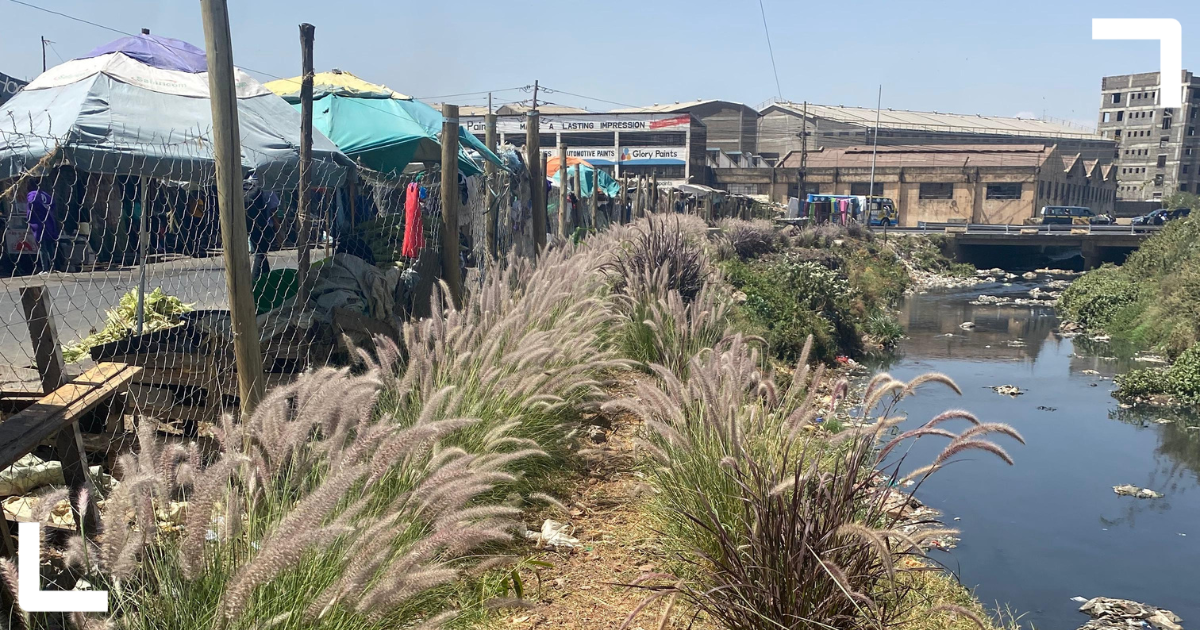
Flooding is not an isolated occurrence, but rather the visible manifestation of deeper structural and systemic challenges within Nairobi’s urban environment. It reflects the cumulative impact of widespread encroachment onto riparian corridors across both formal and informal developments, which has significantly reduced the natural capacity of rivers to accommodate excess flows. This is further compounded by inadequate stormwater infrastructure and poorly maintained drainage systems that are unable to effectively channel runoff during periods of heavy rainfall.
Additionally, ineffective solid waste management practices have led to the accumulation of debris within waterways, obstructing flow and exacerbating overflow conditions. Rapid and often uncoordinated urbanisation has intensified pressure on existing infrastructure and natural systems, while the progressive loss of wetlands, vegetation cover and other natural ecosystems has diminished the city’s ability to absorb and regulate stormwater. Collectively, these factors interact to increase the frequency, intensity and spatial extent of flooding across the urban landscape.
A crosscutting urban planning challenge
Rivers do not distinguish between formal and informal settlements; they traverse the entire urban fabric. Interference with natural river courses, whether through informal encroachment or formal developments, disrupts hydrological systems and often triggers severe flooding. The consequences are evident across the city: flooded apartment blocks in formal neighbourhoods, just as much as inundated iron sheet “mabati” structures in informal settlements.
Framing flooding as a problem facing informal settlements alone overlooks the systemic nature of the issue. It shifts attention away from broader urban planning failures and delays the kind of integrated, citywide solutions required to build resilience.
The myth of blame
Similarly, blaming informal settlements alone for flooding overlooks a much more complex and uncomfortable truth. Encroachment on riparian land is not confined to low-income communities; it is a citywide phenomenon. Across Nairobi, both formal and informal developments have gradually extended into river corridors, constricting waterways and undermining their natural ability to absorb and regulate floodwaters.
At the same time, systemic failures in waste management have turned rivers into channels for plastic and debris, further choking flow, and intensifying flood risks. What emerges is not a localised problem, but a shared urban challenge shaped by decisions made across the entire city.
In this light, informal settlements are not the root cause of flooding; they are simply on the frontline, bearing the brunt of a crisis that has been collectively produced.
Reclaiming riparian corridors: A shared responsibility
If flooding is a systems issue, then the response must be equally systemic. At the heart of this response lies the reclamation and restoration of riparian land. But reclaiming river corridors is not simply an exercise in enforcement or the removal of structures; it is about reimagining and restoring the river’s role within the city.
A healthy riparian corridor acts as a natural buffer that absorbs and slows floodwaters. It is a critical drainage channel that safely conveys stormwater, a thriving ecological habitat that supports biodiversity, and a shared public space that connects communities to nature.
When restored, these corridors can help reshape how the city functions. They reduce the intensity of floods, ease pressure on drainage systems, and create safer, more resilient neighbourhoods across the urban landscape. In doing so, they shift the narrative from crisis management to long-term resilience, benefitting not just those living along the river, but the whole city.

Mitigating flood impacts in the city
While river degradation has often been framed as a challenge concentrated in Nairobi’s informal settlements, it is increasingly clear that it is a systemic, basin-wide issue affecting both upstream and downstream areas. In neighbourhoods such as Kilimani, rapid densification, commercial expansion and encroachment into riparian reserves have disrupted natural drainage systems. The replacement of permeable surfaces with impervious infrastructure has accelerated stormwater runoff, increased peak river flows and intensified flood risks across Nairobi.
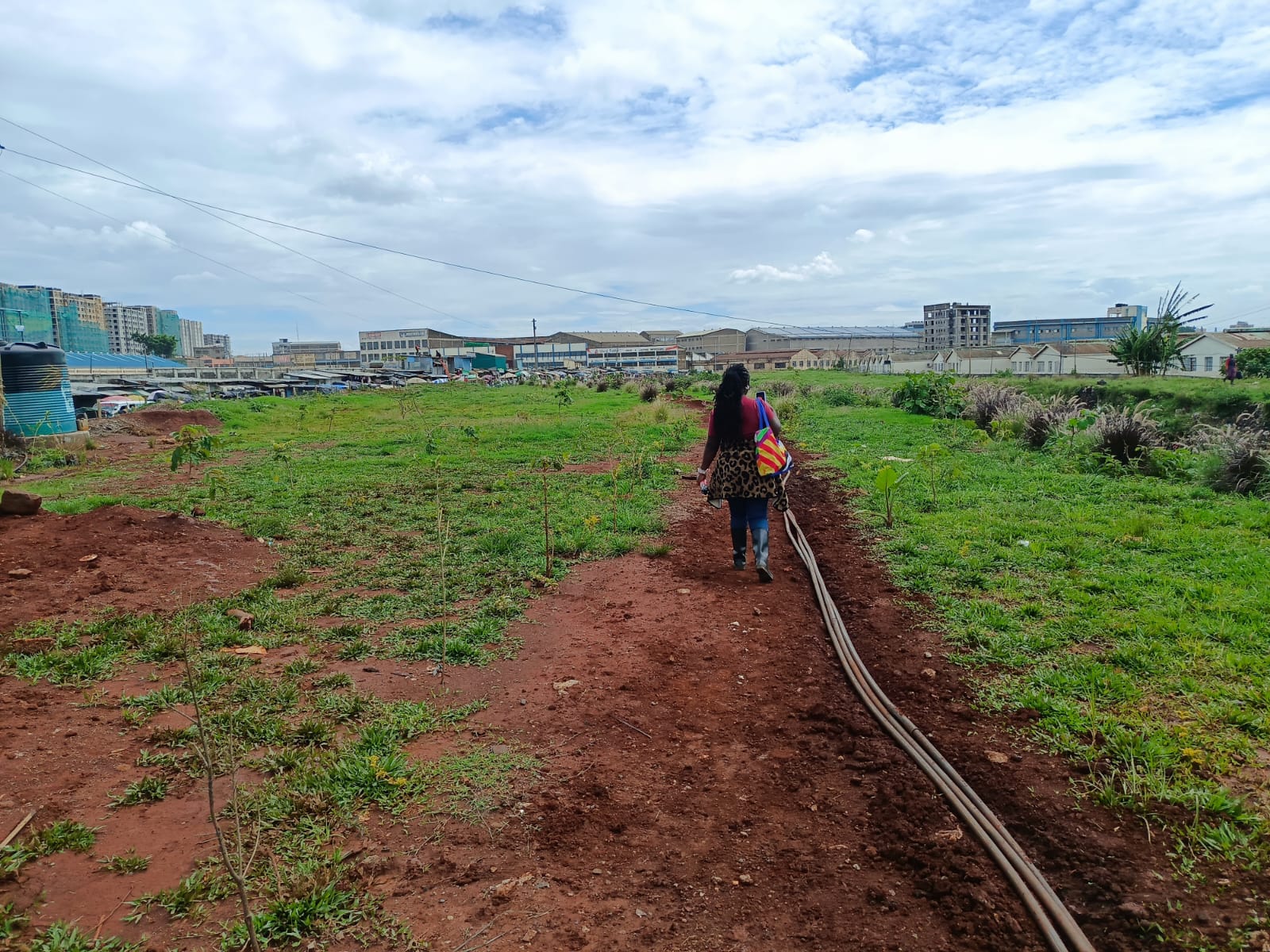
In response to these interconnected challenges, Akiba Mashinani Trust (AMT), in collaboration with the Nairobi Rivers Commission (NRC), civil society organisations, and academic institutions, has co-created a River Regeneration Advisory Plan along a 9km stretch of the Ngong River, from Mombasa Road to Outer Ring Road. This process integrates detailed site analysis, participatory planning and co-design with local communities and technical input, to guide implementation and policy uptake.
Critically, this work demonstrates how river regeneration can function as nature-based infrastructure for flood mitigation. By restoring riparian buffers, reintroducing indigenous vegetation and rehabilitating degraded riverbanks, the initiative enhances infiltration, stabilises soils and slows surface runoff before it enters the river system. These interventions help to attenuate peak flows, reduce downstream flooding and improve the overall hydraulic performance of the river corridor.
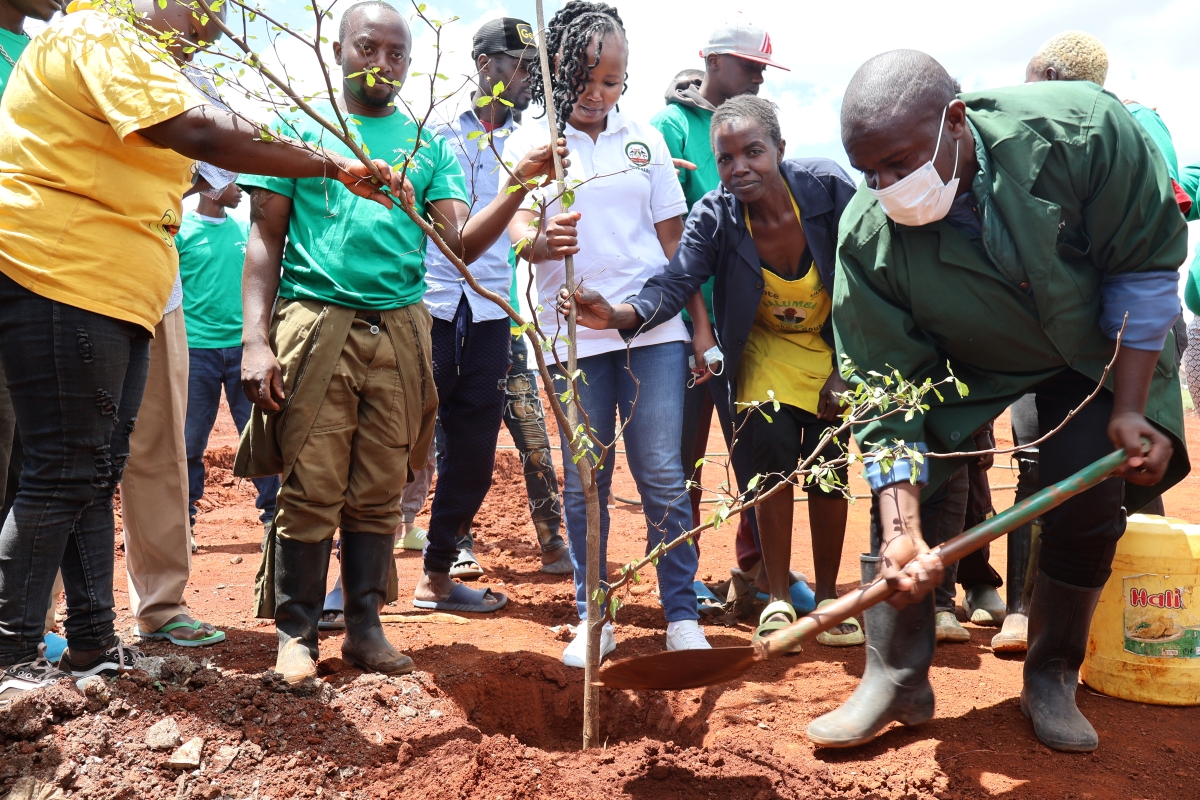
The approach has already moved from planning to implementation. On 10 October 2025, residents of Mukuru Kwa Reuben participated in a large-scale tree planting festival, establishing one of the pilot community-designed river parks. The planting of 100 indigenous trees and 300 grasses marked the first step in creating a continuous green corridor along the river. Beyond ecological restoration, the green corridor acts as an urban sponge, absorbing and temporarily storing stormwater, reducing the burden on grey drainage infrastructure, and lowering the intensity of flood events during heavy rainfall.
Importantly, AMT’s work along the Ngong River basin signals the scalability of this model. By linking upstream land-use practices with downstream flood impacts and embedding community-led stewardship within technical river restoration, the initiative offers a replicable pathway for integrating climate resilience, flood risk reduction and inclusive urban development. As these interventions expand across the basin, they hold significant potential to reduce citywide flood vulnerability while restoring the ecological integrity of Nairobi’s river Systems.
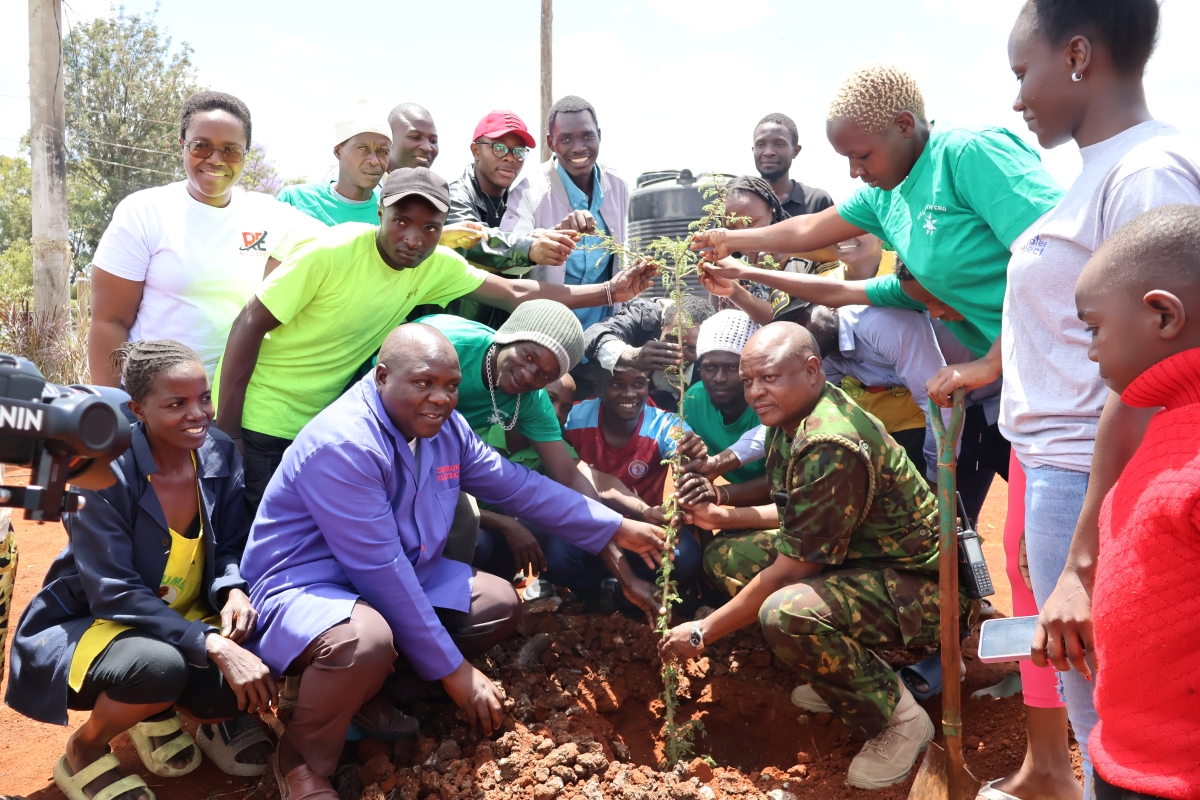
To sustain and expand these gains, AMT, supported by the African Cities Research Consortium (ACRC), is advancing the next phase of river regeneration along the Ngong River. Building directly on the initial 9km stretch, the regeneration work extends both within the initial stretch and upstream. This includes the implementation of a co-designed children’s play park and the continuation of the co-design process along an additional 3.4km upstream section.
Crucially, this expansion reinforces the basin-wide approach to flood mitigation by connecting localised interventions into a continuous, functioning river corridor. Through community-led, nature-based solutions across the river system, the initiative not only deepens ecological restoration but also significantly strengthens Nairobi’s capacity to manage stormwater, reduce flood risk and embed long-term urban resilience within everyday public spaces.
A citywide call to action
Flooding should not be seen through the narrow lens of “problem areas”. It is a shared urban challenge that demands collective responsibility from planners, policymakers, developers, and residents alike.
Reframing the conversation is the first step. When we recognise flooding as a citywide issue, we open the door to solutions that are more equitable, more sustainable and ultimately more effective. Because a resilient city is not built by protecting some areas and neglecting others, it is built by restoring the systems that sustain us all.
Photo credits: Akiba Mashinani Trust, Georgina Kasamani, Peris Sale
Note: This article presents the views of the authors featured and does not necessarily represent the views of the African Cities Research Consortium as a whole.
Generative AI was used to help draft this blog post: The author asked ChatGPT to improve a draft version of the post for clarity. This version was then reviewed and edited by the ACRC communications team, before being approved by the author.
The African Cities blog is licensed under Creative Commons Attribution-NonCommercial-NoDerivatives 4.0 International (CC BY-NC-ND 4.0), which means you are welcome to repost this content as long as you provide full credit and a link to this original post.
