By Patrick Njoroge , Rex Otieno and Maureen Musya
In early February, the Akiba Mashinani Trust (AMT) led a nine-person delegation from Nairobi for a weeklong learning exchange visit to Okerube informal settlement in Lagos. The visit built on a previous exchange, when the Lagos city team visited Mukuru informal settlement in Nairobi to learn from an established WASH intervention. It forms part of ACRC’s wider effort to strengthen learning across cities and projects.
The visit aimed to build institutional consensus and strengthen collaboration around an integrated planning process for Okerube – an approach proposed during the earlier Mukuru exchange to support coordinated and inclusive settlement planning. It created a space for the Kenyan delegation – comprising AMT, Nairobi City County Government (NCCG), Nairobi City Water and Sewerage Company (NCWSC), and representatives from Mukuru community – to meaningfully engage with local government leadership, research institutions, technical partners, and community actors in Lagos.
The University of Lagos Centre for Housing and Sustainable Development hosted the visit with the ACRC Lagos city team and the Shantytown Empowerment Foundation (SHEF). Discussions focused on governance, service delivery, participatory planning and climate resilience. Further lessons were drawn from the Mukuru WASH intervention in Nairobi and contextualised within Lagos’s institutional framework.
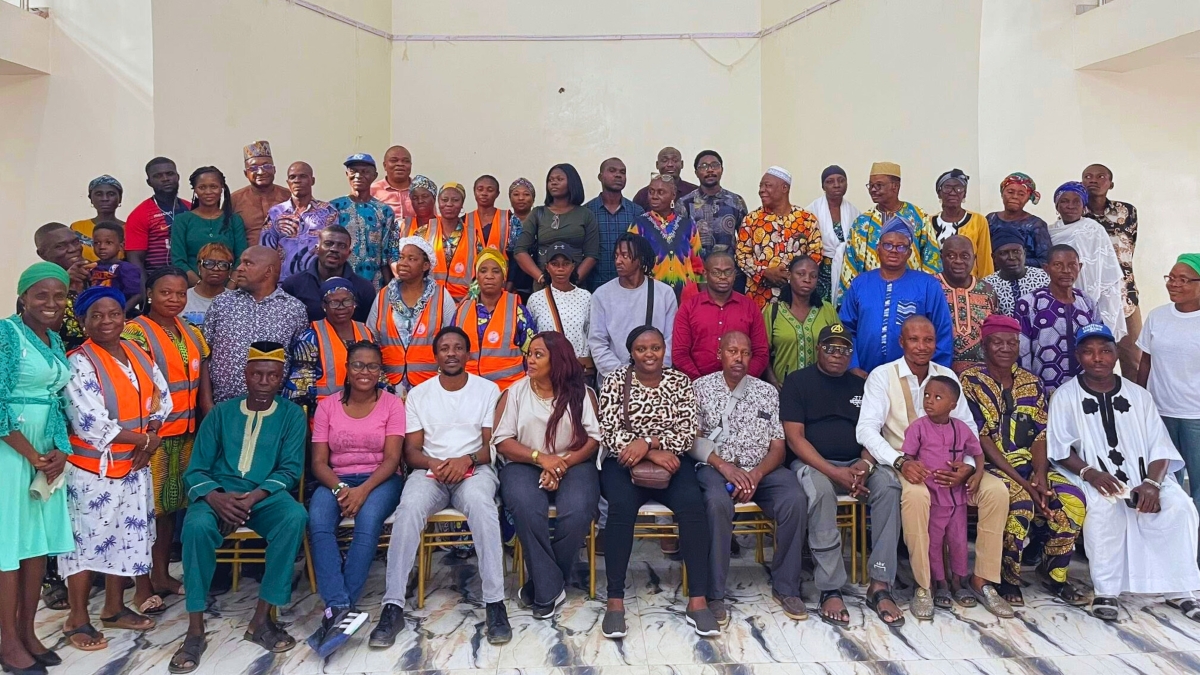
Meeting local council members and visiting Okerube
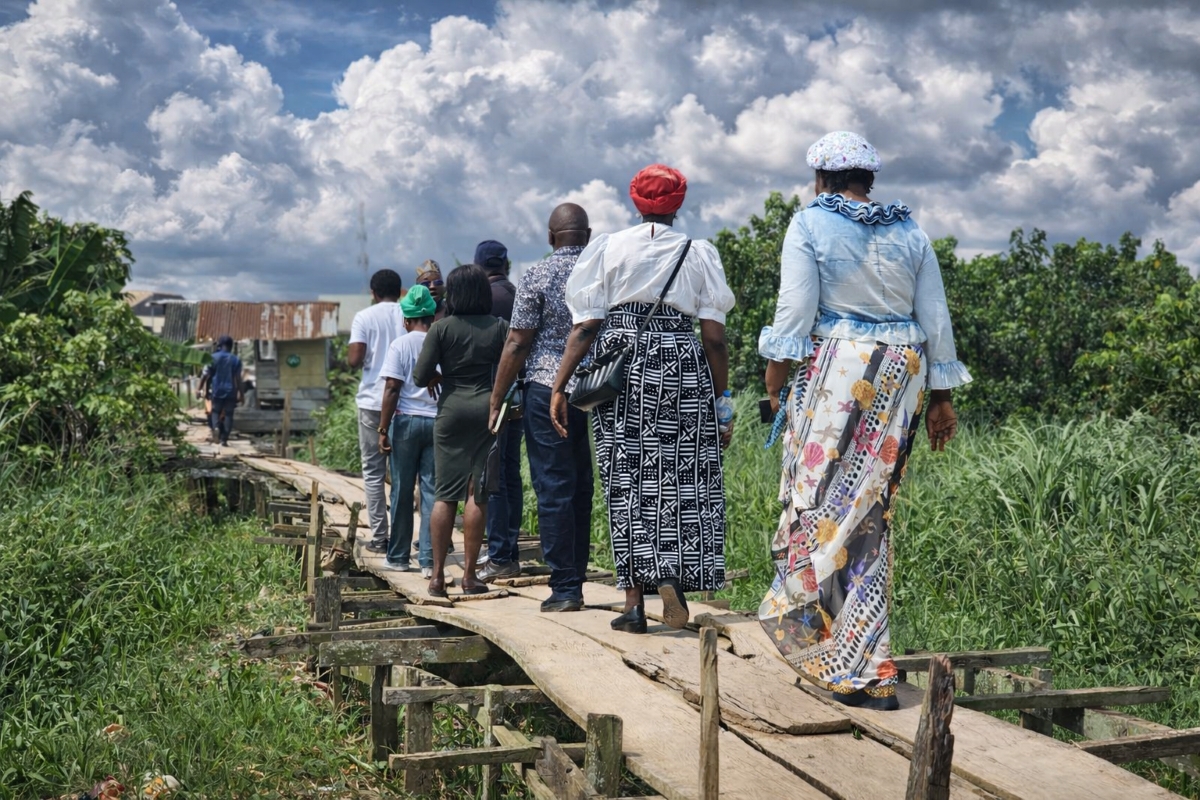
The first day included a visit to the Executive Chairman of Igando/Ikotun Local Council Development Area (LCDA), a transect walk through the Okerube settlement and a meeting aimed at aligning government commitment with community priorities.
Meeting the Igando/Ikotun Chairman reinforced a need for structured collaboration between local and state governments in order to improve service delivery. He highlighted the importance of multistakeholder partnerships to address infrastructure deficits and expand access to basic services, also noting the need to grant greater autonomy to local governments to strengthen accountability and improve delivery.
During the engagement, the Chairman also formally confirmed institutional support for the WASH project in Okerube settlement, committing participation from relevant departments within the local government – specifically Budget and Planning, Agriculture, Health and Social Services, and Works and Development. The visit concluded with the Chairman expressing readiness to scale development interventions following implementation of the research project, reaffirming the institutional commitment to collaborative planning.
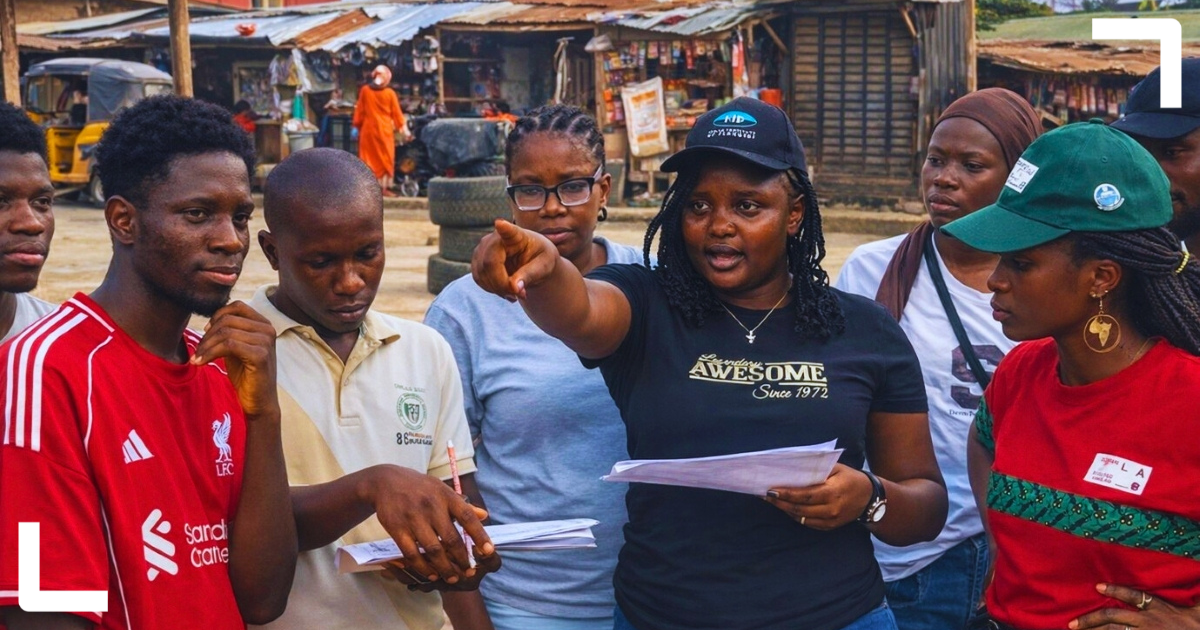
Following the meeting, the team visited Okerube settlement to better understand the spatial realities of the area – particularly the infrastructure conditions and flood-prone zones – as well as its socioeconomic dynamics. Unlike many highly congested informal settlements, Okerube has open spaces and defined plots, but inadequate infrastructure, weak drainage management and environmental vulnerability compound flooding in the settlement. While an active informal economy has emerged to fill service provision gaps, these enterprises are often located in high flood risk areas.
A community meeting was also convened to allow direct dialogue with Okerube residents. Although some community members were hesitant to openly discuss local challenges, other residents highlighted a number of priority needs – including improved water and sanitation, flood management, electricity supply, road and drainage infrastructure, secondary education, streetlighting and security. Flooding in particular emerged as a critical concern, with community members reporting severe flooding at least every two years and one resident describing having to carry her child on her shoulders through chest-level floodwaters to safety.
At the end of the day, the delegation had made progress in contextualising Okerube’s vulnerabilities and securing formal commitment from the LCDA to support the implementation of the WASH action research project.
Institutional learning and knowledge sharing
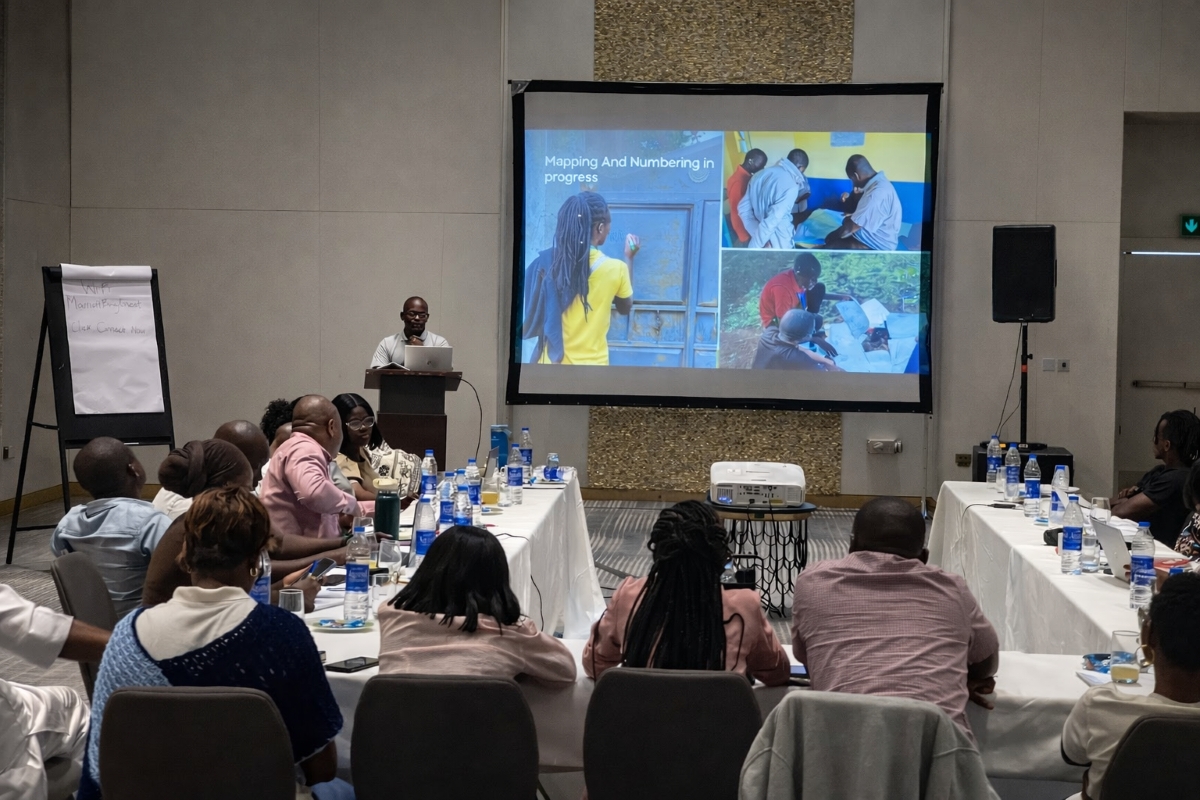
The second day of the exchange visit focused on sharing knowledge and laying the groundwork for coordinated participatory planning, bringing together representatives from the Nairobi delegation, ACRC Lagos, SHEF, academic partners and local stakeholders to examine the political, institutional and community frameworks shaping urban development processes in Nigeria and Kenya.
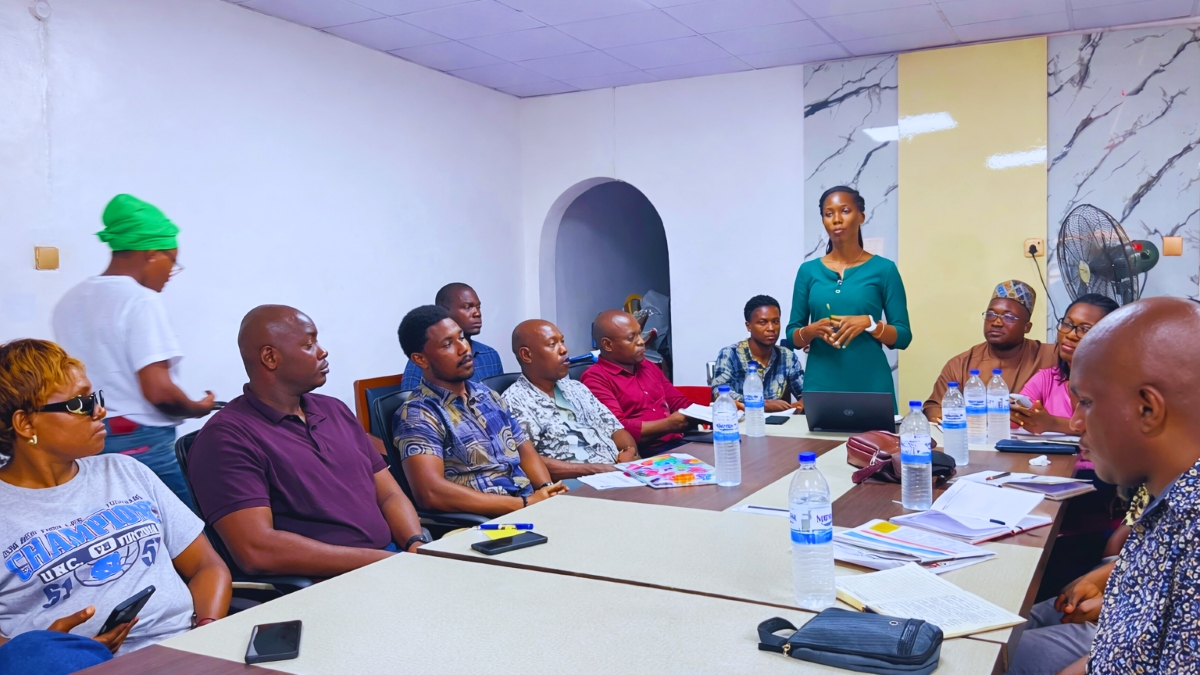
ACRC Lagos in-city politics lead Damilola Agbalajobi delivered a presentation on Nigeria’s political and governance system, contextualising the planning environment for the Okerube WASH initiative and exploring the political dynamics that influence development processes in Lagos.
Funmilayo Daniel separately presented on the Women Water Committees, covering their leadership structure, operational model and how organised community groups have improved water accountability in underserved areas. Her presentation underlined how women’s groups have emerged as critical actors in improving water access in communities.
Following this, the Nairobi delegation shared practical experiences from Kenya – with Maureen Musya presenting the Mukuru Special Planning Area process and Rex Otieno covering the Homa Bay planning process, detailing the methodology and highlighting how long-term frameworks can provide stability and allow for phased investment.
Designing an integrated plan for Okerube
The third day transitioned from knowledge sharing to structured design. Collectively, delegates made progress in defining a shared vision for Okerube informal settlement and outlining the structured actions required to guide the planning process. With support from AMT, the ACRC Lagos team prepared an integrated participatory plan for Okerube informal settlement, moving beyond WASH issues to address broader and interconnected challenges – such as flooding, infrastructure deficits, land issues, social amenities and environmental risks.
For relevance and sustainability, the plan required integration at several levels:
> Integration with existing statutory and development plans
> Sectoral coordination across thematic areas
> Spatial and non-spatial linkages
> Climate and environmental considerations
> Structured input from diverse stakeholders
By the end of the day, it was clear that structured governance arrangements, early and sustained stakeholder engagement, standardised data systems and data-led decision making were key to a phased and methodical planning pathway.
Building capacity around data collection
The fourth day saw the team returning to Okerube settlement for a field-based capacity sharing initiative, which involved hands-on training on enumeration and real-time testing of tools to prepare for a full-scale data collection exercise. After preliminary deliberations to agree on a numbering structure, the session formally commenced with an orientation exercise for 17 community researchers on data collection. The pilot exercise allowed testing of research tools and refinement of questions, to sharpen numbering prior to a full rollout.
Involving community co-researchers proved instrumental in facilitating access and building trust. Their familiarity with local pathways and residents helped cooperation and minimised resistance. The pilot also worked to strengthen enumerator confidence, clarify workflow expectations and provide a shared understanding of quality control standards.
Reflecting and mapping a way forward
As the Lagos and Nairobi teams met one last time for a structured debrief on day five, it was clear that the visit had successfully secured institutional commitment from the Igando/Ikoton LCDA, strengthened collaboration across city teams, and built a shared understanding of an integrated, community-centred and evidence-based planning framework. Strong emphasis was laid on the centrality of co-production between community members, government actors and technical partners.
The exchange visit closed with mutual commitment to advancing the integrated planning process for Okerube settlement, with a collaborative framework linking SHEF, the University of Lagos and the local government. Conscious of the comprehensive nature of planning processes, the team charted a two-phase approach, aligned with statutory planning frameworks and institutional mandates. The first phase will focus on generating evidence and building capacity for comprehensive household numbering, mapping and enumeration, and the second on collective interpretation of the evidence and consolidating the integrated people’s plan.
Continued learning and collaboration
The five-day visit illuminated a complex governance landscape in Lagos state, along with clear physical and environmental vulnerabilities in Okerube, the need for strategic planning and alignment with government priorities, and the centrality of community and evidence in collaborative planning. Beyond securing institutional commitment from the LCDA, the learning exchanges have led to commitment from regional and national governments to advance WASH reforms in Okerube, with SHEF being invited to submit a 145 million Naira (approximately USD 105,700) proposal towards upgrading of WASH infrastructure in Okerube.
As the teams in Nairobi and Lagos continue to grapple with ways of catalysing inclusive urban transformation, the exchange has helped mark a clear path ahead for the ACRC initiative in Okerube: forming multistakeholder consortia, settlement-wide enumeration and mapping, validating findings, and preparing an integrated people’s plan to submit through local government structures.
SDI affiliate SHEF will anchor the process locally, while AMT provides technical advisory support, guiding the strategic approach and ensuring methodological rigour. The team will also explore cross-project collaboration with other ACRC initiatives, such as flood modelling, property tax and waste management.
Read more:
- Nairobi to Naija: Inclusive service delivery in African cities is not a pipe dream
- Is knowledge power? Reflections on water, sanitation and survival in informal settlements
Listen:
Photo credits: Rex Otieno
Note: This article presents the views of the authors featured and does not necessarily represent the views of the African Cities Research Consortium as a whole.
The African Cities blog is licensed under Creative Commons Attribution-NonCommercial-NoDerivatives 4.0 International (CC BY-NC-ND 4.0), which means you are welcome to repost this content as long as you provide full credit and a link to this original post.
