By Joy Birungi and Rosebella Apollo
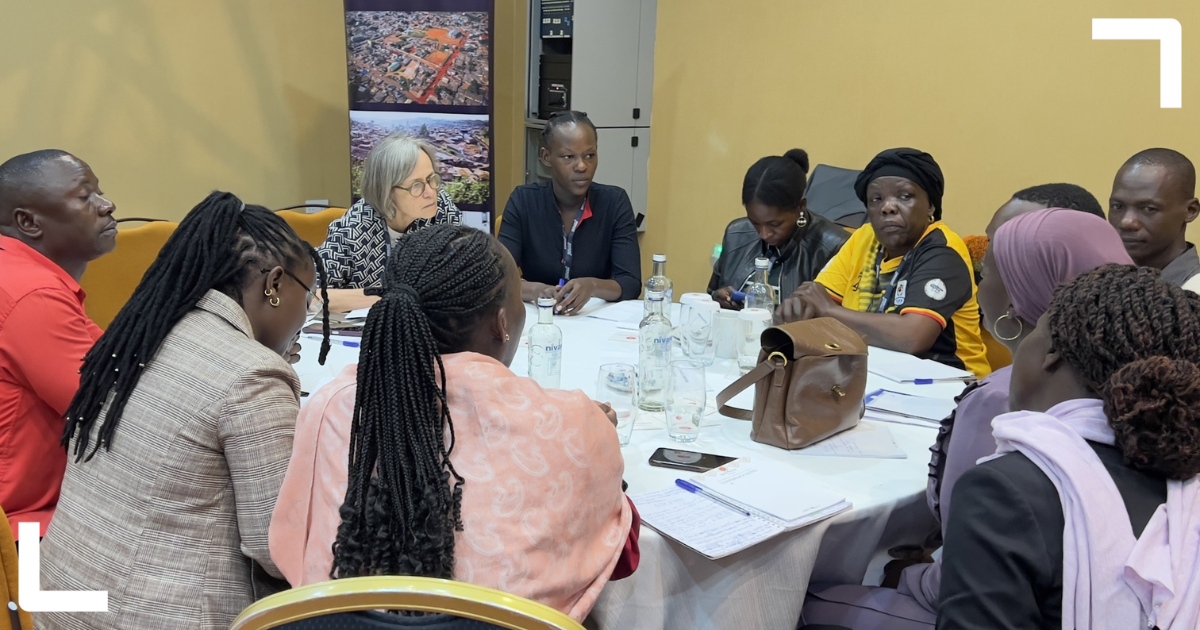
ACRC held a cross-project learning workshop in Kampala during the last week of April 2026, bringing together the Kampala city team, representatives from the action research (AR) projects, and members of the senior management and central uptake teams.
Activities over the two and a half day workshop served as both an inspiration and a brain teaser, pulling reflections from the past research phase and highlighting learnings that could inform ACRC’s implementation phase in Kampala.
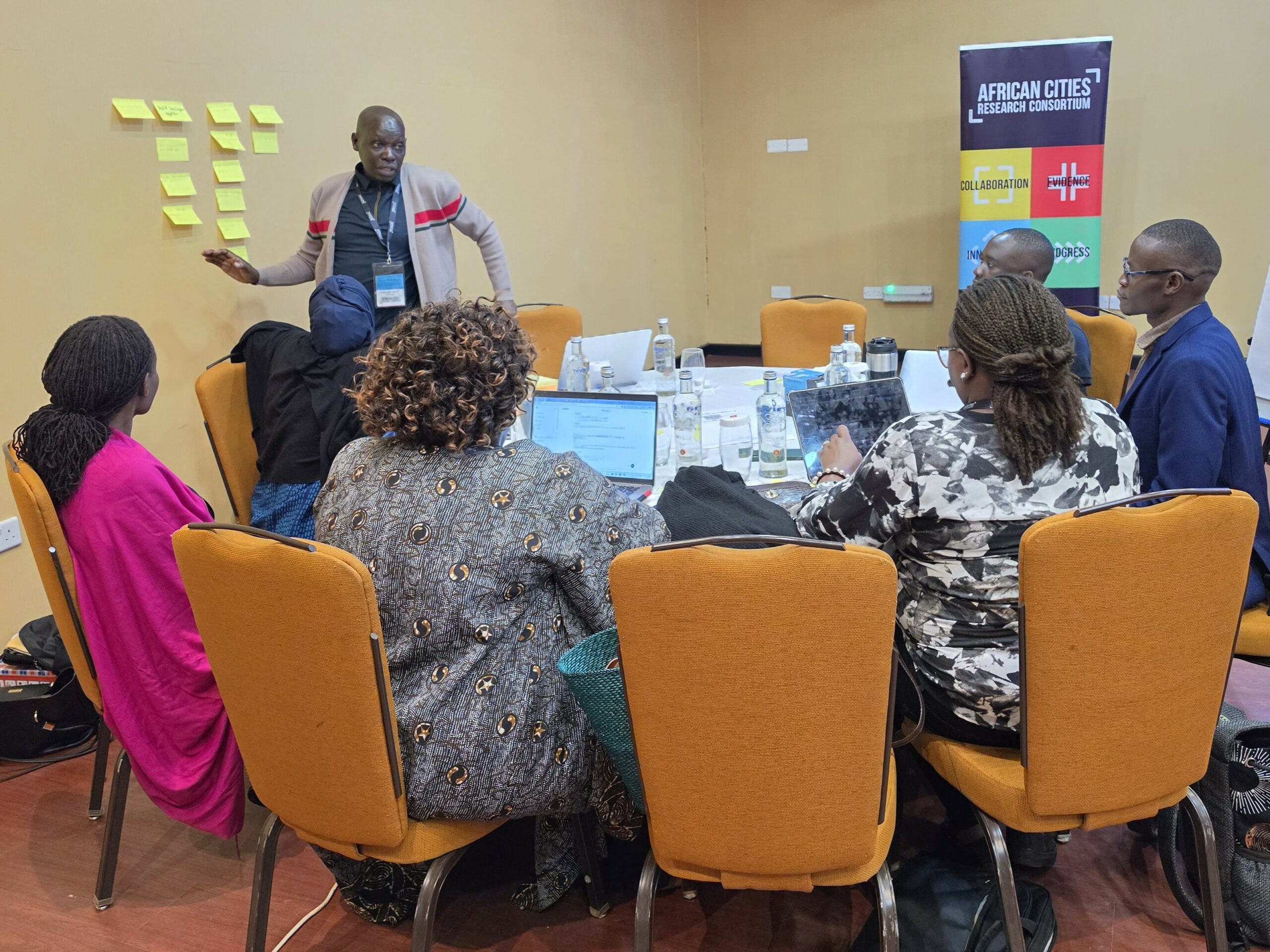
Participants were organised into four functional teams – writers, community knowledge, AR leads and research uptake – to allow inclusive involvement and full exploration of group capacities. As a result, they were able to gain substantial clarity on the mandate of ACRC, the core pillars, domains and application of the ACRC theory of change, and overarching influence on state policy, programming and practices.
Through quick fire panel discussions, functional team group discussions, world café presentations and fishbowl conversations, teams embarked on robust reflections about the ACRC journey – interrogating bright spots, challenges and possible ways of strengthening collaborations and forging integrated reform agendas.
Key learnings
Stakeholder engagement
Within AR projects stakeholder engagement was reported to have worked well, especially capitalising on existing relationships as probable entry points to key government offices. Pre-project preparations, such as preparing project profiles and framing key messages, acted as hooks for target stakeholders. In other instances, there was need to create and build new relationships critical to project outcomes, acceptability and continuity.
During discussions, it was noted that conducting discussions with stakeholders deepened insights of action research scooping studies, and that stakeholder mapping was helpful in identifying individuals who were well-aligned to influence specific policies and programming. Research teams conducted comprehensive community stakeholder mapping to determine potential community gatekeepers, devising strategic ways to engage these stakeholders to ease entry and enable local buy-in. For example, public markets required preauthorisation from the leadership at the City Hall to engage any market officers, dwellers and vendors. Likewise, teams had to continuously update the stakeholder matrix based on state and community feedback to ensure engagement remains relevant.
The importance of aligning ACRC Kampala projects with Uganda’s National Development Plan IV and Uganda’s Vison 2040, in addition the UN Sustainable Development Goals and African Union, was noted as a key reform entry point.
Power of community knowledge
The contribution of community knowledge leads in navigating community politics was undisputed.
“Community knowledge team was a great bridge between project researchers and community leaders and dwellers.”
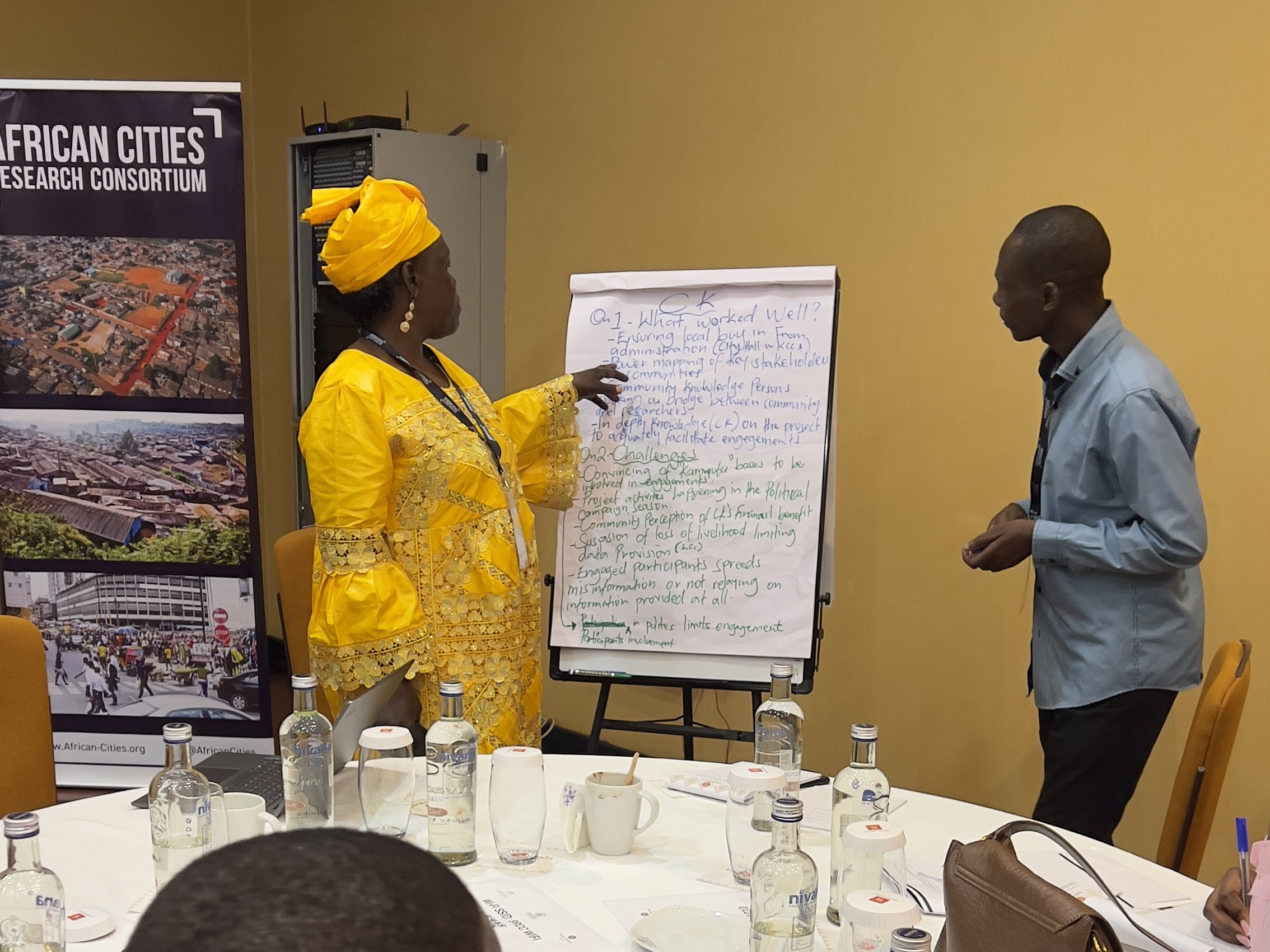
Creative use of informal knowledge sources – such as community volunteers and Kamyufus, who do not have legal mandate but prove resourceful in mapping and capturing ground practices – enriched the documentation of AR projects. However, during the workshop, researchers were reminded to be more flexible and patient while dealing with various community dynamics for project entry and acceptance. Several communities are often influenced by cultural norms and beliefs, political parties and natural attitude towards strangers for fear of eviction.
Additionally, ACRC’s collaborative research approach supported communities and stakeholders to champion their own solutions through co-design workshops for the different projects. Plans to establish and steer dialogues between government agencies and communities through existing and emerging platforms would push the community agenda into the elites’ view. To sum it up, good entry strategies, patience and collaboration were a few of the requirements to work effectively with communities in Kampala.
Leveraging political opportunity structures
In the months before the AR projects commenced, Uganda underwent an active electioneering period – challenging timely access to key state officials, quality participation from informal settlement residents and uptake pathways for ACRC projects in the city. Collaboration across teams was central to navigating politics within the research process and ensuring neutrality. AR teams worked with each other on entry points, shared probable bottlenecks and collectively devised actions and strategies to manage contestations. Although the political season presented a fair share of setbacks, the learning meeting drew attention to potential opportunities, including rekindling relationships with incumbent officials, opportunities to align with emerging priorities and seizing active policy windows.
ACRC theory of change as a roadmap
Teams gained overall clarity of how specific projects feed into the overall ACRC mission and theory of change (ToC). The workshop amplified need to design and develop cross-project plans and strategies, looking at engagement processes, documentation and communication outputs together. Participants discussed how the AR project approach ensures citizen mobilisation, through community participation coordinated by local leaders, which in turn is supported by the elite commitment to drive change.
In terms of elite commitment, this is shown by the inclusion of evidence from AR projects in revisions of national policies, programmes and regulations. A case in point is research findings from the CLASK project informing local government induction trainings and policy consideration for land matters.
Opportunities for the emergence of reform coalitions were identified, such as within the markets, and there is potential for both mainstreaming coalitions across different projects and deepening understanding around building state capacity – the final component of the ToC.
Taking the learning forward
Throughout the workshop, research uptake and the ToC were woven into the tapestry of conversations, highlighting the centrality of these two components in advancing a formidable reform agenda. A clear need for capacity sharing initiatives across the city was identified, to build on the research uptake strategy and forge deeper connections with the ToC.
From the workshop, aspirations for moving together included:
> Co-learning and co-creation of knowledge
The writers group committed to a learning agenda to cross-fertilise ideas and lessons across different functional teams. Most importantly, this is set to involve a collaboration between community knowledge team members and researchers that goes beyond documentation, to incorporating learning and co-producing knowledge.
> Desire for a joint multistakeholder engagement
Building on comprehensive stakeholder mapping to establish common interest and requests, different project teams could attend stakeholder meetings together to pursue common interests. For example, engaging with city authorities and ministerial bodies cuts across all projects. This approach would address a number of bottlenecks and failed attempts in gaining stakeholders’ attention and participation.
Developing and implementing a city stakeholder engagement strategy, plans and budget could facilitate this, by outlining project structuring processes and stakeholder needs, with participation from the uptake lead, AR leads and researchers. A detailed stakeholder database could also be created for easy retrieval of contact information.
> Joint communication and documentation
Many teams shared a desire to sharpen communication and dissemination activities in Kampala – from developing a toolkit to share best approaches, to adopting more community-centric communication outputs to increase access to information and capture community voices, to producing podcasts. Functional teams also shared aspirations to tell a city story, moving away from traditional action research stories.
Kampala’s overarching reform agenda
All in all, the workshop provided the groundwork for team Kampala to start looking at the AR projects as building blocks that are contributing to a bigger change process. As the curtains closed on the learning meeting, an important ask for the team was to think through a citywide reform agenda – mapping potential shifts and changes and weaving these into a coordinated effort to push the reform frontier.
Photo credits: Rosebella Apollo
Note: This article presents the views of the authors featured and does not necessarily represent the views of the African Cities Research Consortium as a whole.
The African Cities blog is licensed under Creative Commons Attribution-NonCommercial-NoDerivatives 4.0 International (CC BY-NC-ND 4.0), which means you are welcome to repost this content as long as you provide full credit and a link to this original post.
