
By Kudzai Chatiza, ACRC Harare in-city urban development research lead, and George Masimba, ACRC Harare city manager
Urban reform in Harare is approached by the ACRC action research team from the recognition that the city is shaped less by formal plans and policies than by everyday practices of negotiation, self-provisioning and incremental adaptation across multiple systems.
In a context characterised by deep informality, constrained municipal autonomy and centralised political control, reform cannot be understood as a linear or technocratic process. Instead, it unfolds through contested, relational and often small-scale shifts in practice that gradually rework how the city is governed and serviced.
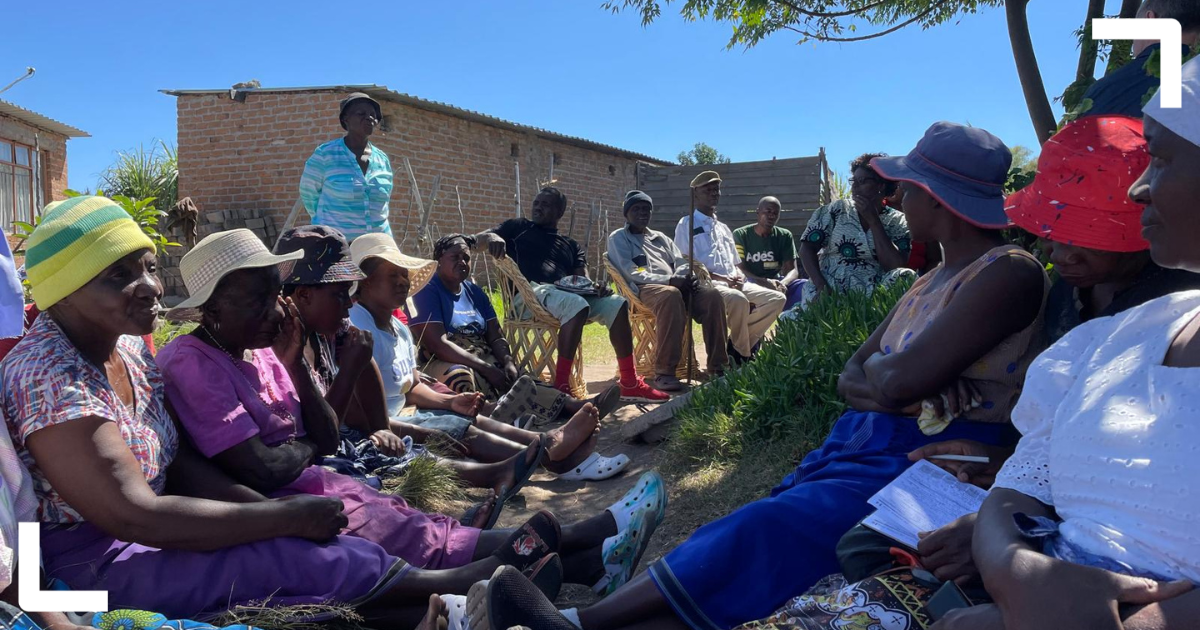
Guided by this perspective, the ACRC Harare team conceives reform as an iterative and practice-based process that is anchored in the lived realities of residents, informal workers, community organisations and mid-level state actors. Rather than seeking wholesale policy transformation as an immediate outcome, our strategy prioritises identifying and working through everyday entry points where alternative ways of governing, servicing and imagining the city are already emerging.
These entry points are understood as critical sites through which inclusive urban reform can be negotiated and expanded over time. Considering how deeply entrenched some of the constraining urban development practices have become in Harare, our strategy recognises that reforms in Harare are best approached as an incremental process.
Six pathways to urban reform
In operational terms, reform efforts are focusing on six interrelated and overlapping pathways:
1. The team is working to identify concrete reform agendas grounded in empirical research and everyday urban practices, particularly in relation to urban markets, community-led waste management and informal settlement climate action. These agendas are not treated as fixed blueprints but as evolving propositions that are continuously refined through engagement with affected communities and institutional actors.
2. Making progress in Harare depends on carefully identifying the everyday entry points for advancing urban reforms. This relies on closely examining institutional, regulatory and practice-related openings within the city. The ACRC Harare team draws on existing experiences working in the city, as well as maintaining a close check of the pulse around city priorities and on-going development agendas.
3. The strategy emphasises the deliberate building of reform coalitions by bringing together like-minded actors across state and non-state spheres – including municipal officials, community alliances, civil society organisations and technical practitioners who are already navigating the tensions between formal regulations and lived urban realities.
4. Reform is advanced through structured and informal dialogue processes that create space for negotiation, learning and trust-building across fragmented governance landscapes. Sectoral dialogues and thematic engagements are used to surface shared concerns, align interests and collectively interrogate dominant policy and practice paradigms that reproduce exclusion. These dialogic spaces are particularly important in a political environment where overt contestation may be risky and where reform often proceeds through subtle recalibrations of practice rather than explicit policy confrontation.
5. The strategy places emphasis on developing coherent and contextually grounded reform narratives that can circulate across institutional and community platforms. These narratives draw on research evidence and lived experience to legitimise incremental reforms and to challenge exclusionary urban logics without assuming consensus or political neutrality.
6. The ACRC Harare team seeks to catalyse reform through targeted engagements that link everyday practices to broader policy and institutional processes. This includes supporting pilot interventions, documenting small but meaningful shifts in practice and strategically feeding lessons from these experiences into ongoing policy debates and institutional reforms. Given the contested nature of urban governance in Harare, the strategy recognises that reform gains may be partial, fragile and uneven. However, such gains are treated as significant, both in their immediate effects and in their potential to open further reform possibilities over time.
Forum for constructive engagement – from policy to implementation
A central institutional anchor for this approach is the Slum Upgrading Project Monitoring Committee (PMC), which functions as a critical space for everyday reform work within the municipality. The PMC was established by the City of Harare in 2012 to help coordinate the Slum Upgrading Programme, a citywide slum improvement initiative that was jointly implemented by Dialogue on Shelter, Zimbabwe Homeless People’s Federation and the City of Harare.
In a context marked by frequent turnover of officials and punitive responses to policy innovation, the PMC provides a relatively protected forum in which technical staff and senior officials can engage constructively with community actors and researchers. The committee enables the translation of research insights and coalition-driven agendas into operational discussions around planning, service delivery and upgrading practices, thereby bridging the gap between policy intent and everyday implementation.
Overall, the ACRC Harare reform approach is grounded in the understanding that transformative change in the city will emerge not through singular policy moments, but through the accumulation of negotiated practices, institutional learning and coalition building across multiple sites. By working with, rather than against, the everyday realities of informality and governance constraint, the strategy seeks to contribute to a more inclusive and contextually grounded urban transformation in Harare.
Photo credits: Chris Jordan
Note: This article presents the views of the authors featured and does not necessarily represent the views of the African Cities Research Consortium as a whole.
The African Cities blog is licensed under Creative Commons Attribution-NonCommercial-NoDerivatives 4.0 International (CC BY-NC-ND 4.0), which means you are welcome to repost this content as long as you provide full credit and a link to this original post.
