
By Abubakar K Monguno, Ismail Ibraheem, Haruna Ayuba and Baba Kura Bukar
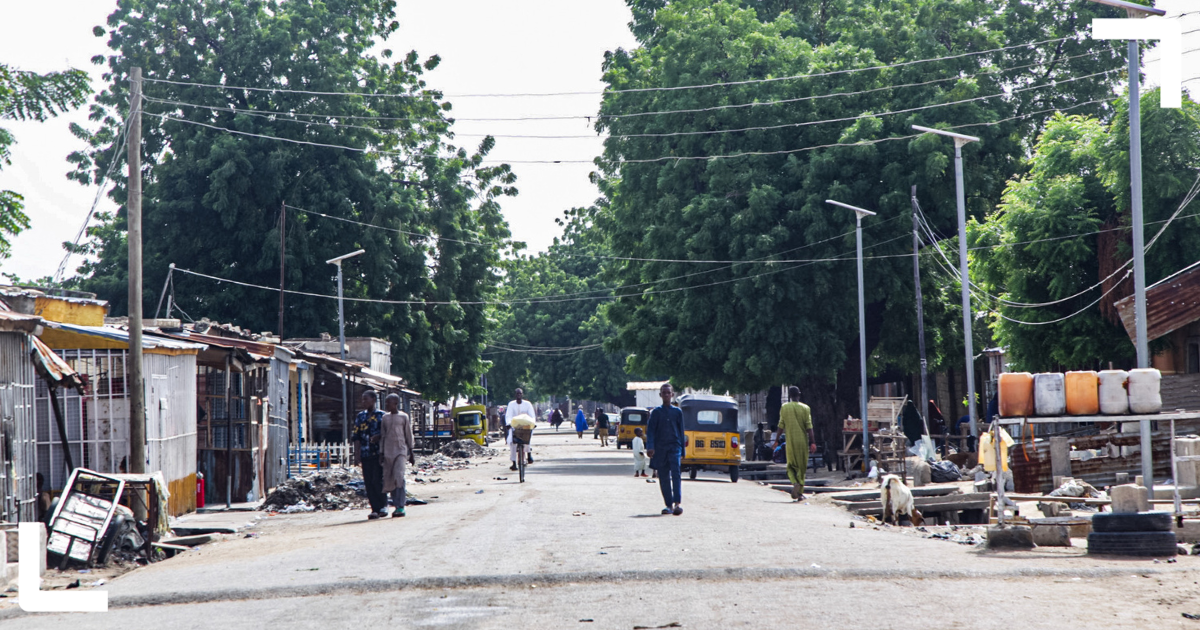
Maiduguri, a colonial city and the capital of Borno State, is the largest city in northeast Nigeria. With its strong traditional institution, Maiduguri has continuously served as the seat of government for over a century.
It is gradually recovering from a more than 15-year conflict caused by the non-state armed group, Boko Haram, and its splinter, Islamic State in West Africa Province (ISWAP), which destabilised governance and exacerbated existing inequalities. These inequalities across many socioeconomic fronts have disproportionately affected women and children.
Displacement, informality and vulnerability
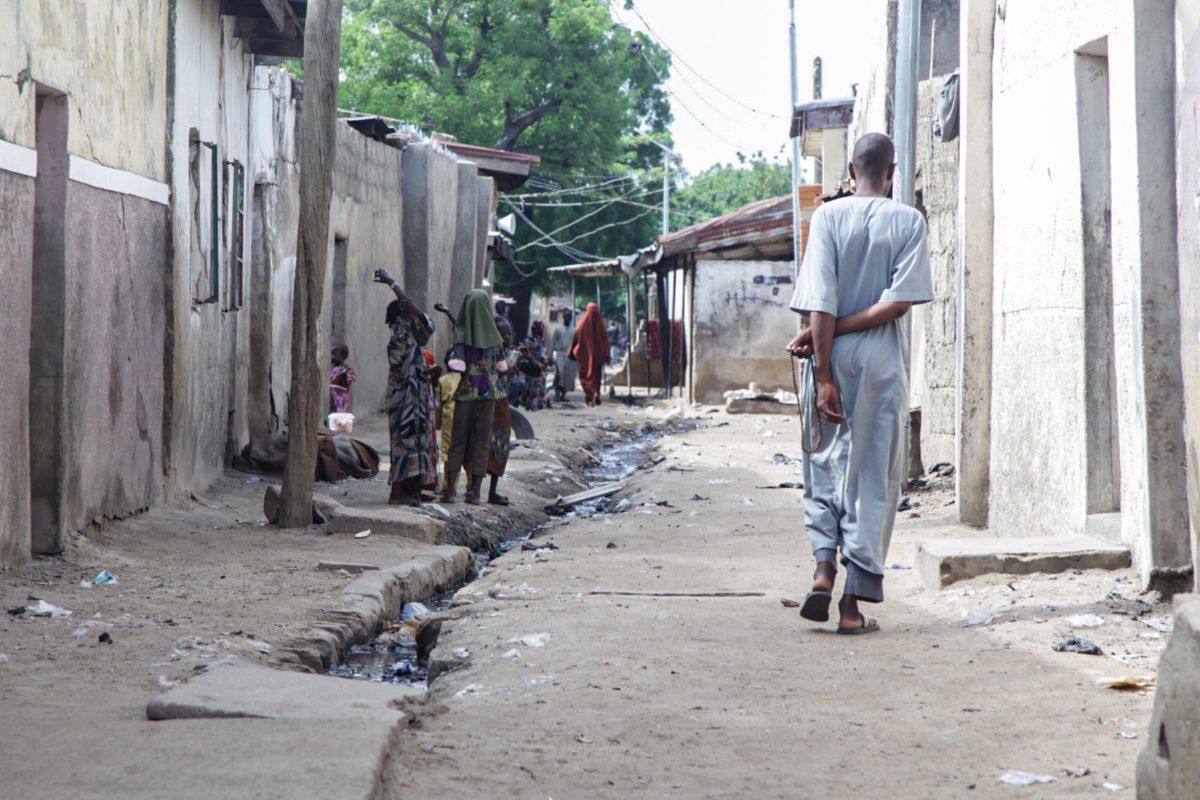
The conflict displaced hundreds of thousands of people, forcing them into unplanned informal settlements and adding to the number of landowners without formal titles. A housing survey conducted by the Borno State Geographical Information Service (BOGIS) reported that about 75% of properties in Maiduguri lack formal titles.
Nigeria’s Land Use Act recognises that all lands under customary administration before the Act are deemed granted but can be formalised through systematic land title registration (SLTR). However, weak documentation of customary land in Maiduguri has encouraged grabbing or intentional land (re)sale to multiple buyers by dubious agents.
Land conflicts are a common subject of litigation in local courts. When they occur, victims are typically low-income residents, especially women. Due to patriarchal norms and perceived better tenure security, women sometimes register properties through proxies – typically their husbands or adult male children/relations. In some cases, this has resulted in women becoming victims of their own choices, when trust is broken by men closest to them. In such instances, they become dispossessed of their hard-earned assets and often fall into poverty.
Beyond tenure security, formalising titles has the additional advantage of converting “dead capital” into “living capital”, meaning women are able to use their title documents to access credit without exploitative third parties.
The cost of tenure security
To help improve land tenure security and unlock the full economic potential of land for vulnerable people – including women and people with disabilities (PWDs) in particular – ACRC’s action research in Maiduguri seeks to improve access to formal land registration through systematic land title registration (SLTR). The SLTR project has been an ongoing process within BOGIS since 2021.
Our action research team comprises researchers from the University of Maiduguri; Rehabilitation, Empowerment and Better Health Initiative (REBHI), a local non-governmental organisation, community leaders; and the Network of Civil Society Organisations (NECSOB), a reform coalition platform. They are working together with BOGIS to improve access to SLTR.
A key learning from the research so far is that cost is seen as a major hindrance to formal title registration. First, fees charged by BOGIS are perceived to be high – about three times higher than in states like Kano. Second, rents collected by customary leaders for issuance of customary certificates to landowners, a precondition for the formal titling, is prohibitive. The amount collected ranges between N100, 000-200,000 (USD 75-150) and is about four to five times the official cost of registration. Put together, these costs constitute a hindrance to SLTR, especially in the context of Nigeria’s cost-of-living crisis.
Evidence leads to commitment
Preliminary evidence from our ongoing research in four districts of Maiduguri suggests commitment from both government (BOGIS) and community leaders to address these costs. Sustained community engagements by our team through townhall meetings and live phone-in radio programme have secured a 50% downward review of the “initial bill” charged by BOGIS.
On the other hand, community leaders have committed to completely waiving rents collected at all levels of local administration. Community volunteers attached to these leaders further support in documentation and serve liaison roles between communities and BOGIS. This means customary titles in these four districts can be obtained for free by women and PWDs who could not afford them before. However, securing waivers for landowners outside ACRC project districts would require sustained action.
Building a reform coalition
The support and commitments garnered from community leaders and BOGIS may just be stopgaps if not sustained beyond our SLTR programming. Our measure of sustainability is how successfully the commitments gained can be scaled. This will ensure that all districts in the city benefit from rent waivers and fee reduction, which can best be achieved through collaboration.
For this to materialise, we are working with the Housing, Land and Property Working Group (HLPWG) – a coalition of international and local partners – as a platform for engaging government and community leaders for reform. Coordinated by the Norwegian Refugee Council with REBHI as a member, HLPWG is cochaired by BOGIS and the Borno State Urban Planning and Development Board. Already, the platform has commenced high-level engagements with BOGIS to make SLTR charges more affordable for Maiduguri’s low-income population. Achieving success may take some time but the engagements need to be sustained.
Sustaining the waivers
To secure waivers for Maiduguri’s low-income landowners, commitment must come from two fronts – BOGIS and customary leaders:
> For BOGIS, the key argument HLPWG is making towards an affordable SLTR is the benefit of scale. Higher government revenues will accrue if more people register at a reduced cost than fewer people at a higher cost.
> Formalising land titles helps to convert “dead capital” to “live capital” if low-earning people can have access to mortgage or loans when properties are properly titled.
> Encroachment into public spaces in customary lands will be checked through SLTR, which is value added to urban planning and development if high registration coverage is achieved.
> Georeferencing of properties and proper documentation of ownership improves security. For conflict-affected cities like Maiduguri, this cannot be taken for granted.
> Currently, HLPWG comprises government, development partners and community organisations working in the housing and property sector, with a clear absence of traditional institutions. Involving customary leaders would be necessary to secure further commitment.
Photo credits: Fatima Adamu
Note: This article presents the views of the authors featured and does not necessarily represent the views of the African Cities Research Consortium as a whole.
The African Cities blog is licensed under Creative Commons Attribution-NonCommercial-NoDerivatives 4.0 International (CC BY-NC-ND 4.0), which means you are welcome to repost this content as long as you provide full credit and a link to this original post.
