
By Janice, Shiko, Obuma, Maureen Oguyo, Calvince Moda, Jane Wambui, Leah Nakami, Evans, Hellen, Ruth, Naomi, Tobias and Stella – Mathare community co-researchers
Before we began the land enumeration, we thought we understood how power worked in Mathare. We grew up walking the same narrow paths, greeting elders at junctions and hearing everyday conversations about land, leadership and survival.
Our work formed part of ACRC’s land rights action research in Mathare, led by Akiba Mashinani Trust and Strathmore University. A key part of this was mapping structures to better understand the diverse housing typologies in Mathare – from simple shacks to multistorey tenements. As we mapped structures and listened to residents, the familiar picture of authority became more complicated.
We began to see that power was not held by one person or institution. It moved through land, relationships, information and fear – and the research itself briefly changed our own position within those systems.
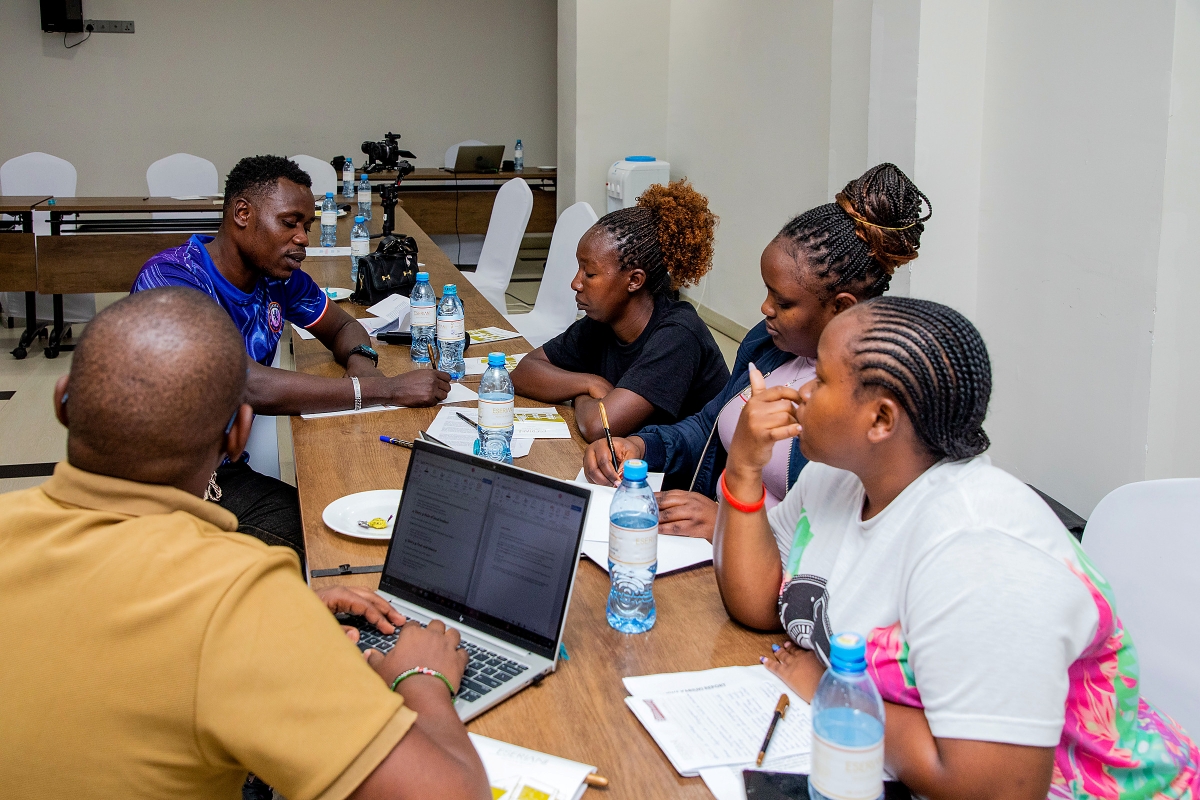
Co-researchers review notes and develop content for the research blog. Photo credit: Akiba Mashinani Trust
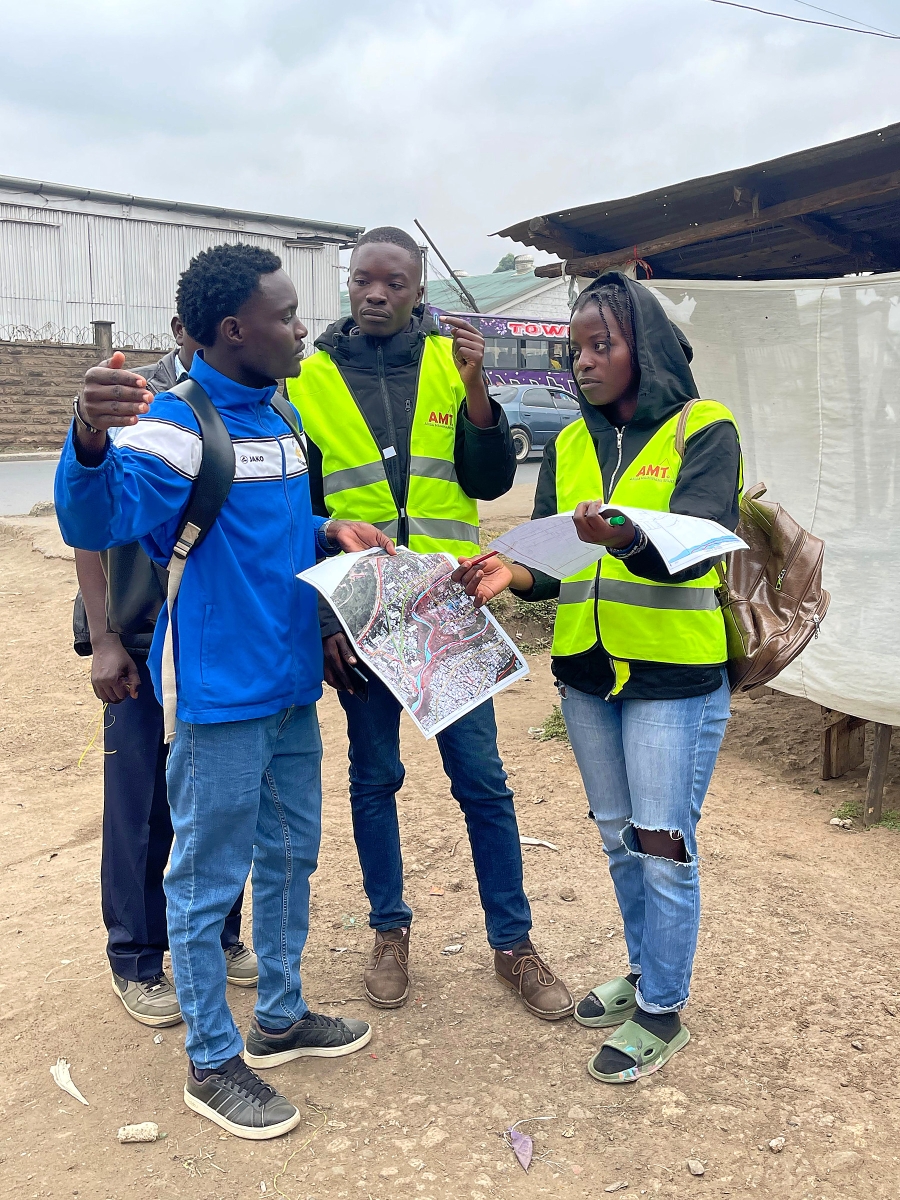
Field researchers discuss routes and mapped locations using printed aerial maps. Photo credit: Michelle Nyaga, Akiba Mashinani Trust
Power is layered
Residents often described village elders and chiefs as the obvious route to authority:
“Huwezi change kitu kwa hii land bila wao kujua. Lazima upitie wao, hao ndio entry point, hao ndio authority.”
(You cannot change anything on this land without their knowledge. You must go through them; they are the entry point and the authority.)
Enumeration revealed more layers. Landlords, structure owners, local champions, informal networks and institutions could all enable, redirect or block the work. In 4A, organised resistance stopped enumeration completely. Elsewhere, support from a trusted leader could turn refusal into a conversation.
“Power yenye tunaona si ile ya mwisho.”
(The power we see is not the final power.)
Information does not move freely
Some residents heard about decisions early because they were close to authority. Others heard later, through rumours, or only when a decision began to affect them.
“Information huku haitembei tu bure. Inapitia structure, inapitia authority, inapitia power.”
(Information here does not move freely. It passes through structures, authority and power.)
Silence was part of this system. Tenants could be reluctant to discuss structure owners, while owners sometimes answered even when tenants were present. We learned not to treat silence or refusal as ignorance. It could be a response to risk, a claim to privacy, or evidence that someone else controlled the conversation.
That changed how we worked. We paid attention to who was present, who answered for whom and which questions produced hesitation. Respecting consent sometimes meant leaving a question unanswered, ending an interview or checking information later rather than forcing an answer.
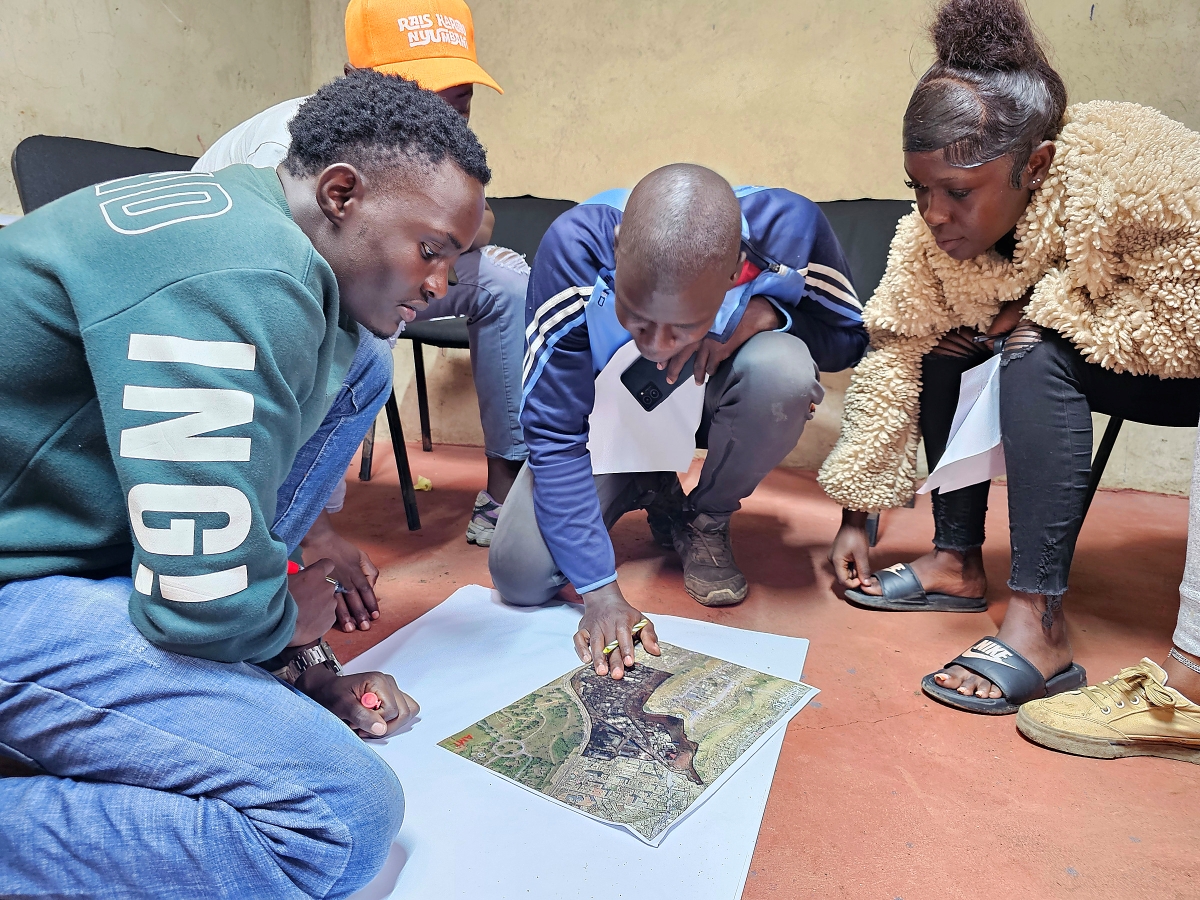
Co-researchers map areas of concern during a collaborative reflection session. Photo credit: Rex Otieno, Akiba Mashinani Trust
What maps reveal – and what they miss
Aerial maps showed roofs and boundaries, but not overlapping claims, informal inheritance, or the relationships inside a compound. Our local knowledge was essential for understanding the difference between what the map displayed and how the settlement actually worked.
Mapping also challenged assumptions about ownership. We found plots with several structure owners, owners who lived elsewhere and women whose ownership was not obvious from paperwork or everyday conversation. Structure owners and tenants sometimes gave conflicting accounts of the same place.
“Hapa nyumba ni mob, lakini structure owners ni wachache.”
(There are many houses here, but the structure owners are few.)
Enumeration therefore did more than count buildings. It revealed who collected rent, who made decisions, whose ownership remained hidden, who was absent, and who carried the consequences. It also showed how easily a single recorded “owner” could erase several competing claims.
The power we carried
Maps, identification letters, reflectors, and official questionnaires gave us temporary authority. They helped us enter compounds, ask sensitive questions and create records that institutions might recognise. That increased our confidence as advocates, but it also created responsibilities: to obtain meaningful consent, protect confidentiality, record accurately and remain accountable to neighbours.
“Hatukuwa tu tunacollect data, tulikuwa tunacreate knowledge.”
(We were not only collecting data; we were creating knowledge.)
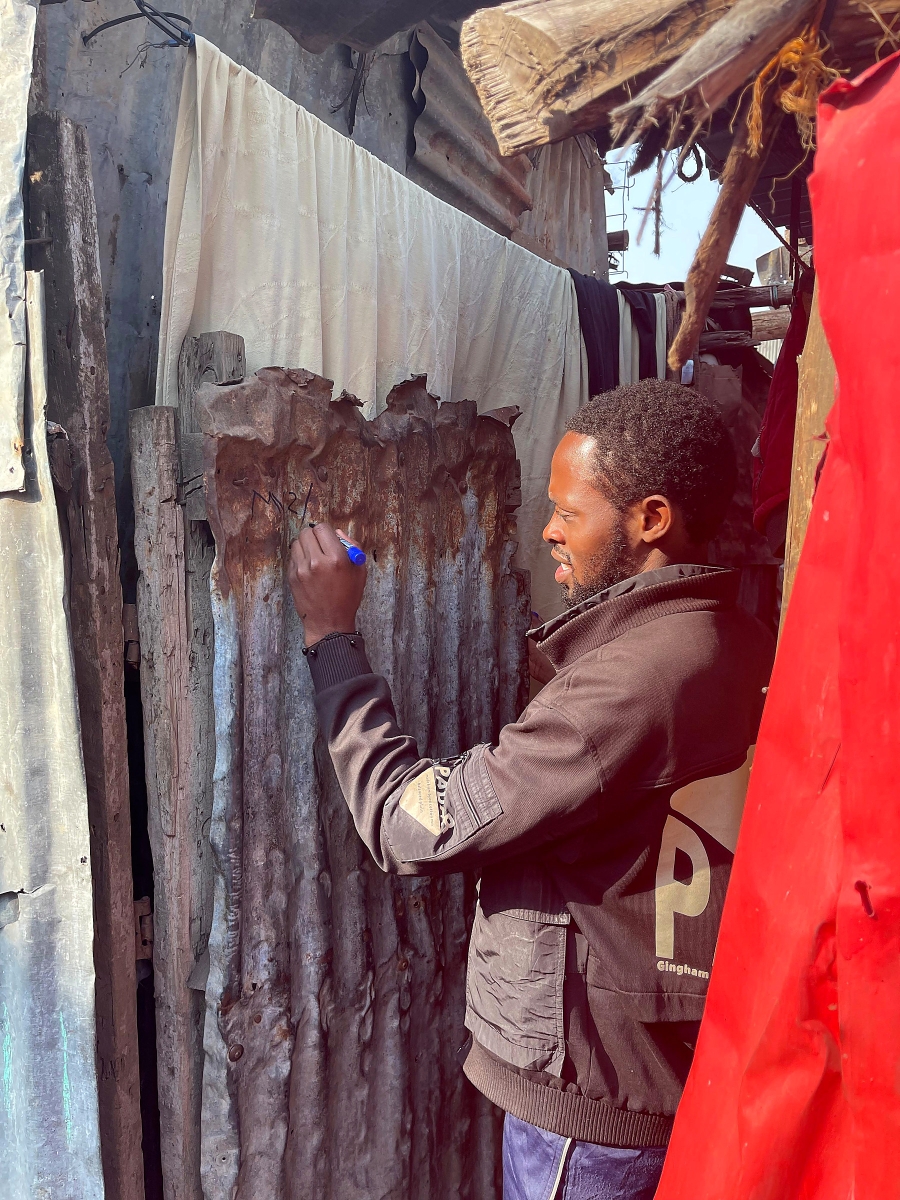
A field researcher marks a structure during the community mapping and numbering exercise. Photo credit: Michelle Nyaga, Akiba Mashinani Trust
When knowledge becomes community power
Shared knowledge can help residents question decisions, support land claims and advocate for services or protection from displacement. But data does not automatically become community power. It must be verified, protected, returned in useful forms and governed by the people who created it.
Research changed how we understood the place we already called home. Community-led enumeration cannot make unequal power disappear. It can, however, make some of its workings visible – and turn knowledge into something residents can discuss, challenge and use.
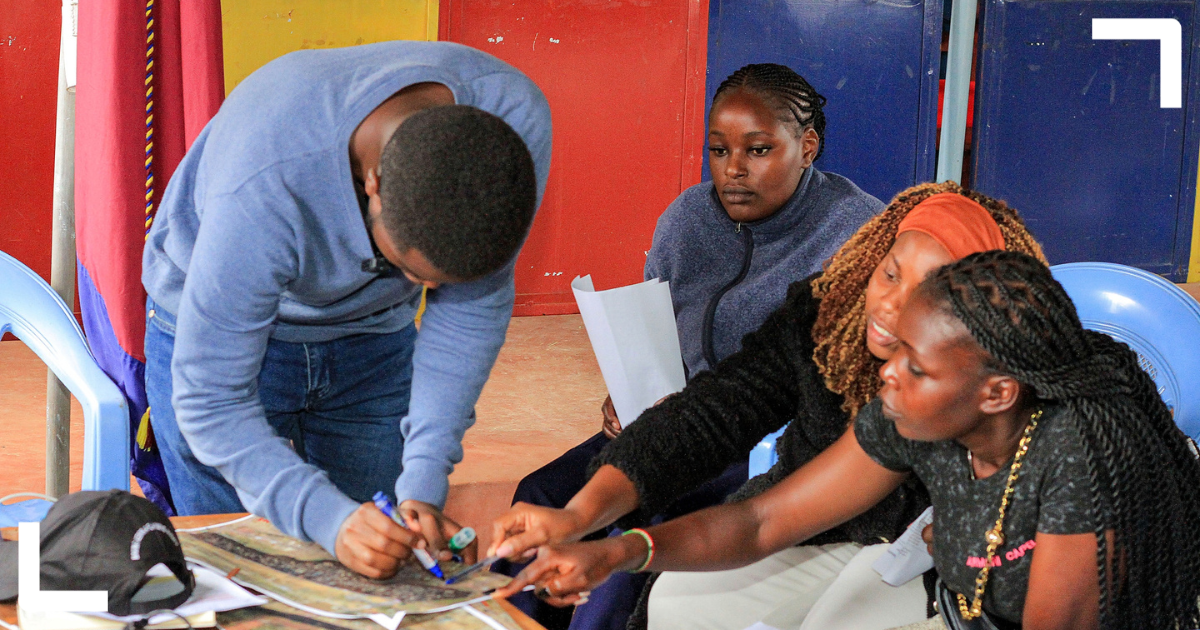
Header photo credit: Akiba Mashinani Trust. Co-researchers examine aerial maps and compare observations during a reflection session.
Note: This article presents the views of the authors featured and does not necessarily represent the views of the African Cities Research Consortium as a whole.
Generative AI was used to help edit this blog post for clarity and structure. The revised text was based on the authors’ draft and the Mathare co-researcher reflection working paper.
The African Cities blog is licensed under Creative Commons Attribution-NonCommercial-NoDerivatives 4.0 International (CC BY-NC-ND 4.0), which means you are welcome to repost this content as long as you provide full credit and a link to this original post.
