
By Maureen Oguyo, Calvince Moda, Jane Wambui, Leah Nakami, Evans, Hellen, Ruth, Naomi, Tobias, Stella, Janice, Shiko, Obuma – Mathare community co-researchers
“Who sent you?” It was one of the first questions we heard while carrying out land enumeration in Mathare. It was often followed by others: “Who will see this information? Is it connected to demolitions? What will happen after you leave?”
The enumeration formed part of ACRC’s land rights action research in Mathare, led by Akiba Mashinani Trust and Strathmore University. The project aims to strengthen community knowledge about land and tenure, and support residents to advocate for greater security.
We were not outsiders arriving in an unfamiliar settlement. We live in Mathare. Yet our experience showed that being a local does not create automatic trust – especially when research touches land, livelihoods, political influence and the threat of eviction.
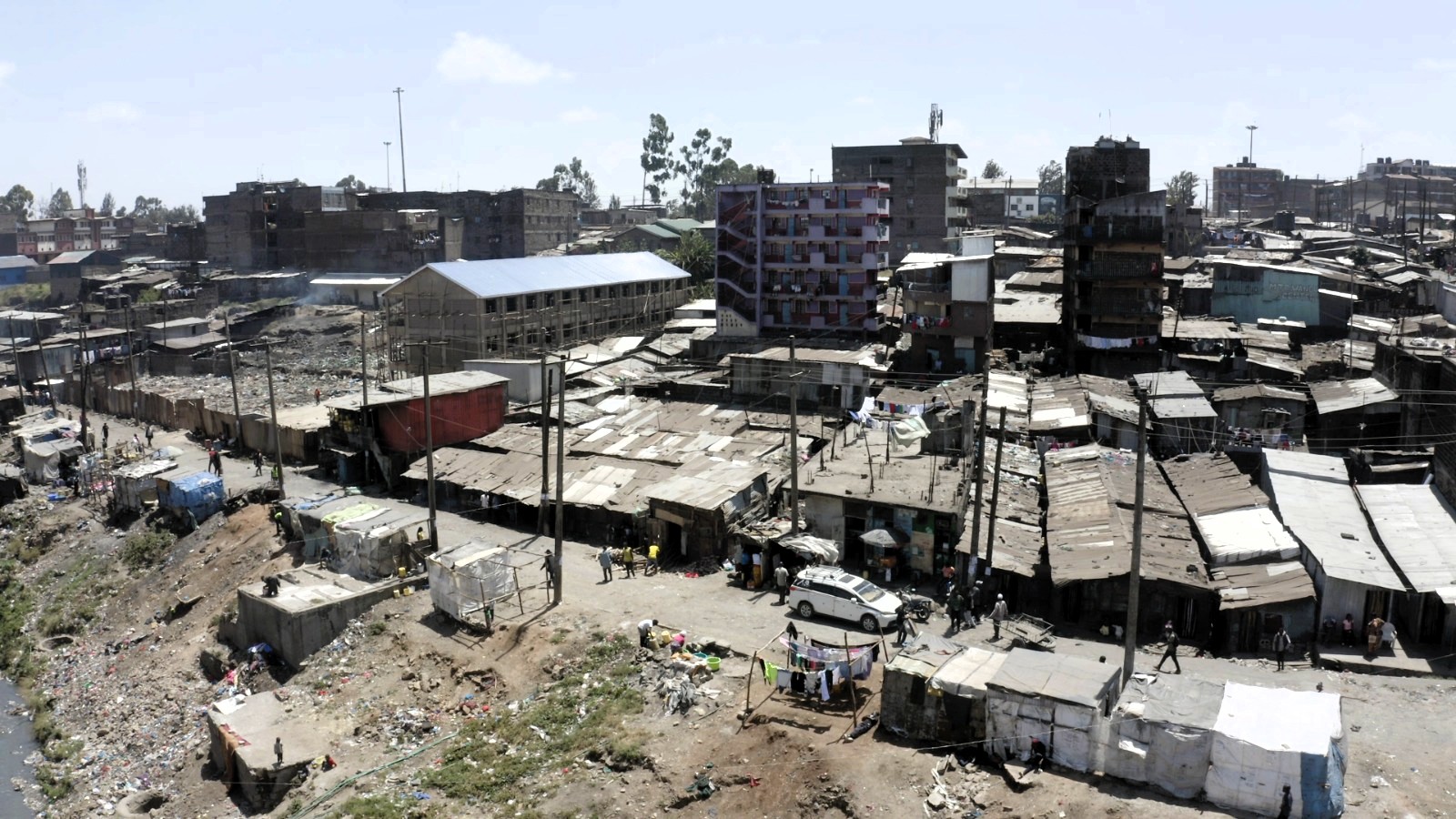
Aerial view of Mathare. Photo credit: Akiba Mashinani Trust
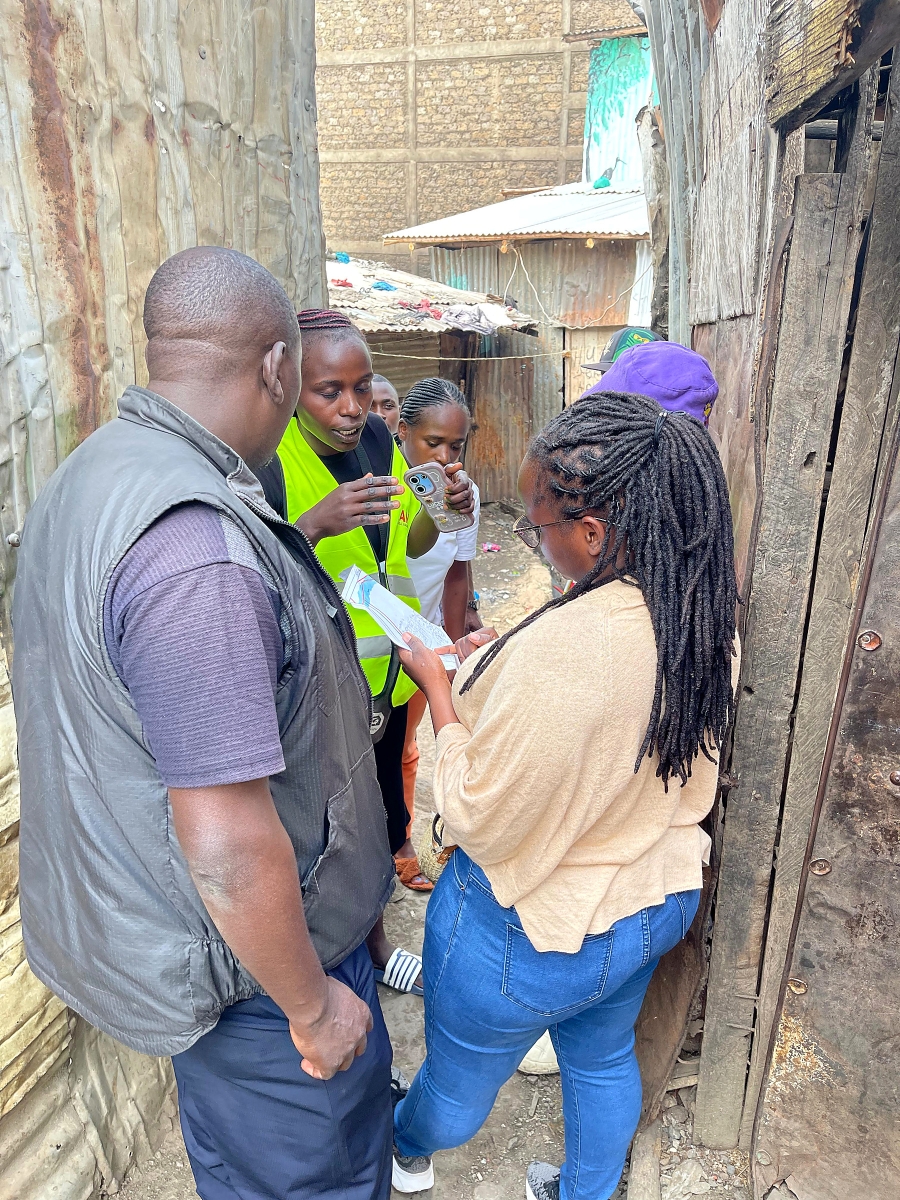
Field researchers verify mapped information using printed materials and a mobile phone. Photo credit: Michelle Nyaga, Akiba Mashinani Trust
Being local does not make entry automatic
We are rooted in different villages: 4A, 4B, Kosovo and Village 2. Moving between them meant crossing distinct histories, leadership structures, languages and relationships. Entry was not a single introduction at the start of fieldwork. It had to be negotiated with each household and renewed in each part of the settlement.
Existing community networks helped us begin. Some co-researchers had worked on earlier land or housing initiatives, served as community health promoters, or were introduced through elders, Nyumba Kumi* members and community champions. These relationships provided legitimacy, but they did not guarantee consent.
Trust grew through clear explanations, visible identification, letters of introduction, and language flexibility. It also depended on making clear that residents could refuse a question or stop an interview. Sometimes respecting a “no” made people more comfortable answering other, less sensitive questions.
When gatekeepers open doors – or close them
Village elders, local leaders, trusted women and youth organisers could make introductions and calm suspicion. Jane Wambui described why involving people already trusted in Kosovo mattered:
“Kuna wamama Kosovo wenye watu wanatrust, so ukiwainvolve inakua rahisi kucollect information kwa kijiji.”
(There are women in Kosovo whom people trust. Once you involve them, it becomes easier to collect information in the village.)
But local influence is never neutral. In 4A, fieldwork began without enough prior engagement with structure owners, elders across all clusters and other influential and interested stakeholders. Rumours linked the exercise to demolition or land repossession. Resistance escalated into direct threats against co-researchers and their homes, and enumeration stopped before mapping, numbering or interviews could begin. Because the co-researchers lived there, they could not simply leave the risk behind when fieldwork ended.
Who joins the research team matters too. Reflection sessions identified gaps involving people with disabilities, Muslim residents, older people, young people and some migrant groups. A team that does not reflect the people it hopes to engage can unintentionally reproduce the exclusions it is trying to understand.
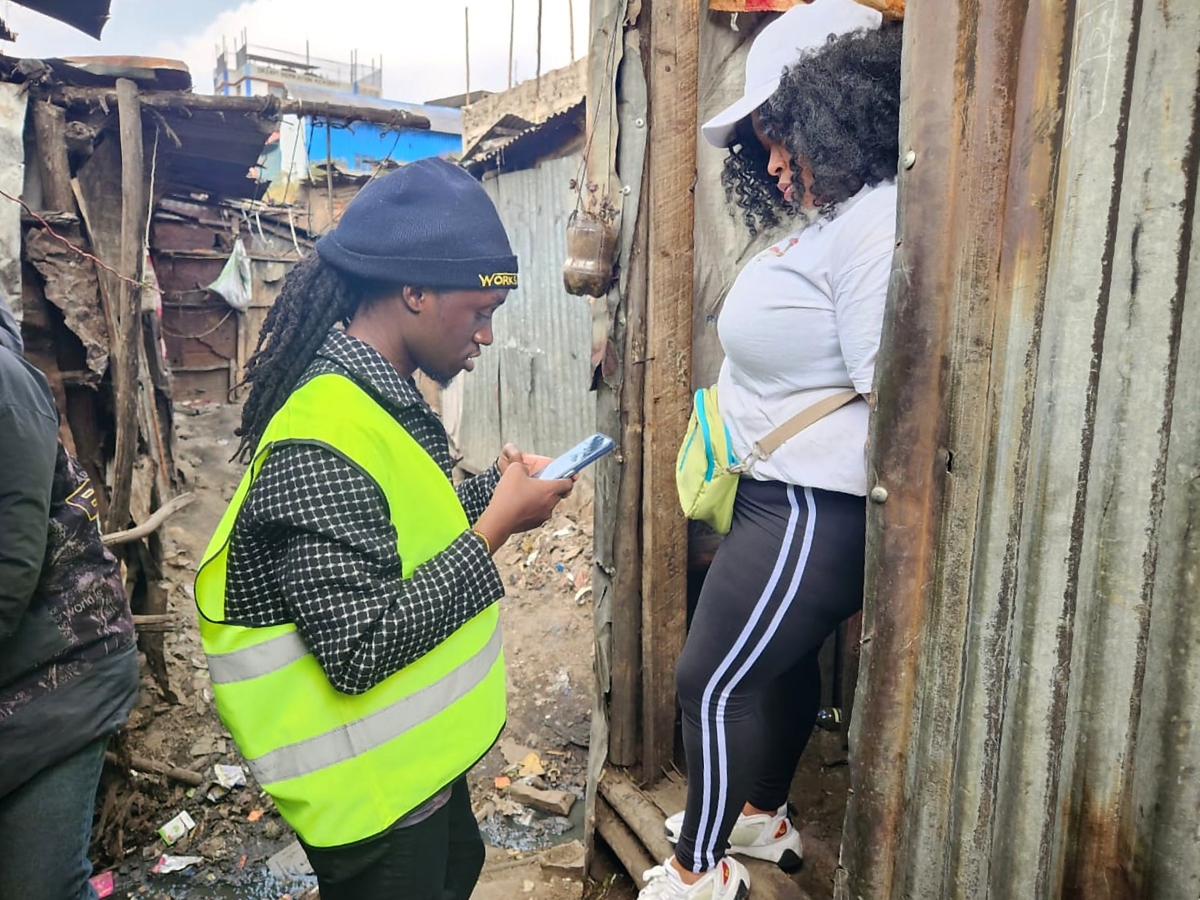
A field researcher records information on a phone while speaking with a resident during the mapping exercise. Photo credit: Michelle Nyaga, Akiba Mashinani Trust
Fear shapes the evidence
Fear affected more than whether a door opened; it shaped what people felt safe to say. In 4B, families affected by demolition were especially cautious. Calvince Moda repeatedly explained that the research aimed to create evidence for advocacy, not prepare the ground for eviction.
“People thought it was about eviction. We had to explain that it was for advocacy.”
In Kosovo, some Ugandan residents were reluctant to share basic details because of language barriers and fear. Elsewhere, tenants deferred to structure owners, owners withheld information, and some households refused entirely. These were not simply empty cells in a spreadsheet. They showed where speaking carried risk, or where one person’s authority limited another person’s voice.
Residents also remembered previous research that collected information without producing visible results. We therefore had to explain the purpose and limits of the work, to avoid raising expectations about titles, compensation, housing or services, and commit to returning useful findings.
Trust must be built into the research
Community-led research cannot place the burden of trust and safety on resident researchers alone. Responsible practice requires risk mapping before fieldwork, practical training, visible ID, safe working hours, paired deployment and clear procedures for reporting incidents and withdrawing from danger. It also requires transparent agreements about compensation and who may access or publish sensitive data.
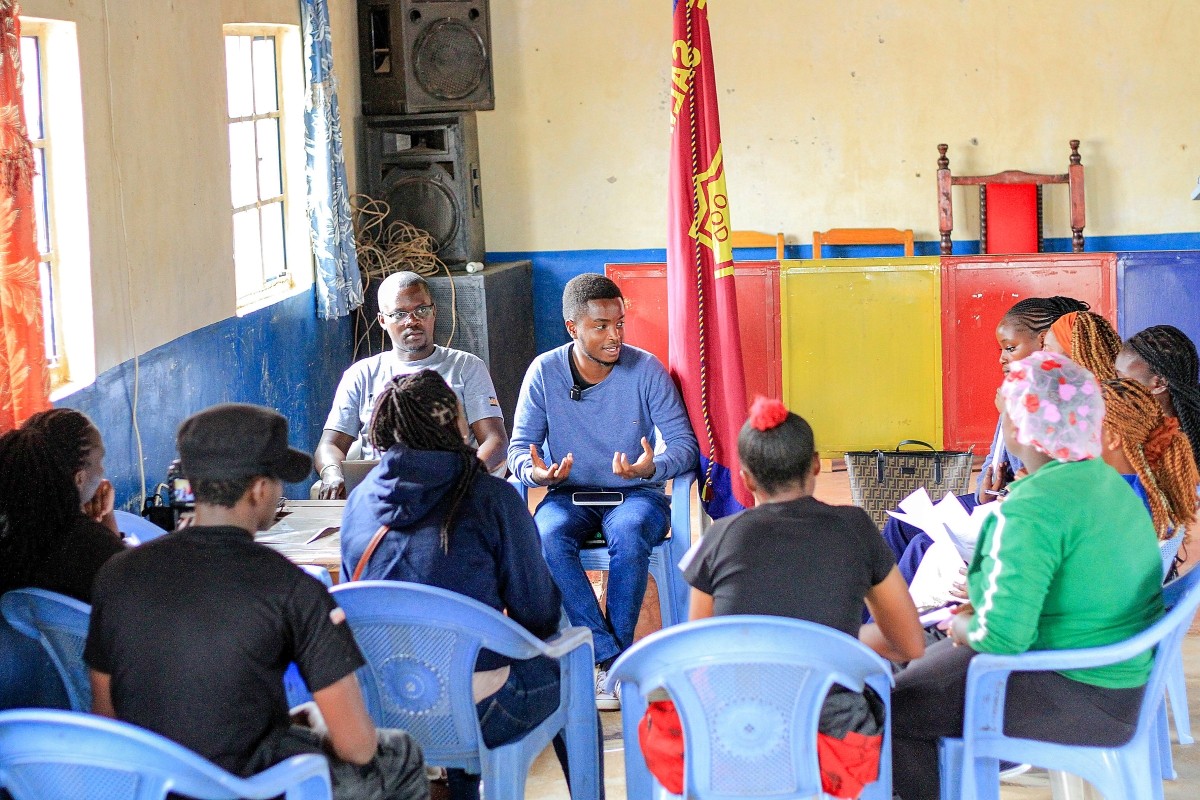
Co-researchers share insights during a facilitated group reflection meeting. Photo credit: Akiba Mashinani Trust
Being from Mathare remains a strength, but it does not erase differences within Mathare or make research automatically safe. Trust determines who speaks, what they can safely share and which realities become visible. Building that trust – and remaining accountable after the interviews end – is not separate from the research. It is what makes credible community knowledge possible.
*Nyumba Kumi is a grassroots neighbourhood structure in Kenya that brings together small clusters of neighbouring households, traditionally around ten, to strengthen community-level coordination, information sharing, and local security. It provides a direct link between residents, community leaders, and government administration, while also creating a platform for communities to raise and address local concerns.
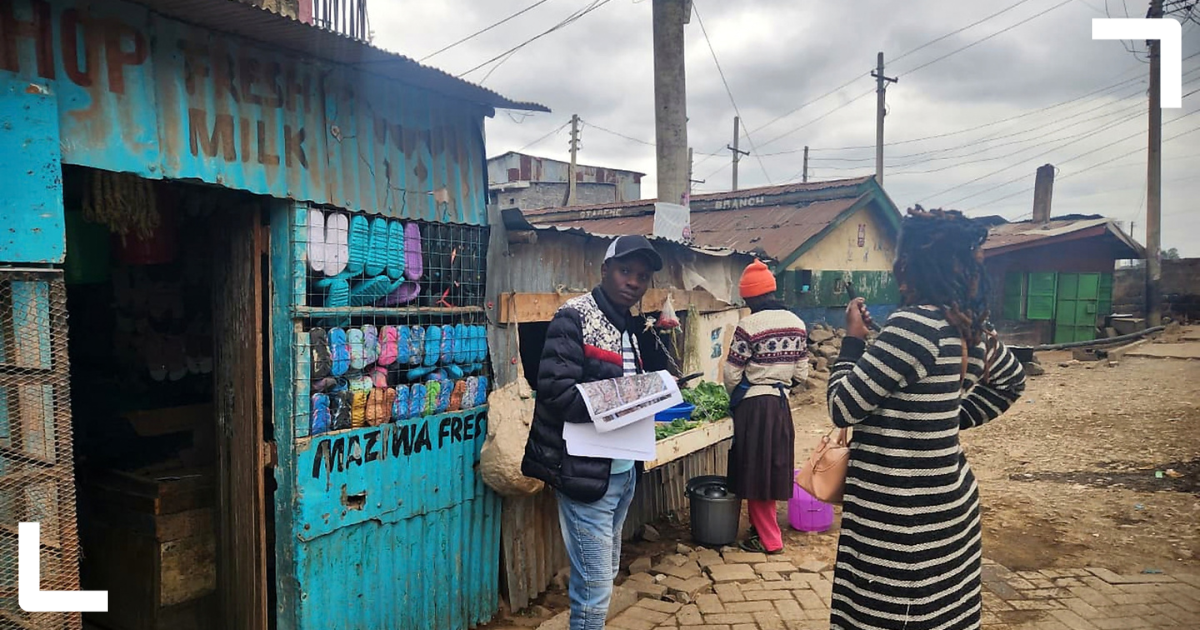
Header photo credit: Michelle Nyaga, Akiba Mashinani Trust. Researchers consult printed aerial imagery while documenting locations in the neighbourhood.
Note: This article presents the views of the authors featured and does not necessarily represent the views of the African Cities Research Consortium as a whole.
Generative AI was used to help edit this blog post for clarity and structure. The revised text was based on the authors’ draft and the Mathare co-researcher reflection working paper.
The African Cities blog is licensed under Creative Commons Attribution-NonCommercial-NoDerivatives 4.0 International (CC BY-NC-ND 4.0), which means you are welcome to repost this content as long as you provide full credit and a link to this original post.
