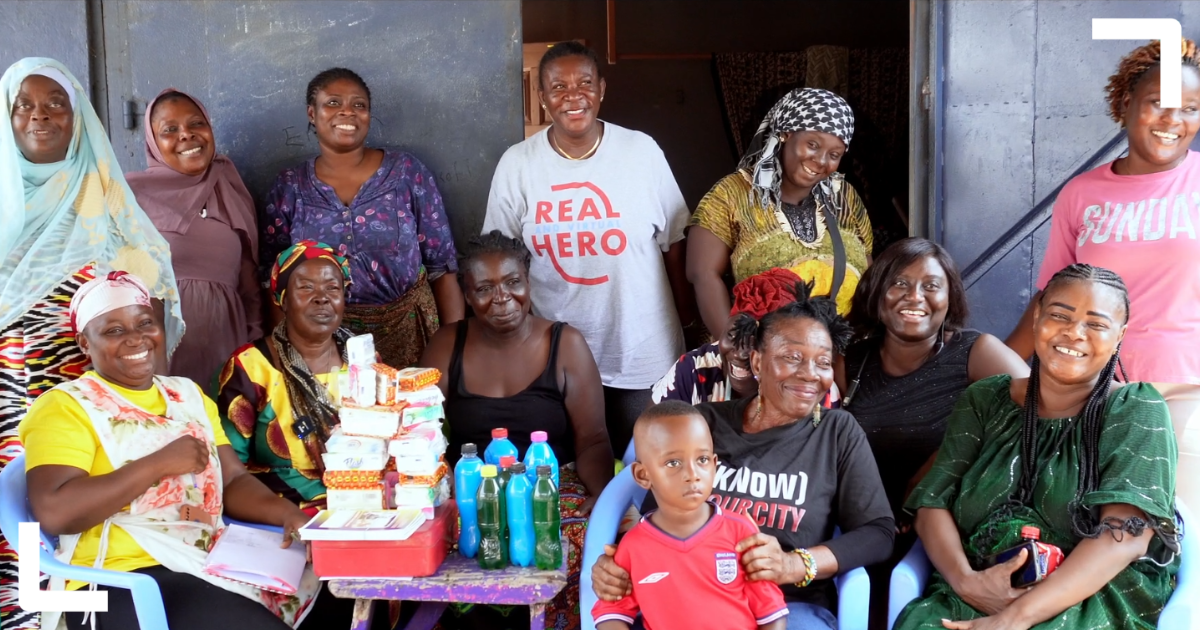
For over 40 years, Hawa Dawudu has lived in Old Fadama, Accra – a historic informal settlement, with a growing population of over 120,000 and the location of one of the city’s largest fruit and vegetable markets.
A new film, produced by the Know Your City TV team at SDI, gives a personal insight into the experiences of Hawa and some of her neighbours as they navigate daily life in the community.
Released for World Habitat Day and the start of Urban October, Hawa’s story highlights the complexity and systemic issues that Old Fadama’s residents deal with every day. Like the majority of ACRC’s action research in the city, dealing with waste is a major focus, which creates very real problems, but also presents opportunities for the community.
Old Fadama is a low-lying settlement along the Odaw river in Ghana’s capital city. The area is prone to flooding, which is made worse when waste blocks drainage channels, bringing with it waterborne diseases.
Accra generates around 1,500 tonnes of solid waste per day, but only about 55% is collected, usually in higher income areas of the city. Hawa and the residents of Old Fadama are often left to fend for themselves, with large amounts dumped in the rivers and lagoon, or burned.
Better cities. Built together.
But communities aren’t standing idle. Building on the long-term organising of local savings groups supported by SDI, residents are creating livelihoods and value out of the city’s waste issue.
Since the film was shot, ACRC has been helping Hawa’s group to create a community composting facility on a piece of land donated by the Accra Metropolitan Assembly. Group members source organic waste from the markets and households to create compost, which they plan to sell – reinvesting any profits into further developing the community.
We’re also backing the efforts of informal motorised waste transporters – widely known as “borla taxis” – to receive formal recognition of the vital role they play at the interface of the informal and formal waste systems.
While the job they do is critical, a lack of regulatory framework and acknowledgement perpetuates stigma and makes it impossible for them to bid for formal government contracts. By strengthening the Borla Taxi Association, we’re helping young men who have often migrated to the city to create better livelihoods for themselves, while improving services for all of Accra’s residents.
Urban October aims to celebrate the people and initiatives creating better cities together.
We’re thrilled to highlight the experiences, challenges and insights of Hawa and her fellow residents of Old Fadama as they build a better life and a better city.
Read more:
- ACRC’s action research projects in Accra were based on extensive scoping research that examined the city systems and politics, alongside the issues of housing, informal settlements, land and economic development. Read the full report.
- A more detailed summary of our action research projects focused on waste in Accra can be found here.
- More information about our work in Accra is available on our city page.
Header photo credit: Know Your City TV
Note: This article presents the views of the author featured and does not necessarily represent the views of the African Cities Research Consortium as a whole.
The African Cities blog is licensed under Creative Commons Attribution-NonCommercial-NoDerivatives 4.0 International (CC BY-NC-ND 4.0), which means you are welcome to repost this content as long as you provide full credit and a link to this original post.
