By Temilade Sesan, ACRC Lagos city manager
One of the less visible but highly impactful aspects of the ACRC programme is the opportunity for cross-learning that it presents for urban development researchers, practitioners and policymakers working in different city contexts.
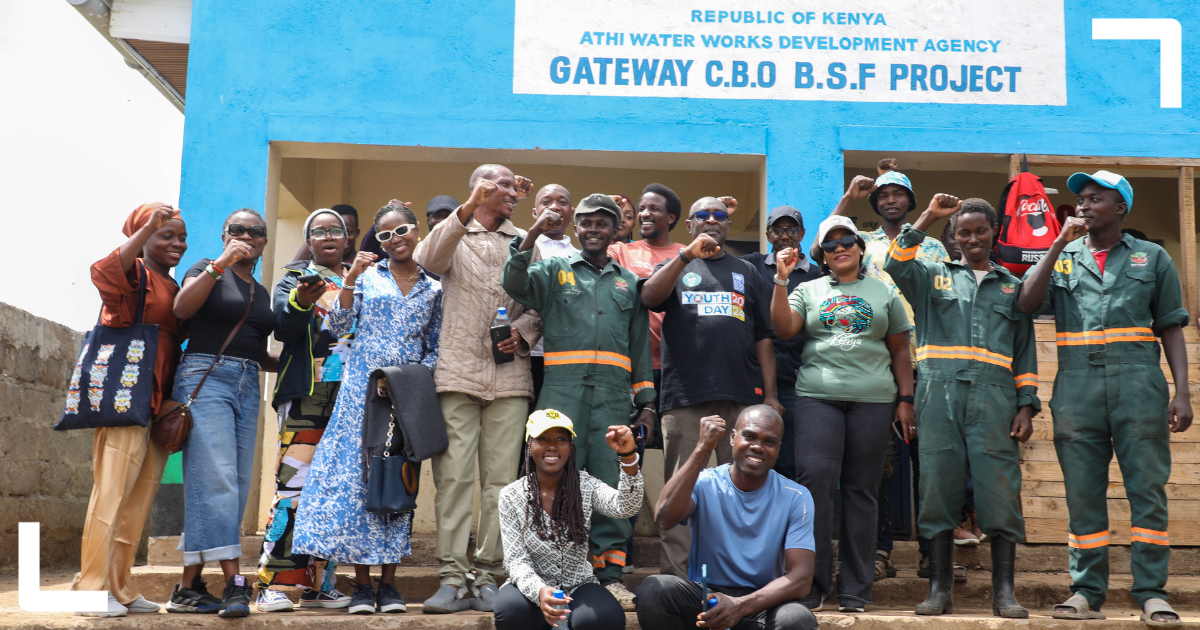
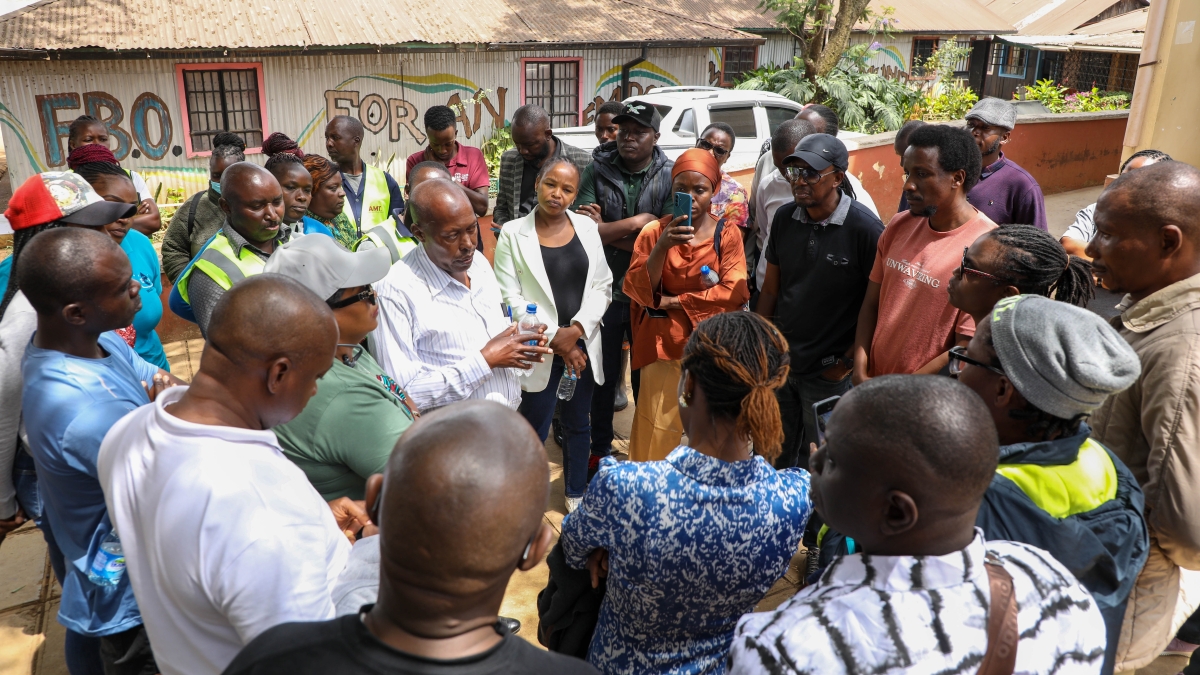
This was precisely the case for an ACRC Lagos delegation that went to Nairobi on a learning visit in December 2025. The delegation comprised researchers helping to launch a community-led water and sanitation (WASH) project in Okerube, an informal settlement in Lagos; community members leading mobilisation and data collection efforts on the ground; and officials from relevant local, state and federal government departments.
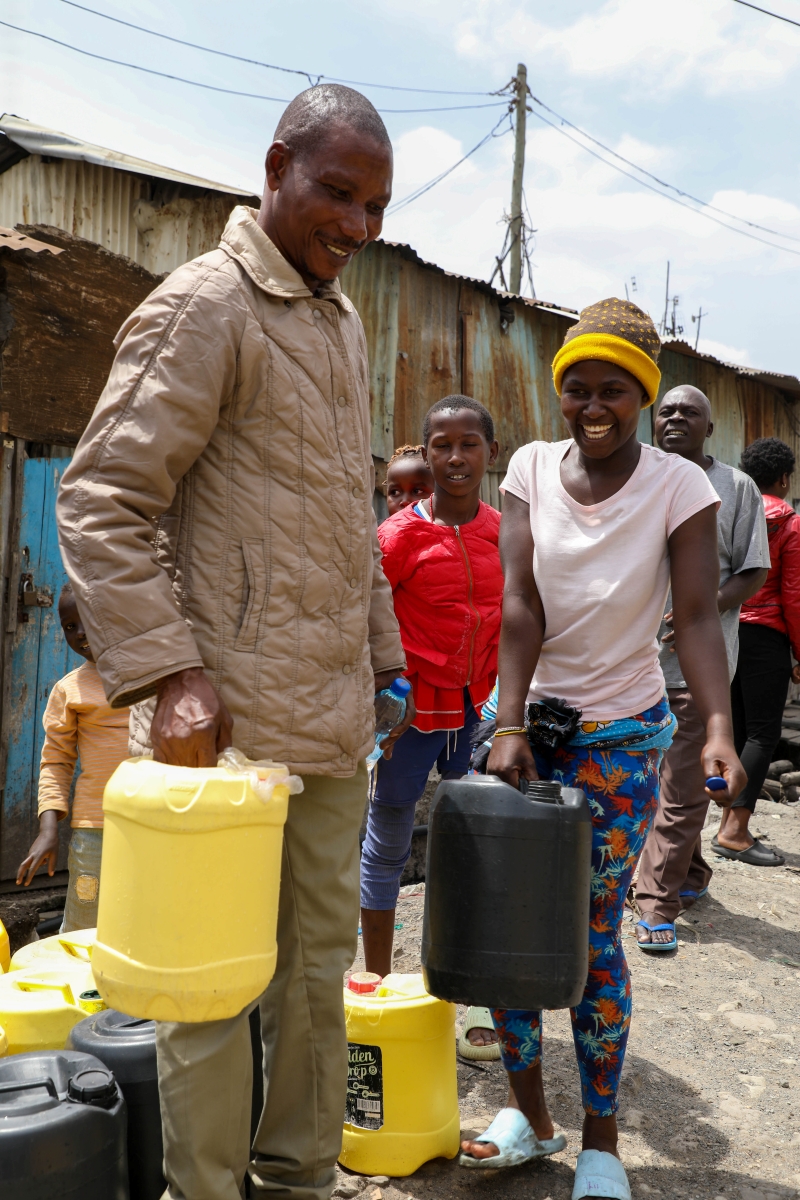
The Lagos team set out to gain inspiration from an established WASH intervention in Mukuru – a sprawling informal settlement in Nairobi in which, as of 2017, only 1% of the population of roughly 400,000 people had access to private WASH facilities.
Following years of advocacy and dialogue by a broad-based reform coalition co-chaired by local NGOs and the Nairobi County City Government, Mukuru moved from being a target of demolition to being declared a Special Planning Area by the latter.
Crucially, this declaration has paved the way for reform actors, including the county government, to expand access to WASH infrastructure in the community, resulting in a rise in plot-level sewer connections to an impressive 20% as of 2025. These features make the Mukuru case highly interesting and instructive for us in Lagos.
Lessons for governance
Lagos, a “megacity” of about 22 million people, has a severe public water deficit, with existing waterworks serving less than 10% of the population. This falls far short of the urban average of 57% coverage (and even the rural average of 22%) reported for sub-Saharan Africa. It certainly lags behind coverage in Nairobi, where 71% of the city’s 5 million residents are connected to the public water system, which is run by the Nairobi City Water and Sewerage Company (henceforth Nairobi Water).
Apart from the direct benefit of piped water access for the majority of residents connected to the service, what the coverage data in Nairobi show is that the state does have the capacity to operate and maintain a substantial, albeit incomplete, networked system for WASH. This, in turn, ensures the existence of a public service around which residents can engage the state and hold it accountable.
The observed contrast with Lagos threw a key lesson into relief for the delegation to Nairobi: poor public service delivery in the former – in WASH, but also in health, education, transport, waste management and several other sectors – makes it difficult for residents to participate in a vibrant democracy premised on tangible experience of a social contract with the state.
How are citizens supposed to hold their government accountable when there is very little – in concrete terms – to hold it accountable for?
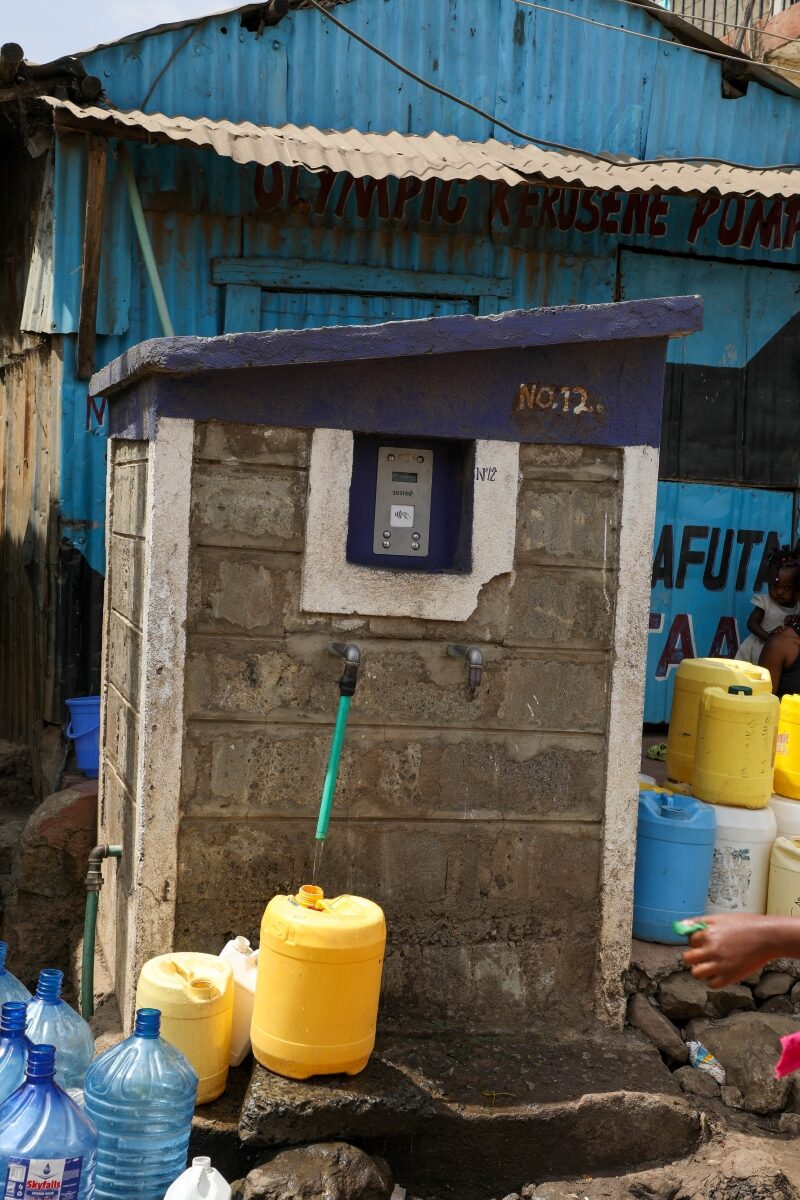
A public water point fitted with smart metering technology in Mukuru
Cities of systems
This takes us to the core of ACRC’s “city of systems” approach, which recognises that urban development systems – for water, energy, health, education, and so on – are interdependent and must therefore be considered in relation to one another. Our engagement with state agencies is premised on the assumption that they do, in fact, run these systems in service of the public good, and that interaction with evidence-informed advocacy and action can help them to do better. This scenario appears to have played out more or less as expected in the Mukuru WASH case.
Mukuru, like many other informal settlements in Nairobi, has been historically excluded from the formal water and sewerage connections managed by Nairobi Water. Upon the declaration of the community as an SPA, however, Akiba Mashinani Trust (AMT), a key coalition member, began working with Nairobi Water to build a Simplified Sewer System that enables temporary but durable connections from individual plots to main sewer lines.
Combined with access to finance facilitated by AMT and other coalition members, this has made it possible for many more landlords to construct shared toilets for residents. In addition, Nairobi Water installed public taps with smart metering technology that provide residents with water at a fraction of the cost charged by private vendors – a big win from an equity standpoint.
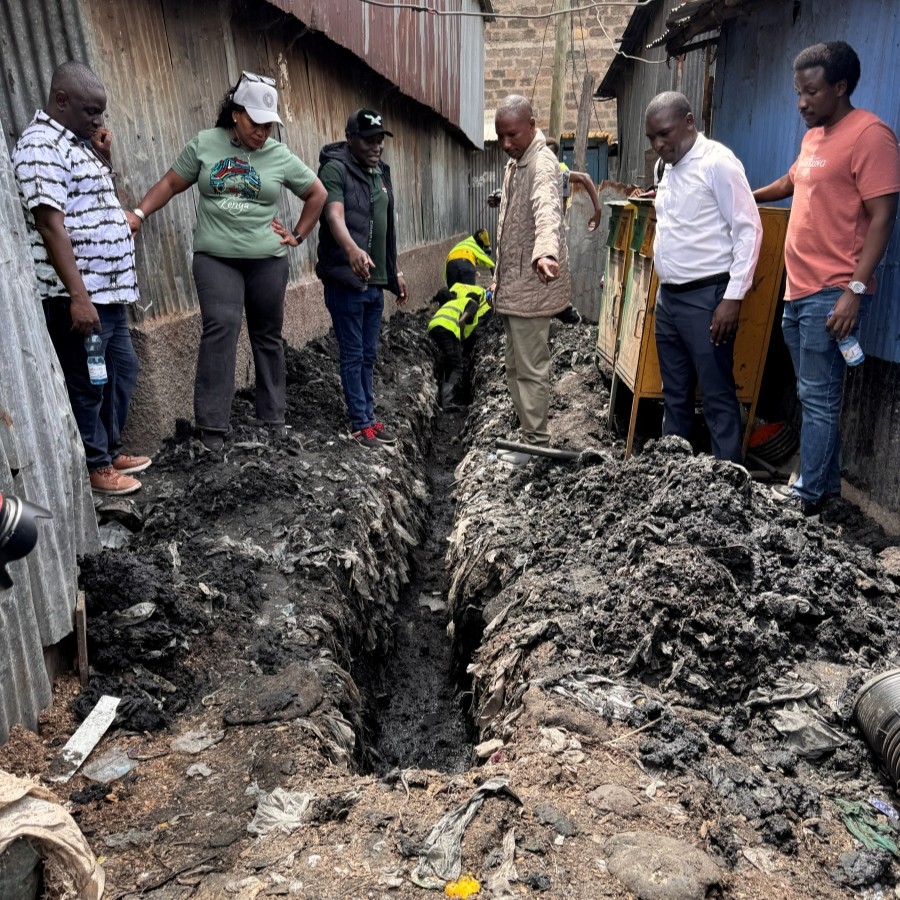
Work underway on Mukuru’s Simplified Sewer System
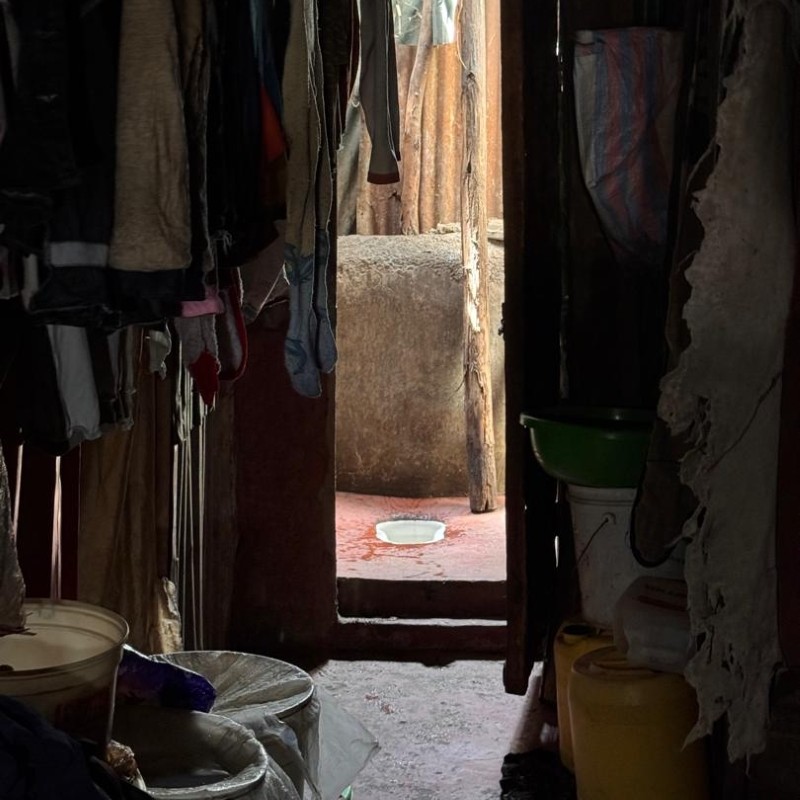
A plot-level toilet in Mukuru connected to Nairobi Water’s Simplified Sewer System
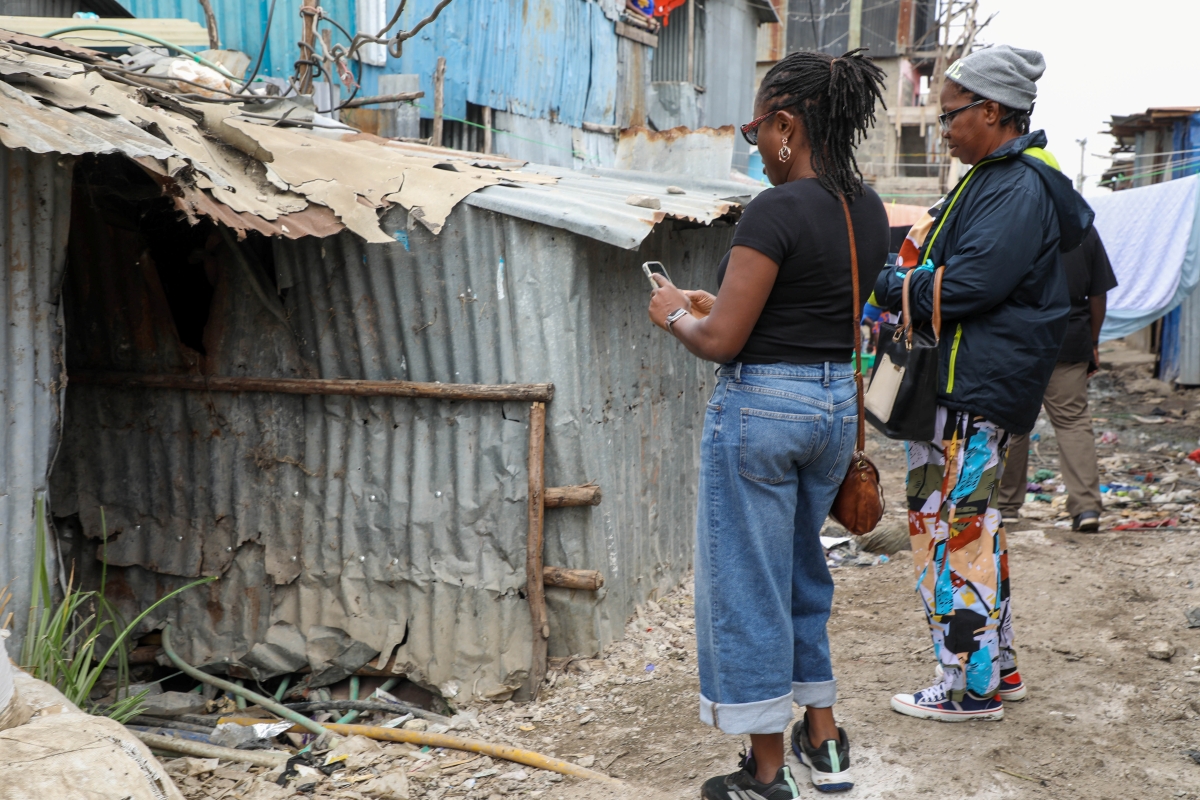
The crucial point to note is that these state-supported improvements to WASH in Mukuru were possible precisely because there was already a state-run system in place; advocacy and action by reform actors provided the impetus for the state to do better by bringing in populations that were previously excluded from this system. This was an important insight for the Lagos delegation: the idea of the city taking responsibility for WASH service provision in one of its most disadvantaged neighbourhoods – and in the process, strengthening both its systems and its social contract with citizens.
The Lagos delegation came away with a realisation of how the dearth of functional networked systems makes our attempts to apply a city of systems lens in our work decidedly more challenging. Fortunately, we also emerged with ideas for how to make incremental progress toward the change we seek in our context.
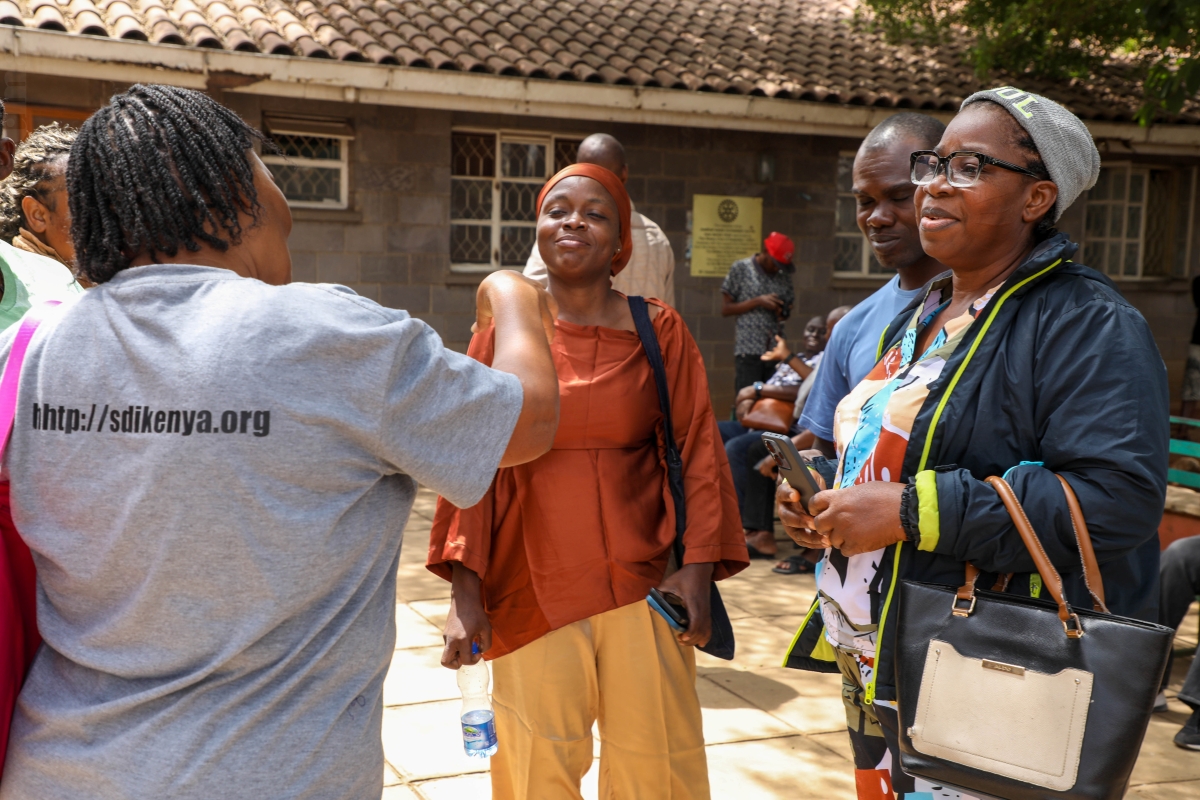
Moving forward
It is important to note that there are sectors – such as transportation, waste management and health – in which the Lagos state government has taken steps to build out existing public infrastructure. While the reach of the state is often narrow compared to that of private actors, especially those in the informal economy, these sectors are obvious candidates for the task of coalition-enabled systems strengthening.
We outline below some transferable lessons from the Mukuru WASH case in this regard, in line with the four components of the ACRC theory of change.
1. Elite commitment: Progress is accelerated when organs of the state join up to promote the wellbeing and welfare of citizens. Nairobi Water investing in short- and medium-term WASH infrastructure in Mukuru, while the housing ministry works to resettle residents and rebuild the neighbourhood with long-term sewerage connections, is an example of this.
2. Enhanced state capacity: State agencies stand a better chance of enhancing their technical capacity to deliver infrastructure and services if they begin with a commitment to manage small-scale systems effectively for the public good.
3. Mobilised citizens: Communities must continue organising for improved service delivery grounded in secure land tenure. The experience of Mukuru indicates that, while it is not yet Uhuru, sustained advocacy at the grassroots can ultimately lead to the ceding of ground to residents of informal settlements.
4. Reform coalitions: Professional elites, especially those in academia, civil society and the media, must take up the charge of mobilising various forms of capital – whether financial, social, political or cultural – and channelling these toward improved service delivery across the city, including in historically disadvantaged neighbourhoods.
Back in Lagos, we continue to work from the understanding that the city’s political settlement is one in which power is highly consolidated among a few key actors. The difference is that we are more inspired than ever to work with reform actors, including those within the government, to transform the might of the state into meaningful action for all citizens.
Read more:
- From Mukuru to Okerube: Reflections from the Nairobi–Lagos WASH exchange
- Is knowledge power? Reflections on water, sanitation and survival in informal settlements
Listen:
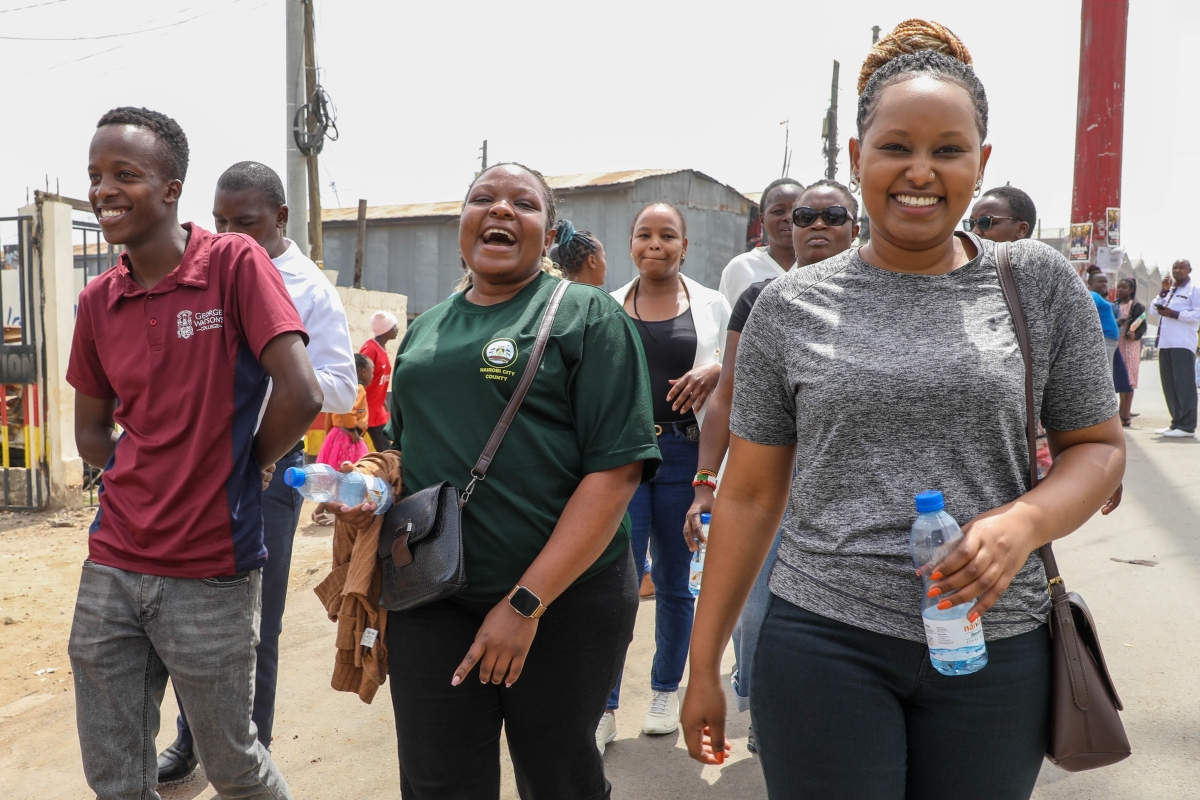
Photo credits: Akiba Mashinani Trust, Temilade Sesan
Note: This article presents the views of the authors featured and does not necessarily represent the views of the African Cities Research Consortium as a whole.
The African Cities blog is licensed under Creative Commons Attribution-NonCommercial-NoDerivatives 4.0 International (CC BY-NC-ND 4.0), which means you are welcome to repost this content as long as you provide full credit and a link to this original post.
