
By Temilade Sesan, Adewumi Badiora, Victor Onifade and Segun Adaju
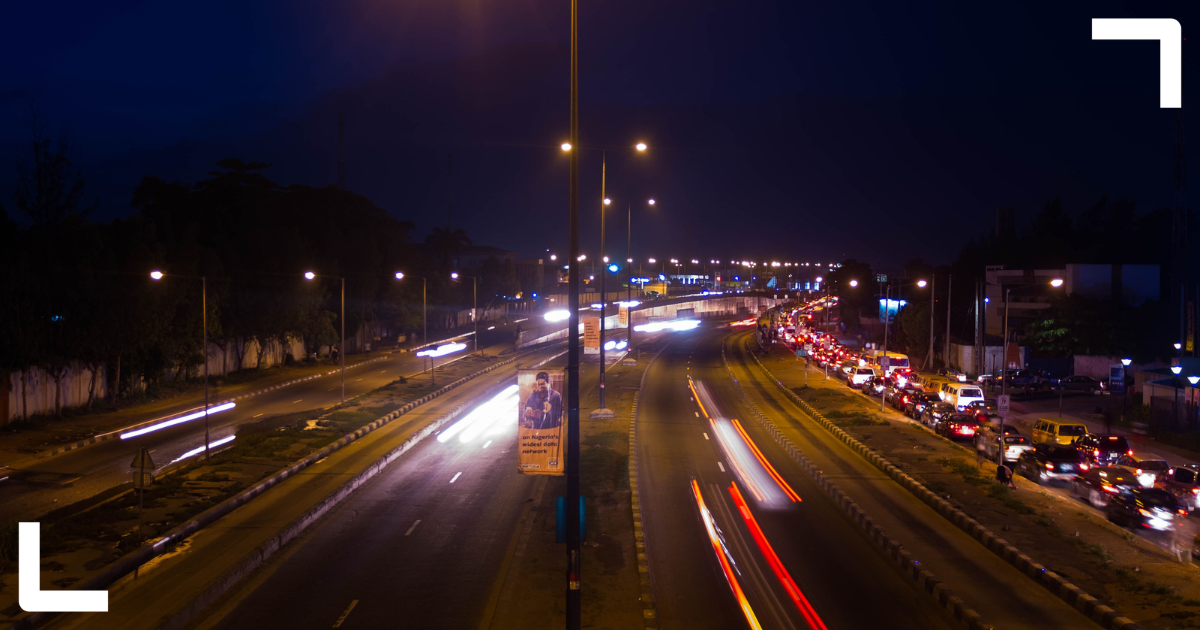
Approaching Lagos from the air at night can feel disorientating: amidst the lights emanating from the ground are many dark patches in between. These gaps are a result of the acute energy poverty experienced by residents across this megacity, where many households receive less than eight hours of electricity from the national grid daily.
By this measure alone, Lagos is in dire need of interventions to light up its streets at night. Indeed, the potential value addition of community-level streetlighting was a core finding of ACRC’s foundation phase research in the city, which ran from 2020 to 2022, as well as two rounds of exploratory research conducted between 2024 and 2025.
For all the acknowledged benefits of streetlighting for communities, however, it is not a straightforward task to propose viable projects in this domain – largely because streetlighting as a service poses a peculiar challenge in Lagos. While such an intervention would benefit individual homes and businesses, it is inherently a public good that neither government agencies nor local communities have been adept at providing. (More generally, quality public service provision is in short supply in the city – a situation that manifests in sectors as varied as electricity, water, sewerage, transport and education.)
A notable counterpoint to the status quo is a city-wide initiative that was launched by the state government in 2015 to light up major thoroughfares and high-profile public areas across the city. Concurrently, local businesses have found it profitable to provide streetlighting in many middle- and high-income neighbourhoods: the purchasing power of residents in those communities means sufficient returns on private investment are almost guaranteed. Elsewhere in relatively affluent communities, residents have evolved self-help models for lighting up their streets independently of public and private providers.
But the biggest gap resides in low-income neighbourhoods, where there is neither public interest nor private appetite to deliver streetlighting services, despite evidence of demand on the ground.
Recognising that this gap obscures the development potential of scores of low-income communities across the city, a new ACRC action research project builds on initial findings and aims to uncover whether, and under what conditions, streetlighting can be reliably provided in the city’s most disadvantaged neighbourhoods.
The project team comprises the usual mix of academic and community researchers, but also, less predictably, a for-profit energy service company – to test the potential the private sector has to narrow the service provision gap facing underserved communities. The central question we hope to resolve through the project is: how do we interest the city’s political and business elite in prioritising streetlighting for residents of low-income communities in the medium to long term?
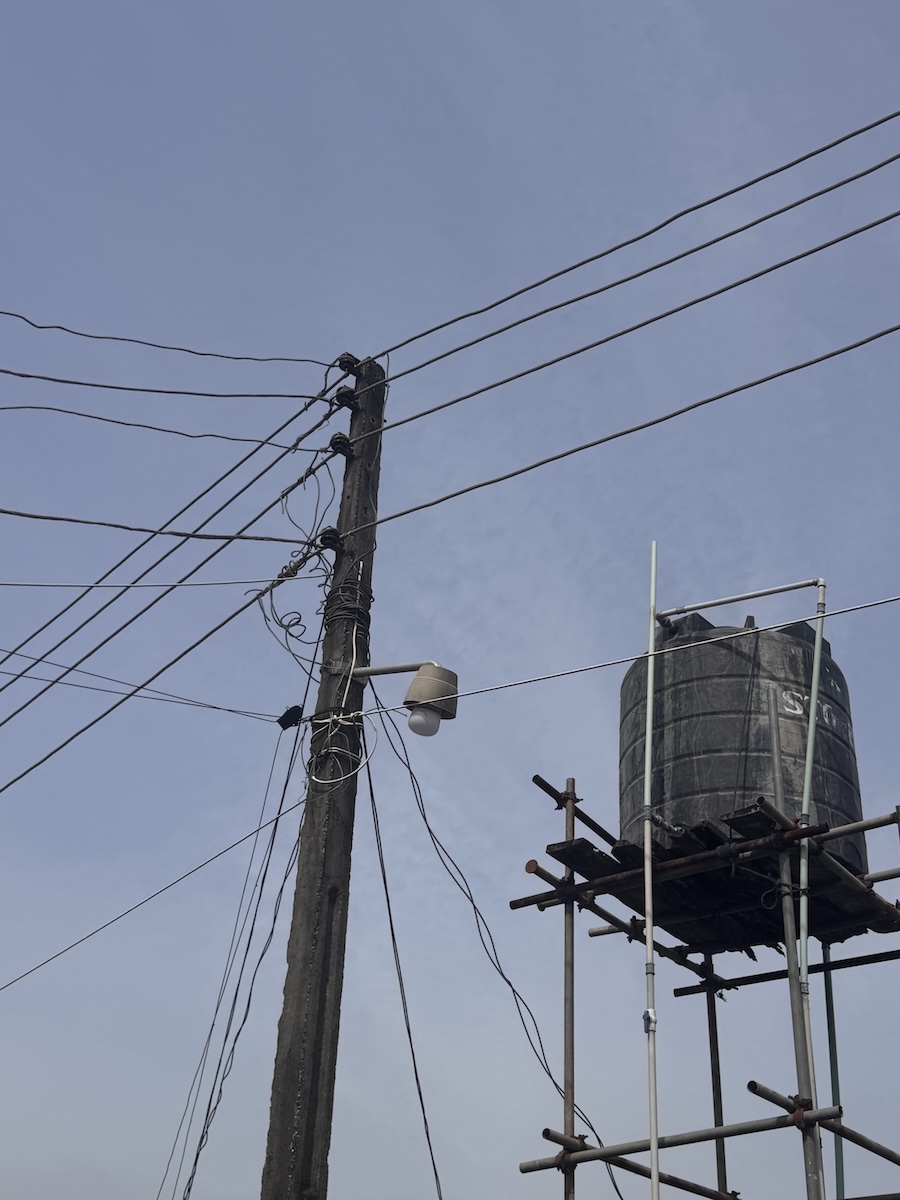
A grid- and generator-powered DIY street lamp affixed to an electricity pole. Some of the city’s residents have evolved self-help models for lighting up their streets at night, indicating that demand exists for the service. Photo credit: Temilade Sesan
Why community-level streetlighting, and why now?
The need for improved safety and security in Lagos emerged through ACRC’s foundation phase research, along with a realisation of the potential for last-mile streetlighting to contribute to that goal. More importantly, however – and in keeping with ACRC’s conceptualisation of cities as systems, in which prevailing political arrangements broadly circumscribe opportunities for development – the exploratory research identified a political window for pursuing reform through a well-designed streetlighting intervention aimed at demonstrating proof of concept.
The main factors we found showing potential for streetlighting reform include:
> Political will within the executive and legislative ranks of the state government to finance streetlighting projects on major roads;
> Improvements in lighting technology that enable energy efficiency and cost-effectiveness;
> Increased regulation and enforcement of technical standards on public contracts;
> Growing private sector expertise in the procurement and installation of components;
> A heightened awareness among all stakeholders of the need for communities to be integrated into the planning, implementation and maintenance of streetlighting projects – which is especially important.

Ajegunle-Ikorodu, a low-income community in Lagos, has only three streetlights installed, courtesy of an intervention by a local NGO. Photo credit: Victor Onifade.
These developments are encouraging, but what remains unclear is how low-income communities fit into this overall picture, and what delivery models will be required to reach them effectively. This is what informed our proposal to co-create, test and iterate on a private sector-led delivery model in a selected community within the city.
Our theory of change
Our immediate task is to establish criteria that might make paid streetlighting schemes more likely to succeed in low-income communities, and then select a pilot community for our intervention based on those criteria.
The exploratory study found that streetlights spur retail activity, especially in the informal sector in low-income areas after dark. The assumption arising from this is that neighbourhoods with high prospects of increasing revenues from existing nighttime retail activity have a built-in incentive to pay to keep the lights on in the streets in the evening.
In turn, this has given rise to the following theory of change: if we can demonstrate the potential for neighbourhood economic development (for residents) and increased tax earnings (for the government) through a sustainably managed, community-level streetlighting intervention, then we can interest political actors in investing public funds to light up disadvantaged yet promising communities for guaranteed economic returns in the long term.
Communities at the core
One lesson we have learned from past streetlighting projects in Lagos is that the real measure of success is not so much how many lights are installed in the first place, but whether and how they are maintained over time. Working streetlights are more likely to stay that way when there is commitment from host communities to safeguard the infrastructure against the imminent threats of damage and theft.
However, robust engagement is needed to achieve this level of synergy with communities, which has largely eluded project implementers in the past. This is a key area in which our initiative is set to innovate at the community level, notably through the co-creation of a self-governed, broad-based committee to oversee operations and maintenance of the infrastructure after it is installed.
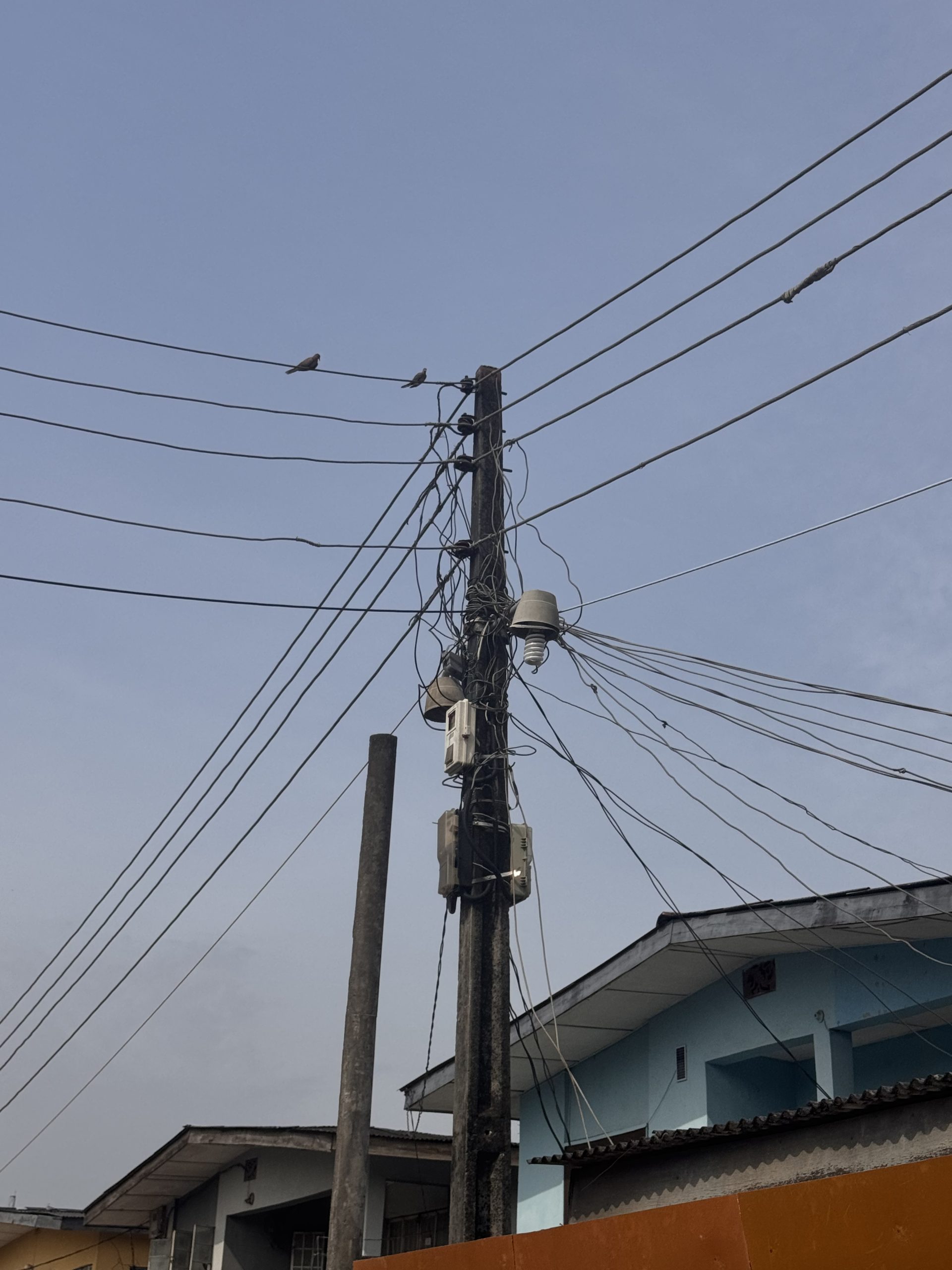
Another example of a DIY streetlight in Lagos. Photo credit: Temilade Sesan
What’s next?
The project team is proceeding with a first phase dedicated to robust community and policy engagement on the one hand, and data-driven intervention design on the other. In this vein, the next steps are as follows:
> Co-produce weighted criteria to assess and rank prospective host communities.
> Based on this ranking, identify a suitable community for the intervention – ideally with verifiable economic importance/potential for local residents, sufficient commercial viability for private investors, and a positive fiscal outlook for public authorities.
> Co-design a workable business model that ensures cost recovery on the supply side and affordability on the demand side, including details of applicable tariffs, subsidies and payment plans.
> Develop a next-phase proposal for installing, maintaining and monitoring the operation of streetlighting infrastructure in the selected community.
A word on uptake
Our project recognises that the Lagos State Government is the biggest stakeholder in the city’s streetlighting domain. Several state-level agencies have been actively engaged in the government’s quest to light up parts of the city. For our work at the community level, however, the uptake strategy will prioritise engagement with local council authorities in the initial proof-of-concept stages, with a view to drawing in state government support with the evidence generated in the medium to long term.
Our task in the meantime is to deliver an action research project that facilitates the co-creation of a viable, replicable model for installing and maintaining streetlights in more neighbourhoods across the city. Perhaps then those dark patches seen from the air will begin to close – a visible sign to the elite, at least, that Lagos is working.
Header photo credit: Charles Okweyeh / Getty Images (via Canva Pro). A Lagos street at night.
Note: This article presents the views of the authors featured and does not necessarily represent the views of the African Cities Research Consortium as a whole.
The African Cities blog is licensed under Creative Commons Attribution-NonCommercial-NoDerivatives 4.0 International (CC BY-NC-ND 4.0), which means you are welcome to repost this content as long as you provide full credit and a link to this original post.
