By Kudzai Chatiza, ACRC Harare in-city urban development research lead
“Urban development” is a term that is widely used but rarely unpacked. It often evokes images of new roads, housing estates and expanding city skylines. Yet, when viewed from the perspective of cities like Harare, urban development is far more complex, contested and dynamic than conventional definitions suggest.
Drawing on my role as an in‑city urban development research lead under the African Cities Research Consortium (ACRC), this blog reflects on what “urban” and “development” mean in practice, and how urban development is unfolding in Zimbabwe.
Rethinking “urban” and “development”
In Zimbabwe, the term “urban” is commonly used to describe a geographical area with at least 2,500 residents, most of whom do not rely on agriculture for their livelihoods. Urban settlements are also typically more compact than rural ones. Importantly, these areas are not always governed by formally designated urban local authorities. They may fall under the jurisdiction of mines, farms, rural district councils (RDCs) or other authorities responsible for their establishment and management.
“Development”, on the other hand, relates to improvements in quality of life. This includes the provision and management of infrastructure, as well as social, economic and environmental services that support both human and non‑human populations.
When these two ideas are brought together, urban development can be understood as the process of improving areas defined as urban. This involves planning and re‑planning, investing in new and existing infrastructure, and managing urban spaces to meet social, economic, environmental and spatial objectives. These objectives are shaped by political decisions and implemented through state and non‑state governance and administrative institutions.
Ultimately, the success (or failure) of urban development is best judged by outcomes: people’s health and wellbeing, access to decent work and environmental sustainability.
Defining urban development in practice
Beyond formal definitions, urban development is often framed in narrower ways – like physical expansion, economic growth or the upgrading of infrastructure. Other perspectives emphasise development as a response to urban challenges, many of which differ in character, intensity and drivers from those found in rural areas.
Urban development is rarely neat or linear. It is shaped by politics, markets, social practices and institutional capacity. These dynamics become particularly visible in cities like Harare, where formal planning systems coexist with widespread informal development. The decisions and actions that support urban development in Harare (and other urban spaces in Zimbabwe) involve national, provincial and local government institutions alongside non-state actors. Often this results in contradictions and conflict.
Insights from a Harare brainstorming session
A brainstorming session with ACRC partners held at the Development Governance Institute (DGI) on 15 December 2025 provided useful insights into how urban development is understood in Harare specifically and Zimbabwe generally.
First, participants highlighted urban development as a multi‑actor and multi‑modal process of delivering constitutional rights (through providing services) to urban residents. It is not only driven by the state. It also involves self‑provision, self‑financing and non‑state mobilisation, all operating within a political economy that often defies conventional urban management models.
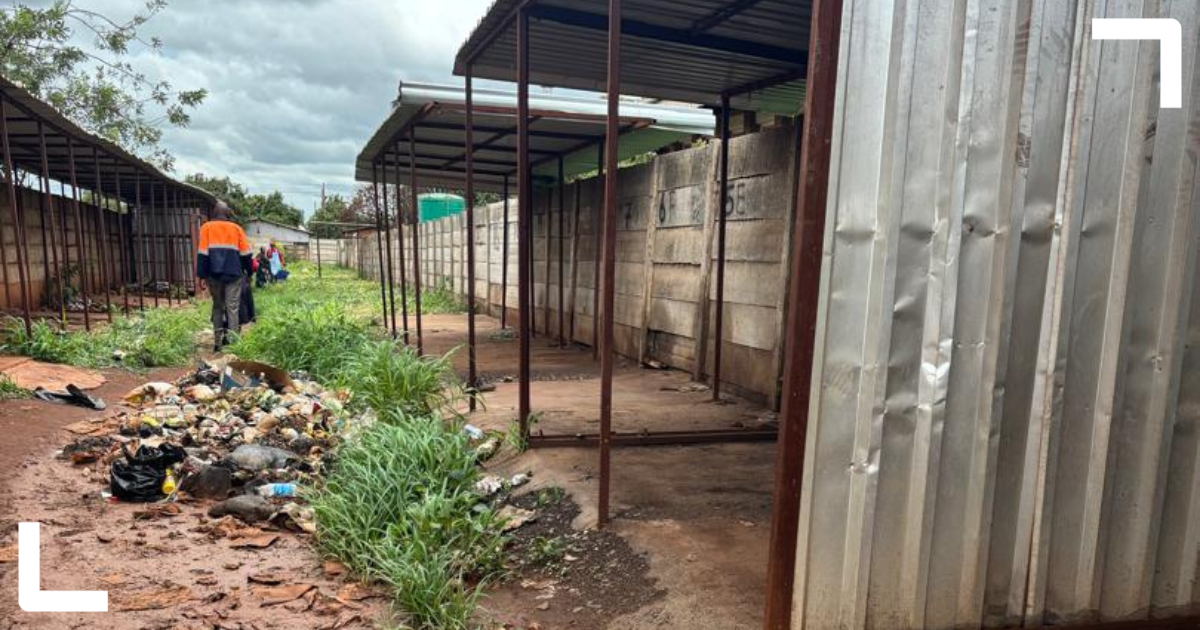
The results of this complexity are visible in the city itself. Houses built outside formal planning frameworks and cars purchased but not “counted” are generating enormous demand for water, sanitation, health, education and transport infrastructure and services. These demands expose persistent service gaps.
Second, there was a recognition that many infrastructure and service gaps in Harare stem from largely informal urban growth. Housing and economic activities often precede infrastructure provision, placing after‑the‑fact demands on institutions already weakened by the pace and nature of urbanisation. In this sense, service gaps are not necessarily evidence of “non‑development”, but of development occurring ahead of formal urban systems.
This reality also challenges the assumption that urban development is solely the responsibility of urban local authorities. In practice, alternative authorities and actors often shape urban outcomes, sometimes bypassing formal institutions altogether.
Third, participants recognised that significant urban development is taking place in spatial and governance peripheries. Communal areas, peri‑urban zones and spaces outside designated urban boundaries host distinctive forms of urban development, often under contested and polarising conditions.
These peripheries have generated important lessons on planning, resilience and governance. The lessons are driven from above, below and through uneasy combinations of the two. Following the backlash against Zimbabwe’s once highly ordered urban development model, institutional reforms have lagged behind demand, especially for housing and economic spaces. As a result, urban development in these areas appears fragmented and emergent. This emergent character is only visible upon closer reflection.
Harare as a case of “indigenous” urban development
When applied specifically to Harare, these reflections reveal a city experiencing rapid and uneven urbanisation. Small‑scale construction, largely dominated by housing, coexists with uneven service provision and evolving, make‑do governance practices.
Viewed through an intergovernmental lens, political tensions between an opposition‑run local authority (the City of Harare) and a ruling‑party-led national government have shaped urban development outcomes. These tensions have often undervalued resident agency, even where political affiliation has been used as a means of accessing urban land and economic opportunities.
At the same time, value and economic dynamism have shifted from formal industry and commerce to informal housing and economic sectors. This has made traditional measures of urban development increasingly blurred and difficult to apply.
In recent years, urban development in Zimbabwe, and Harare in particular, has taken on a distinctly “indigenous” character. The state has alternated across the roles of enabler, regulator and lagging service provider. These overlapping and sometimes conflicting roles help explain the coexistence of notable achievements – such as large‑scale land delivery for greenfield housing – alongside serious infrastructure gaps and service failures in both established and newly developed areas.
Self‑provisioning and self‑financing have become defining features of Harare’s growth. Cluster housing, “micro‑malling”, industrial renewal and the rapid spread of fuel stations, food courts and automobile‑spares hubs all point to a city developing through multiple, decentralised nodes, rather than a single, coherent plan. Perhaps the recently concluded Master Plan, if appropriately funded, will be an instrument for managing spatial governance and development contradictions.
Conclusion: Urban development as a living process
Urban development in Harare, and in Zimbabwe more broadly, is neither static nor uniform. It is a dynamic, evolving process shaped by local realities, institutional gaps and the ingenuity of urban residents themselves. While progress has been made, city authorities continue to grapple with both long‑standing and emerging challenges.
Under my role as the ACRC urban development research lead in Harare, the aim is to deepen understanding of these complexities and support more informed policymaking and implementation. A more sustainable and resilient Harare will depend not only on formal plans and institutions, but also on recognising and engaging with the ways urban development happens on the ground.
Photo credits: Kudzai Chatiza
Note: This article presents the views of the authors featured and does not necessarily represent the views of the African Cities Research Consortium as a whole.
Acknowledgement: This blog draws on ACRC‑supported work but does not represent the views of the Consortium or its funder, FCDO (United Kingdom). The contributions of ACRC Harare colleagues – especially George Masimba and Tapiwa Nyamukapa – and participants in the 15 December 2025 brainstorming session are gratefully acknowledged.
The African Cities blog is licensed under Creative Commons Attribution-NonCommercial-NoDerivatives 4.0 International (CC BY-NC-ND 4.0), which means you are welcome to repost this content as long as you provide full credit and a link to this original post.
